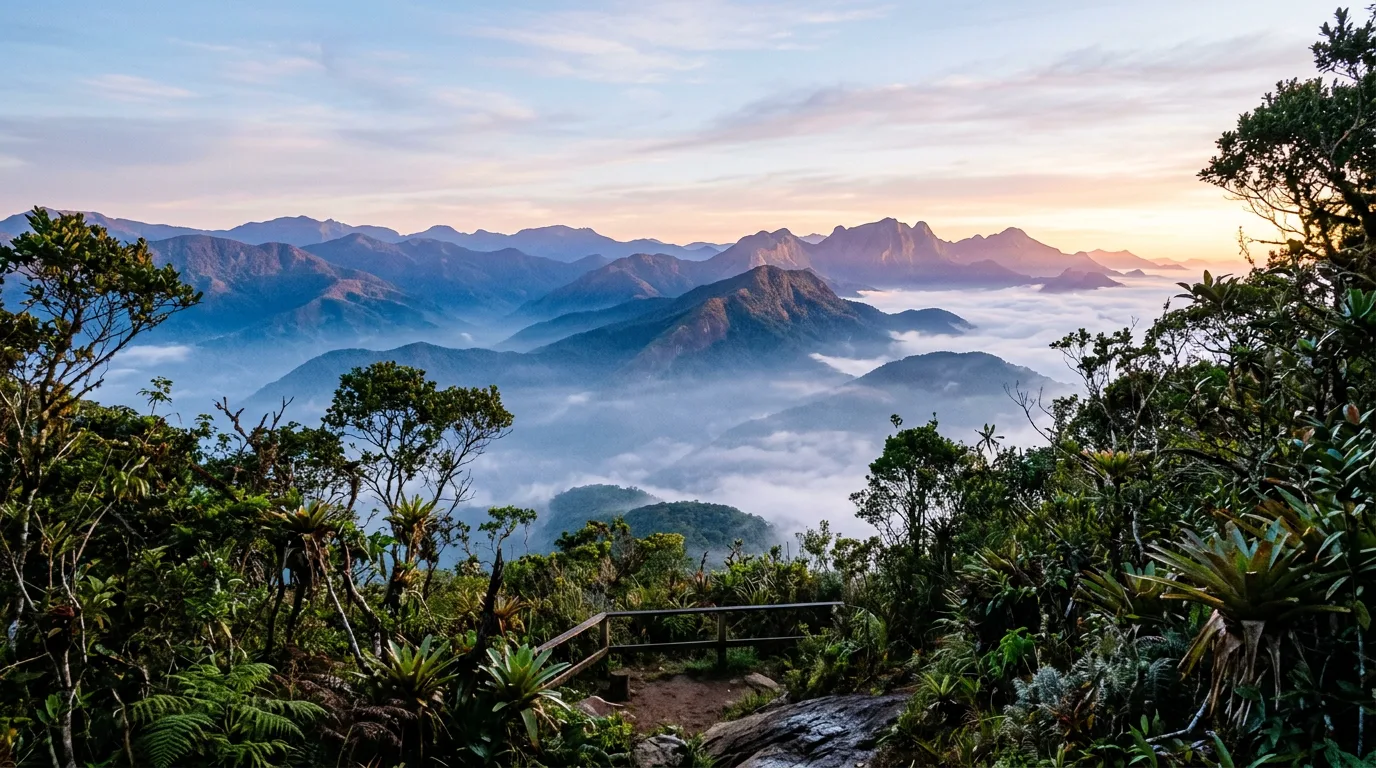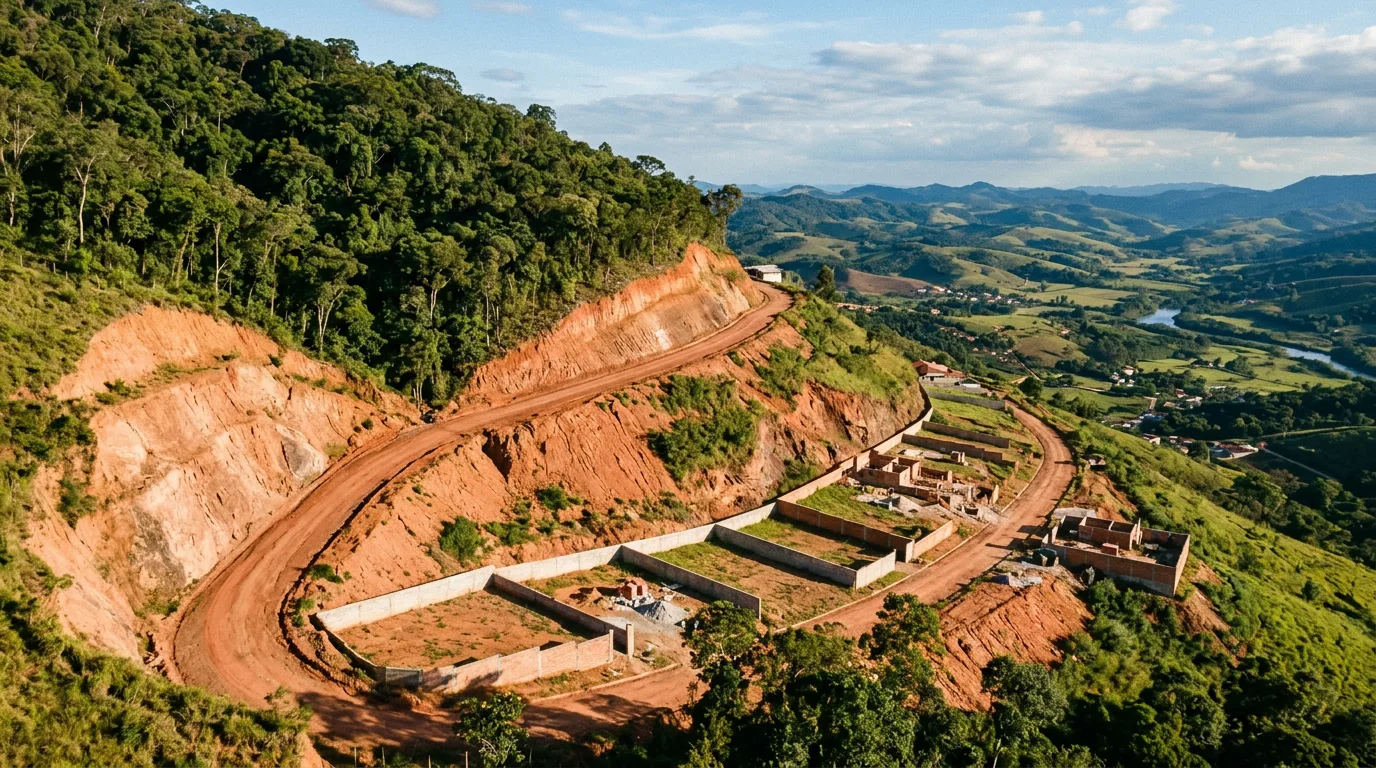
The reflex to subdivide, and why it feels safe
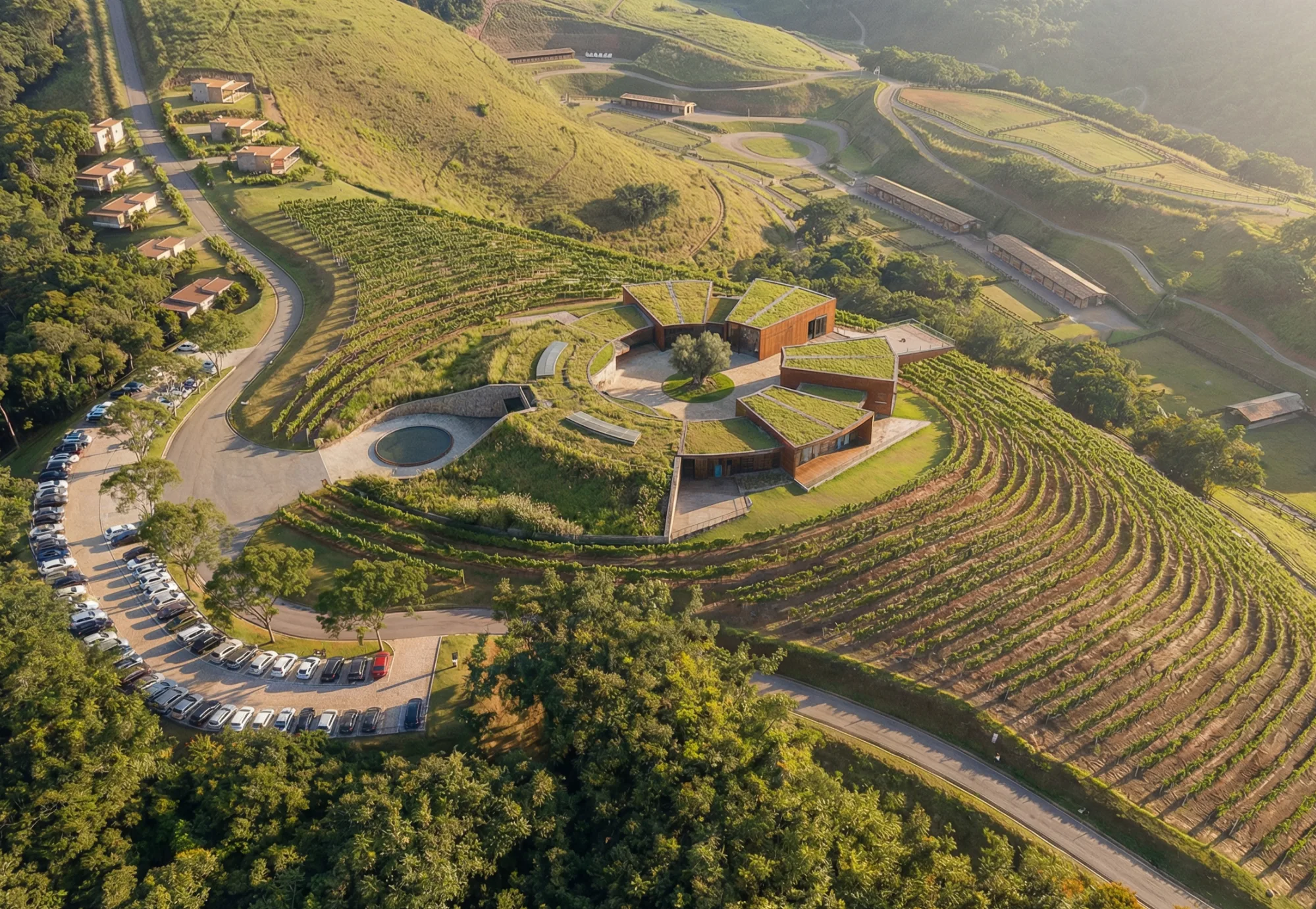
Faced with a large tract of land, subdividing and parceling it into a gated community is the most immediate use most owners can imagine. It is also the easiest to finance and to sell. The market already has a ready-made product for that format: broker, bank, developer, and buyer recognize the luxury rural lot without any effort to explain. That is why the reflex to parcel feels safe. It fits into a chain that already exists and returns money quickly to whoever holds the land.
What this reflex hides is the nature of the operation. Subdividing is a single sale. The land is converted into lots, the lots are sold, and, from the standpoint of the original owner, the asset ceases to exist. There is no second harvest. What remains is the capital received in the account, subject to inflation, to the opportunity cost, and to the decision of where to reinvest. The property that took decades to form vanishes from the balance sheet in a few sales cycles.
There is also a feature of the product that usually goes unnoticed. The logic of the luxury rural gated community is exclusivity and privacy. That is the selling argument, and it works. But exclusivity, by definition, closes the land off to the public. A successful gated community is one no outsider enters. This eliminates, at the source, any revenue from visitation, from open hospitality, from gastronomy, or from events. The model is born without a public face and dies without one.
The argument of this series is not that subdividing is wrong. In many cases it is the correct decision, and the only viable one. The argument is narrower and more uncomfortable: subdividing captures less value than it seems, because it liquidates the asset instead of programming it. Before accepting the reflex, it is worth comparing what is gained all at once with what could be gained continuously.
From single sale to recurring revenue
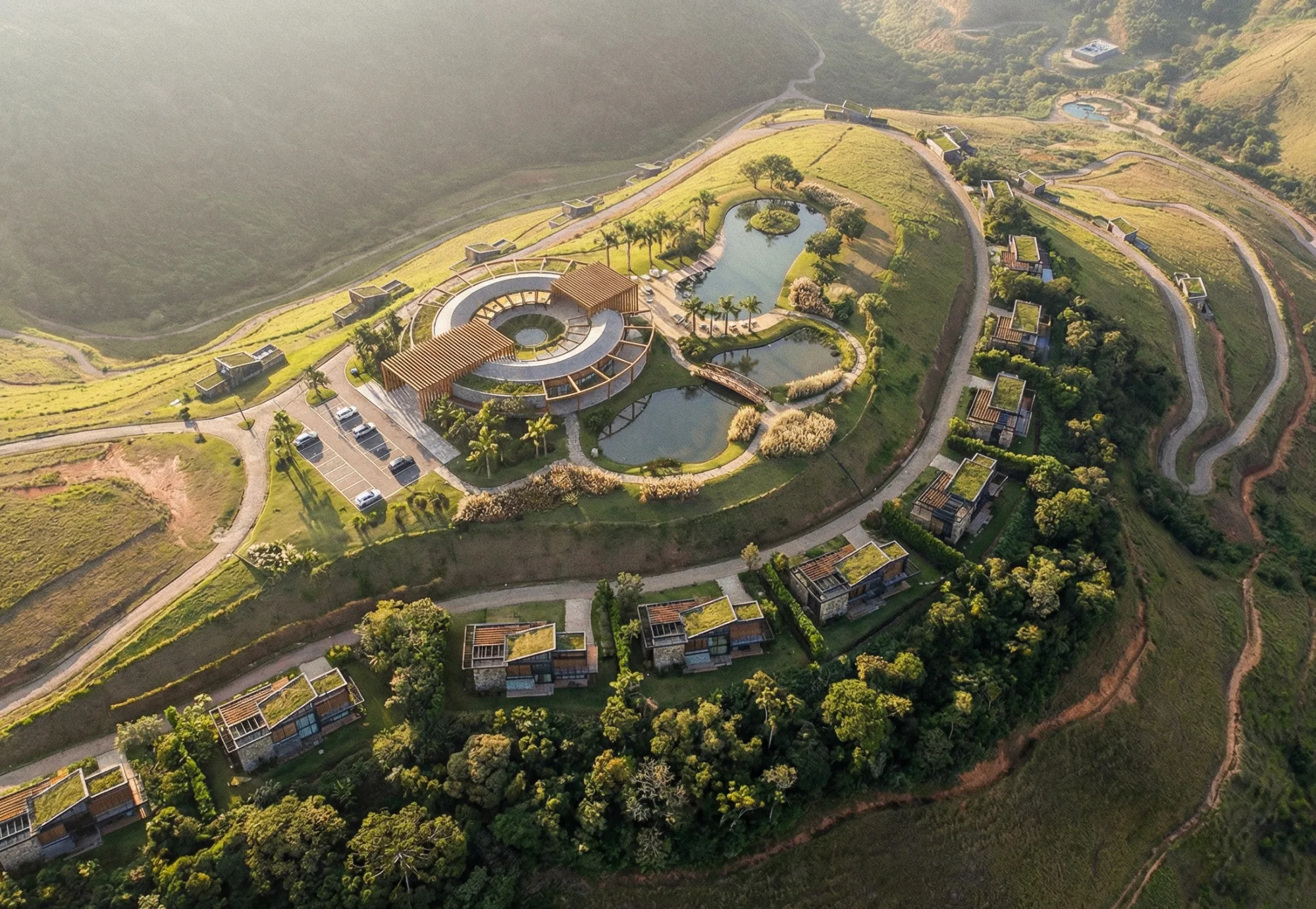
The central thesis is simple to state and hard to internalize: on one side, the single revenue of the sold lot; on the other, the recurring revenue of the destination. Hospitality, tickets, gastronomy, events, and experiences do not happen once. They happen every weekend, every season, every year. The destination turns the land from stock to be liquidated into a platform that works continuously.
The sold lot pays once.
The destination pays every year.
The first consequence of the shift is patrimonial. The destination keeps the property within the owner's estate and makes it produce, instead of transferring the asset to third parties. The land remains land, and becomes operation as well. Whoever programs a destination does not part with the tract: they learn to extract a flow from it, and keep the option to do anything else in the future, including subdividing a part, if they want.
The second consequence is intangible and harder to measure, but often more valuable. A consolidated destination creates brand and reputation. The gated community does not generate that asset, because it has no public face: nobody visits, nobody comments, nobody returns. The destination, on the contrary, accumulates recognition with every visitor who leaves satisfied. That recognition is an asset that does not appear in the deed, but weighs on the value of the whole.
The third consequence is the way the land appreciates. In the lot model, appreciation depends almost solely on the square meter: location, infrastructure, comparables in the region. In the destination model, appreciation comes to depend on the flow of people, on the narrative the place builds, and on its cultural relevance. Land that becomes a reference is worth what it represents, not just what it measures.
Inhotim: land as a cultural institution
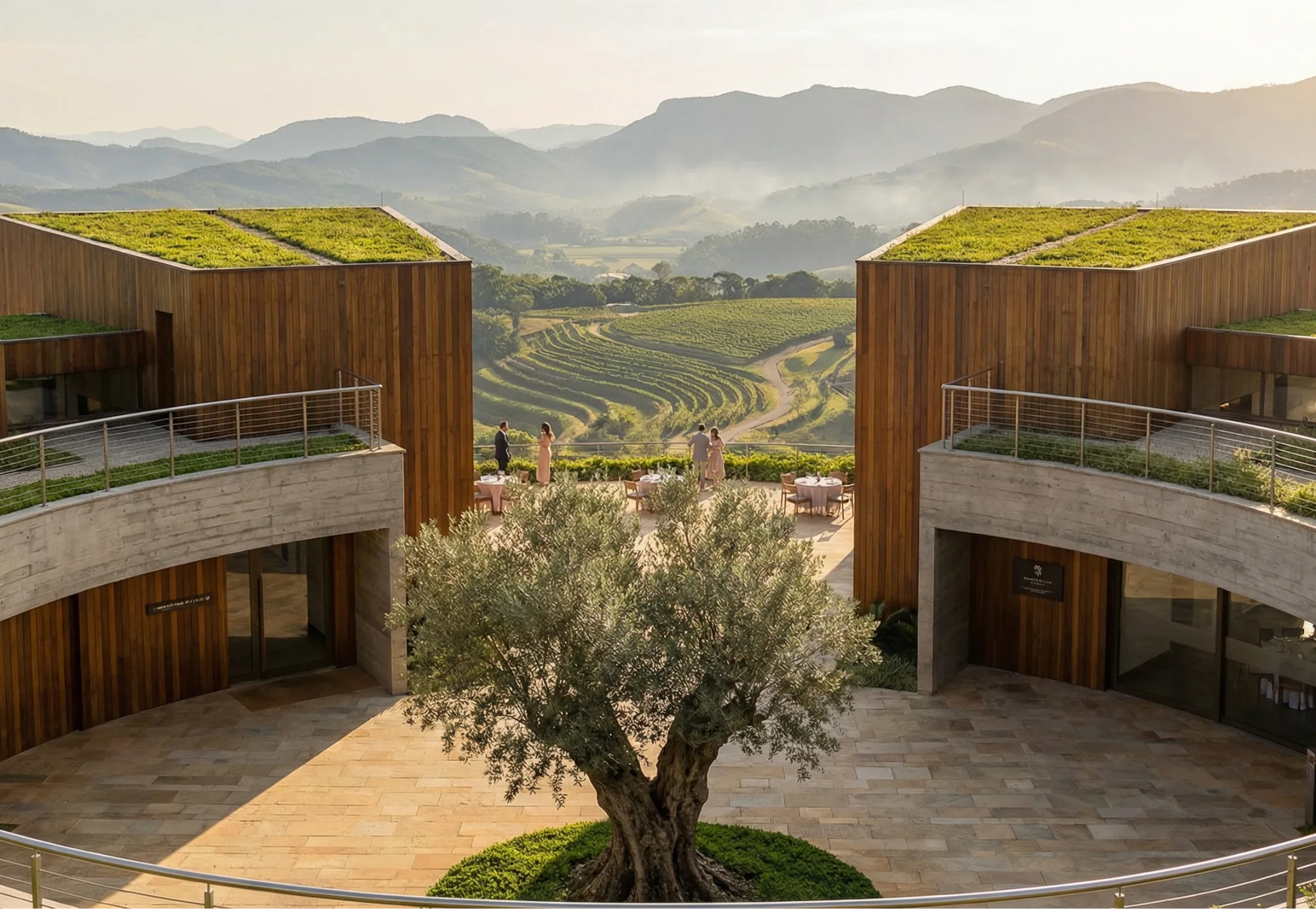
The most instructive case of land programmed as a destination in Brazil is the Inhotim Institute, in Brumadinho, Minas Gerais. It is an open-air contemporary art museum integrated into a botanical garden, with a visitation area of around 140 hectares. It is described as one of the largest open-air museums in Latin America, a scale that only makes sense because the work is spread across a rural property, and not confined to a building.
The dual nature of the place is what makes it instructive. Inhotim is not just an art collection: it received the official title of Botanical Garden in 2010, granted by the National Commission of Botanical Gardens. Art and botany overlap on the same ground, and each one reinforces the reason to visit the other. The land ceases to be a backdrop and becomes part of the collection. The path between one work and another crosses the garden, and the garden is, itself, content.
As an archetype, Inhotim shows how cultural content transforms a rural property into a destination with its own identity and continuous attraction of the public. We are not asserting figures on revenue, ticket sales, or visitors, which depend on a primary source and were not verified for this text. The point is structural: once the land hosts content that people want to visit, it begins to generate flow on a recurring basis, and flow is the raw material of everything that comes after.
Vale dos Vinhedos: the destination born of the product
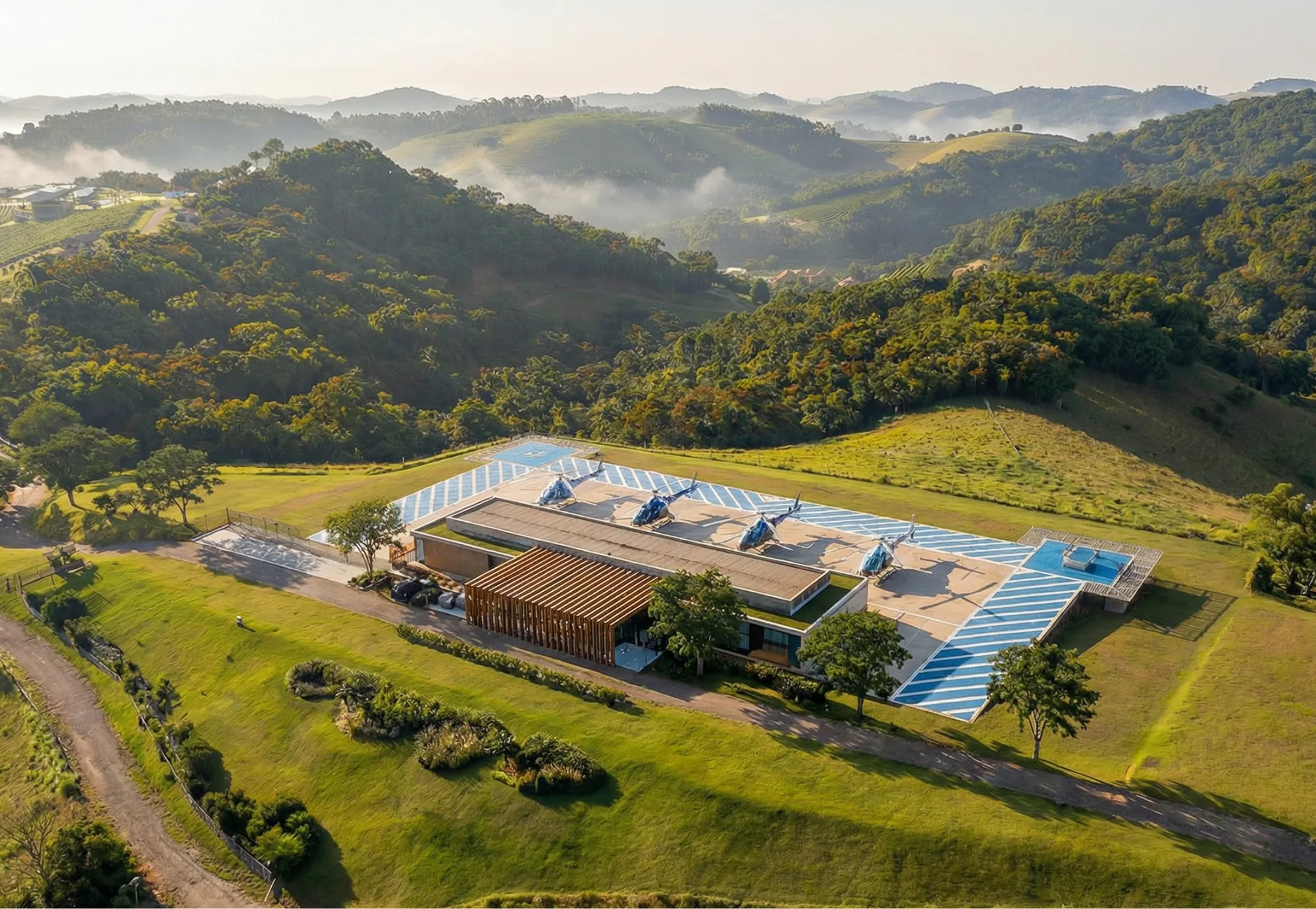
The second archetype is different, and for that reason complementary. The Vale dos Vinhedos, around Bento Gonçalves, in the Serra Gaúcha of Rio Grande do Sul, is a national reference in wine tourism. Here the destination was not born of an institution built upon the land, but of the product the land yields and of the territory that produces it. The wine came first; the destination organized itself around it.
The Vale dos Vinhedos was the first recognized Geographical Indication in Brazil. It obtained, in 2002, the registration as an Indication of Provenance with the National Institute of Industrial Property, and in 2012 it became the first Denomination of Origin for wines in Brazil. The origin seal delimits an area of 81.23 km², distributed among the municipalities of Bento Gonçalves, with 63%, Garibaldi, with 30%, and Monte Belo do Sul, with 7%. The delimitation is not a bureaucratic detail: it is what gives the territory a name the market recognizes.
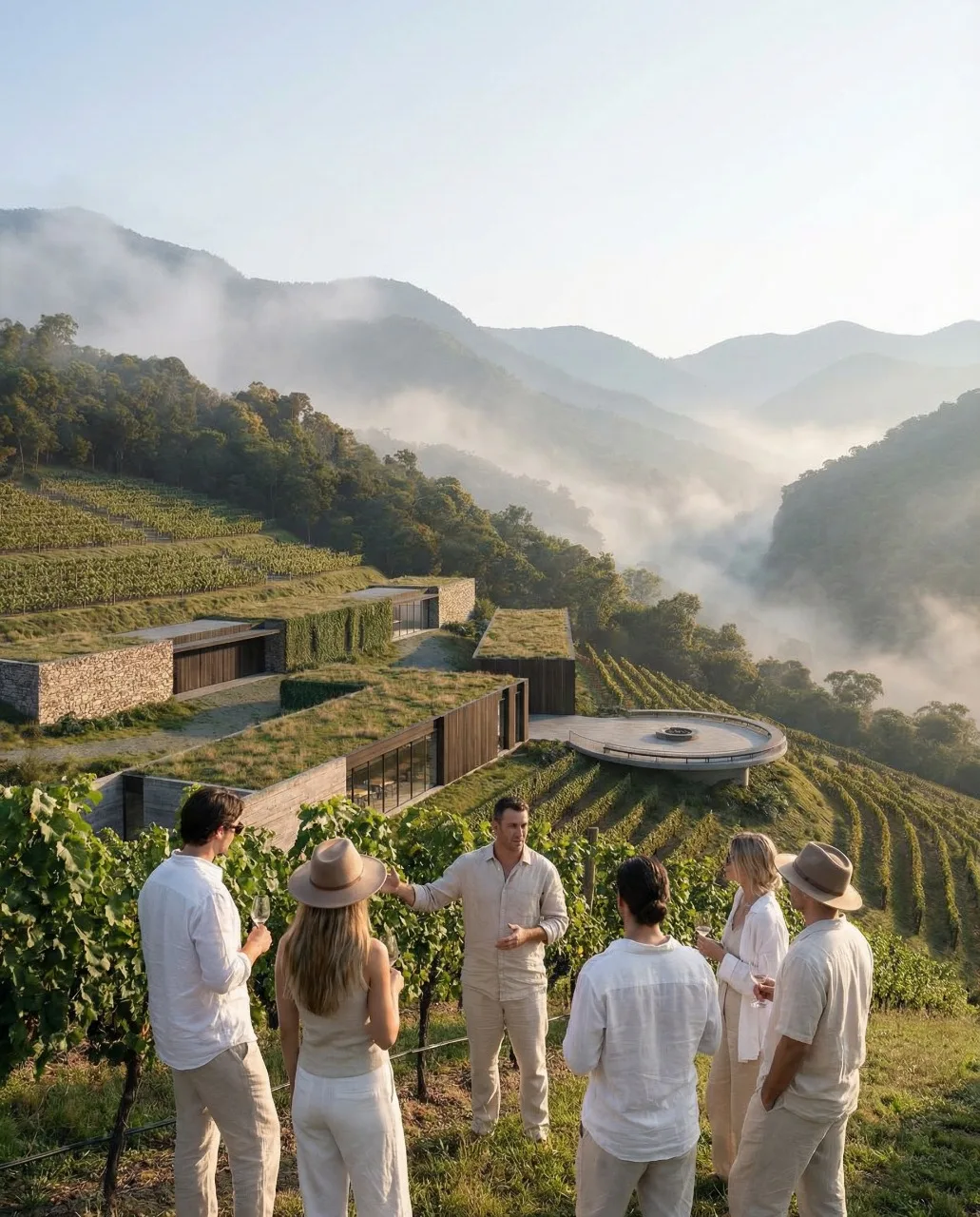
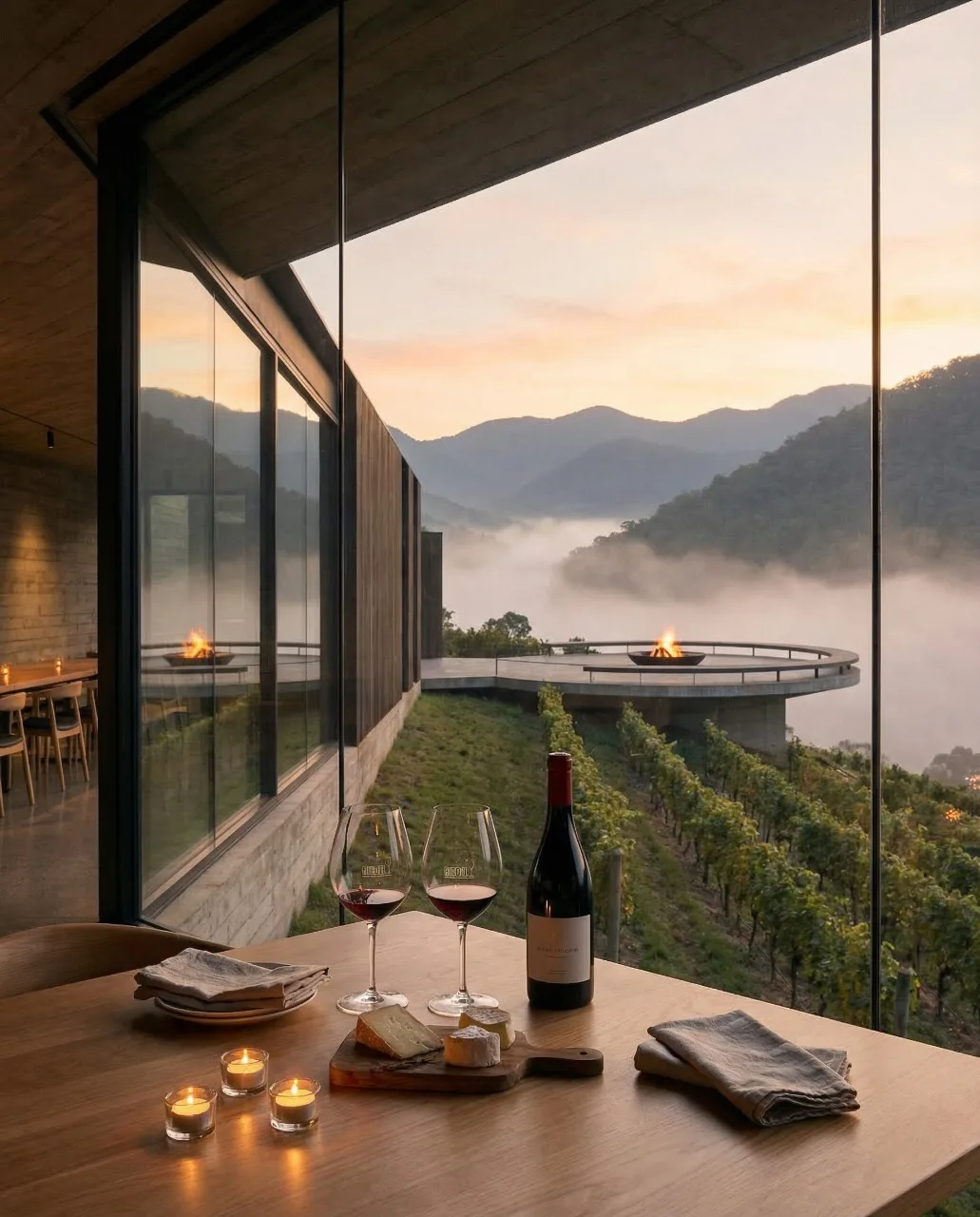
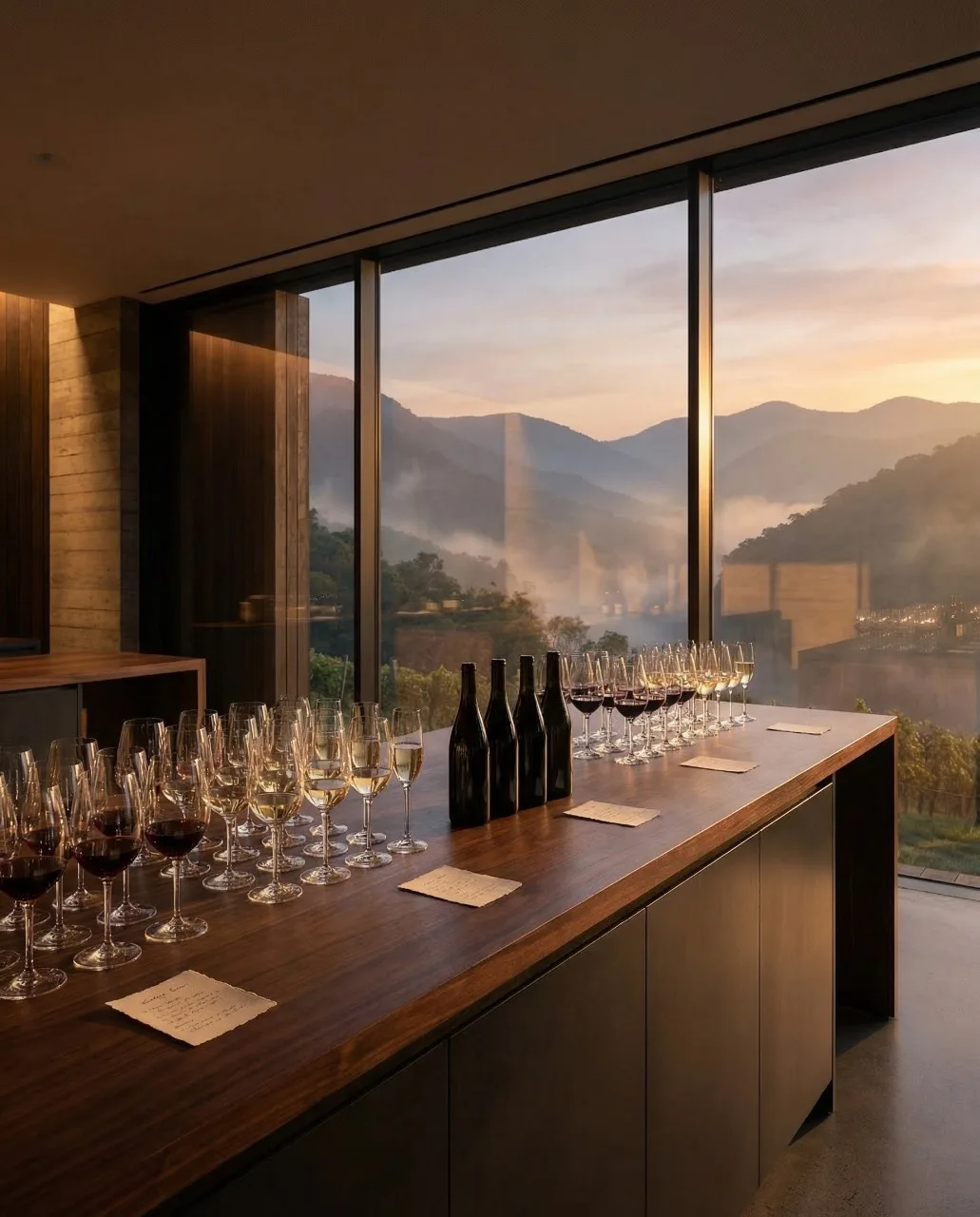
The lesson of the Vale dos Vinhedos is that product, terroir, and origin seal become destination. The land generates revenue from what is experienced in it, the visit, the tasting, the stay, and not only from what is sold from it. The wine continues to be sold, but the territory learned to charge also for the experience of being there. It is the same tract generating two revenues: that of the product and that of the destination. For anyone evaluating a farm with a productive vocation, this is the closest model.
Farm hotel and rural tourism: the already consolidated model
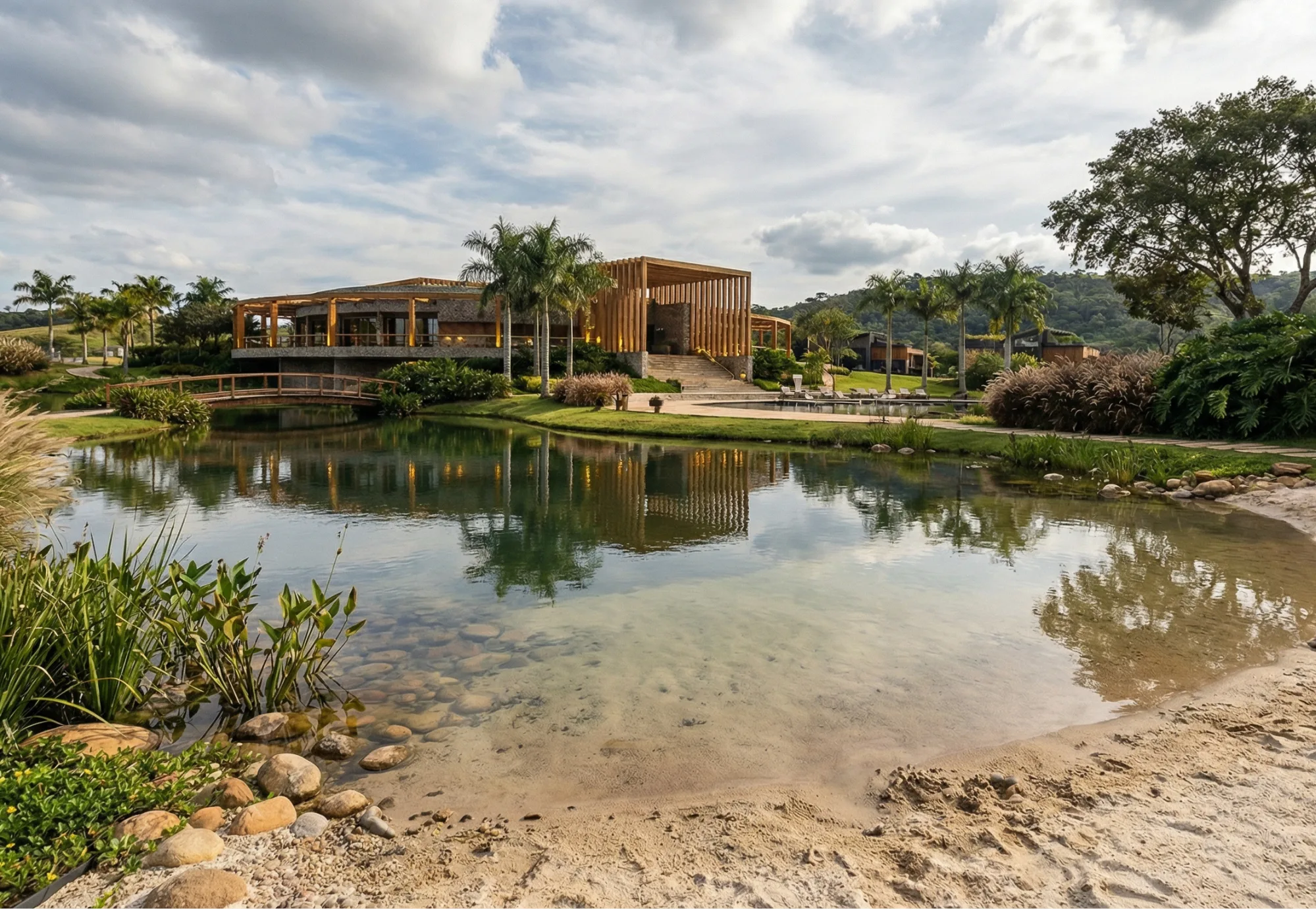
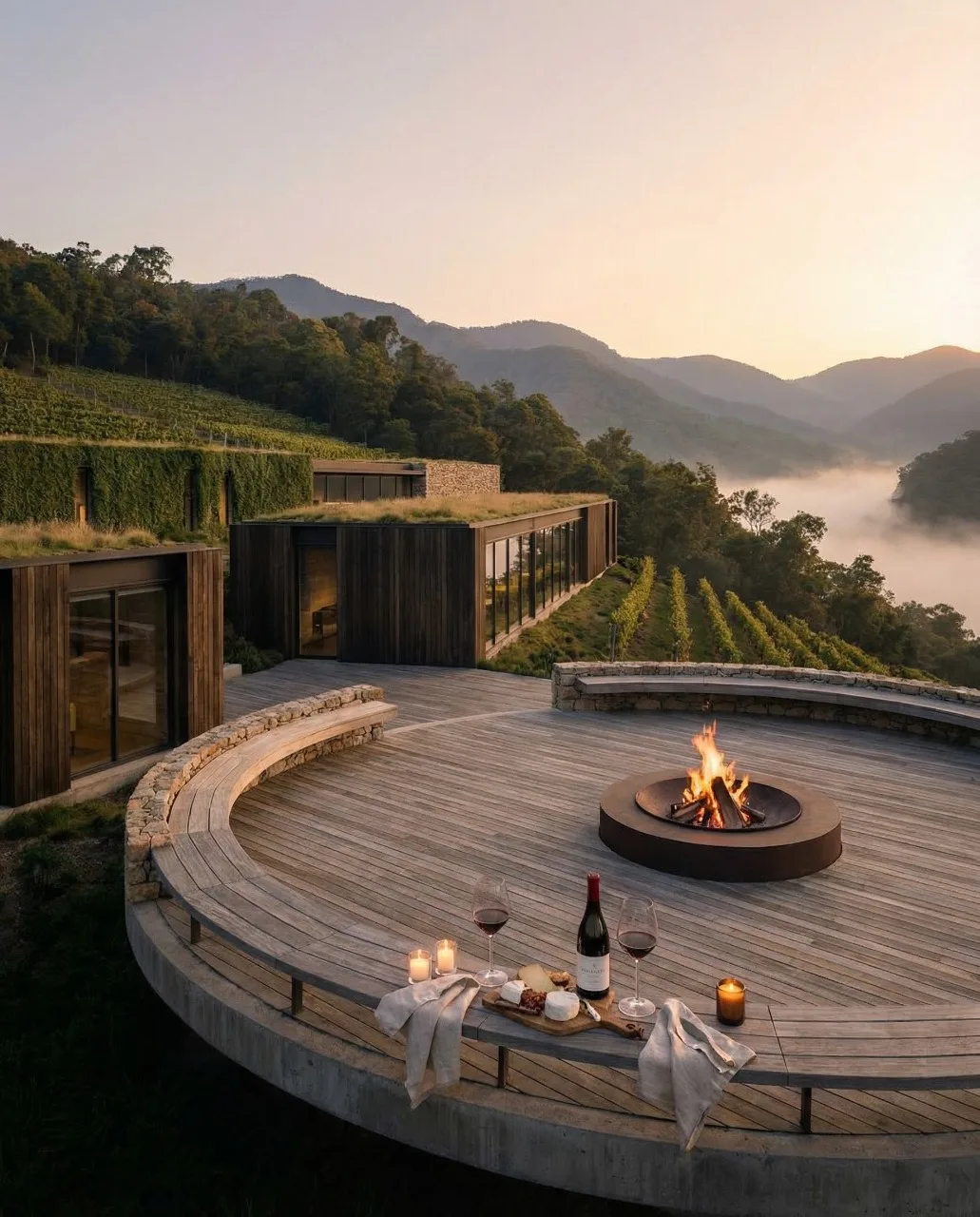
The first two archetypes are exceptional. The third is deliberately ordinary, and that is its strength. The farm hotel and agritourism are typologies already consolidated in Brazil: a rural property that receives guests and generates recurring revenue, without needing a contemporary art collection or an international origin seal. It is the destination in its most reproducible form.
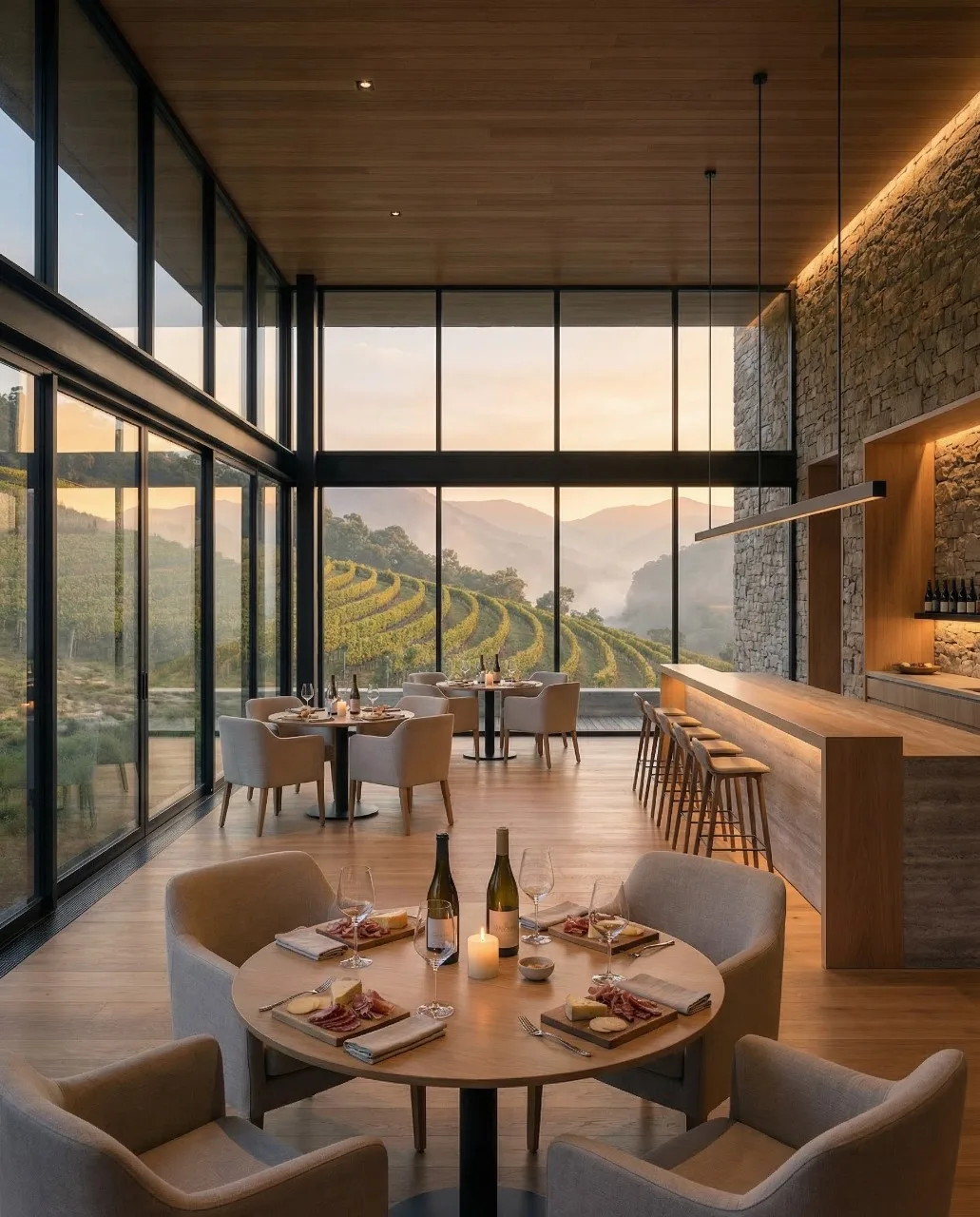
Rural tourism is treated as a structured segment by the Ministry of Tourism, which maintains its own guidelines and publications for the activity. There is, therefore, an official repertoire and a mature market: it is not a matter of inventing a category, but of entering one that already has demand, language, and channels. For the developer, this reduces risk. The behavior of the farm-hotel guest is known, and the product can be sized based on real references.
One example of how these properties add up is the Caminhos de Pedra, a rural and cultural tourism route in the countryside of Bento Gonçalves. It organizes several properties around a common narrative, Italian immigration, gastronomy, and stone architecture, and turns a set of lands into an itinerary. The destination, here, is not an isolated farm: it is the network of farms that decided to tell the same story. The lesson is that there is no need to reinvent the wheel. There is a tested repertoire of hospitality, experience, and itinerary, ready to be designed from the project stage onward.
Program the land before parceling it
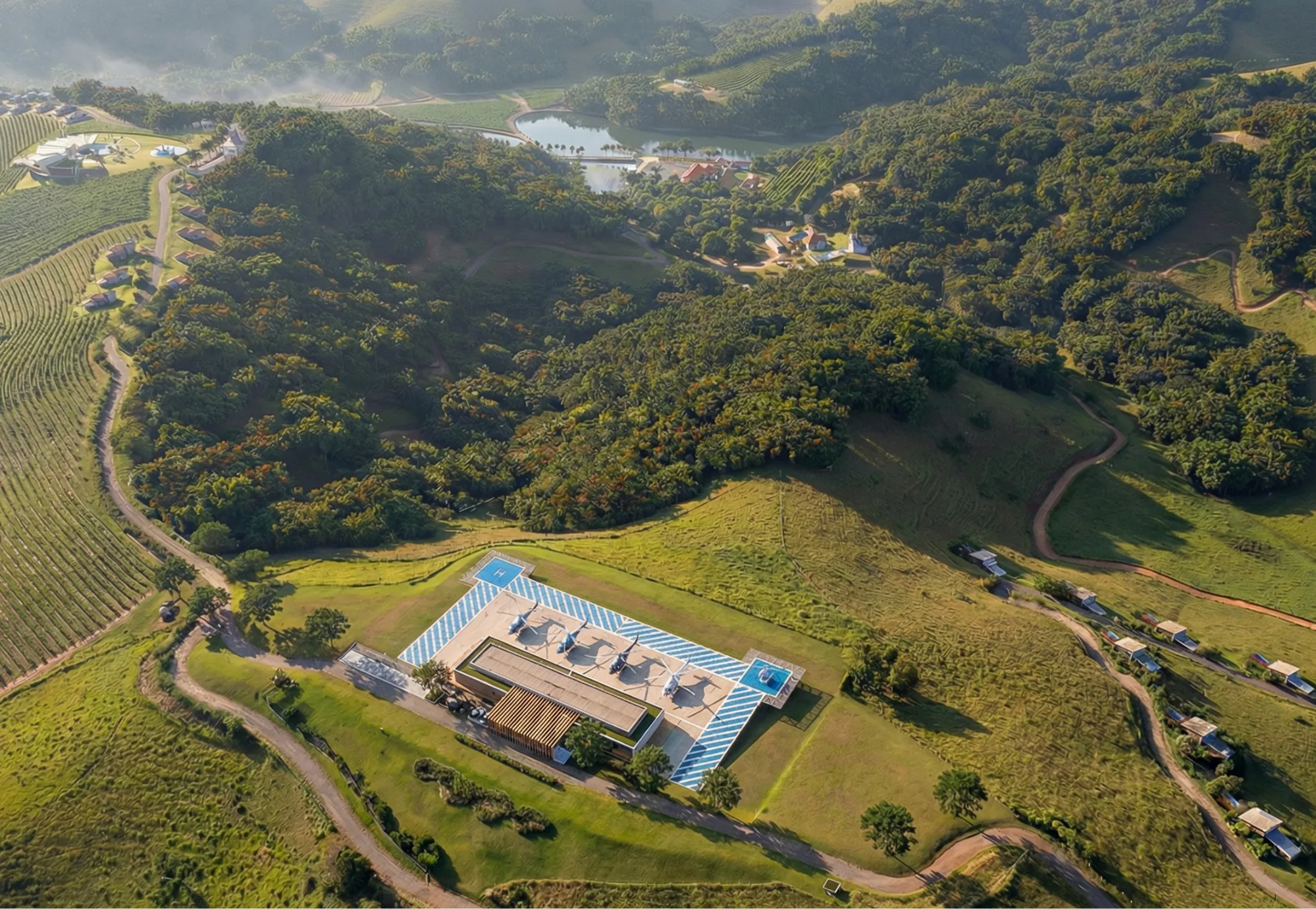
The difference between lot and destination is not in the land. It is in the program: what the land hosts, for whom, and how it generates flow and revenue over time. Two owners with identical tracts can arrive at opposite results, not because one has better land, but because one decided to liquidate and the other decided to program. The table below synthesizes the two logics side by side.
| Axis | Subdivide (rural gated community) | Program (destination) |
|---|---|---|
| Nature of the revenue | Single sale of the lots | Recurring revenue from operation |
| Fate of the asset | Leaves the owner's estate | Stays and works continuously |
| Relationship with the public | Closed, exclusivity and privacy | Open, flow of visitors |
| Brand and reputation | Does not generate, no public face | Accumulates every season |
| Basis of appreciation | Square meter and comparables | Flow, narrative, and relevance |
| Speed of return | Fast and finite | Gradual and continued |
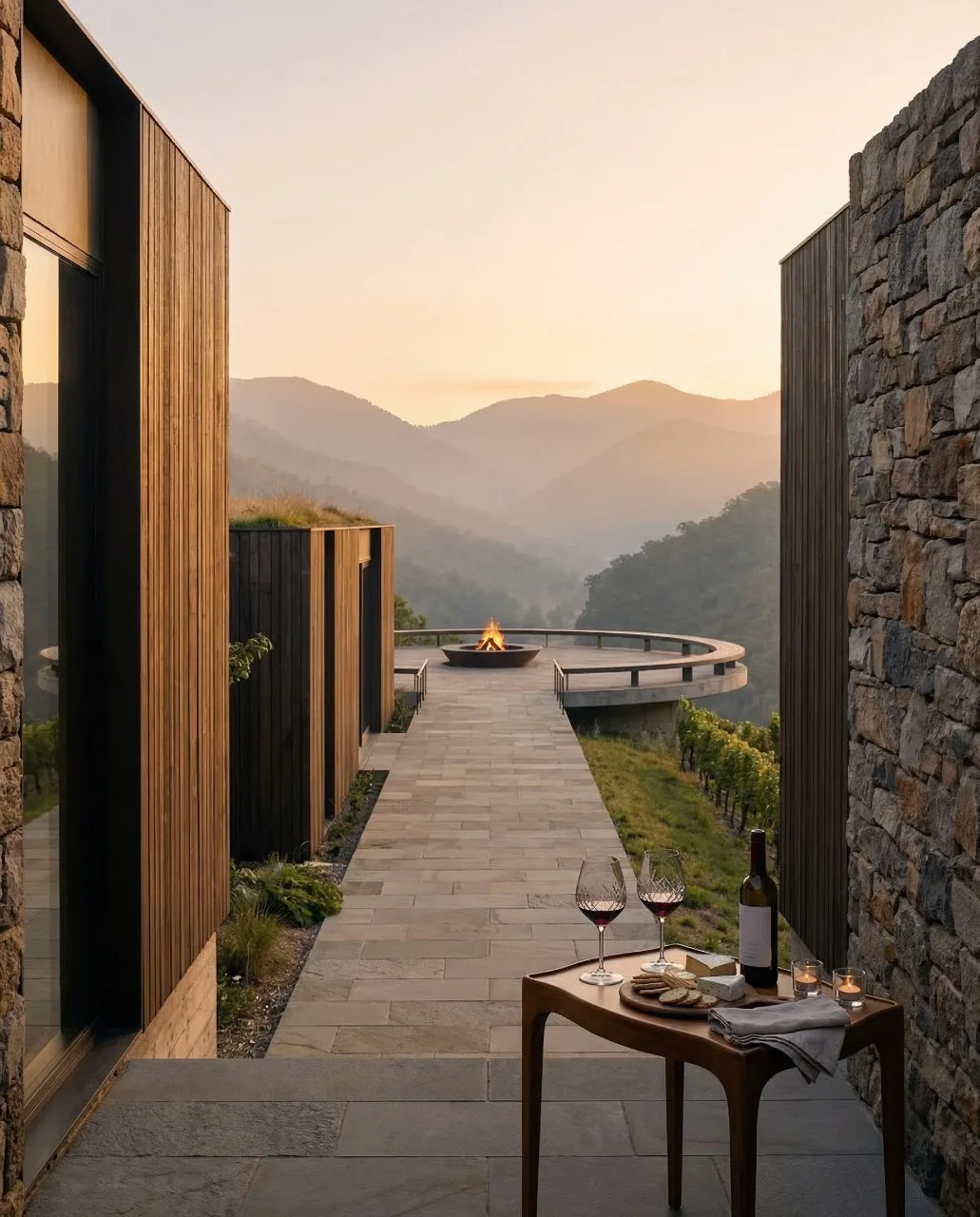
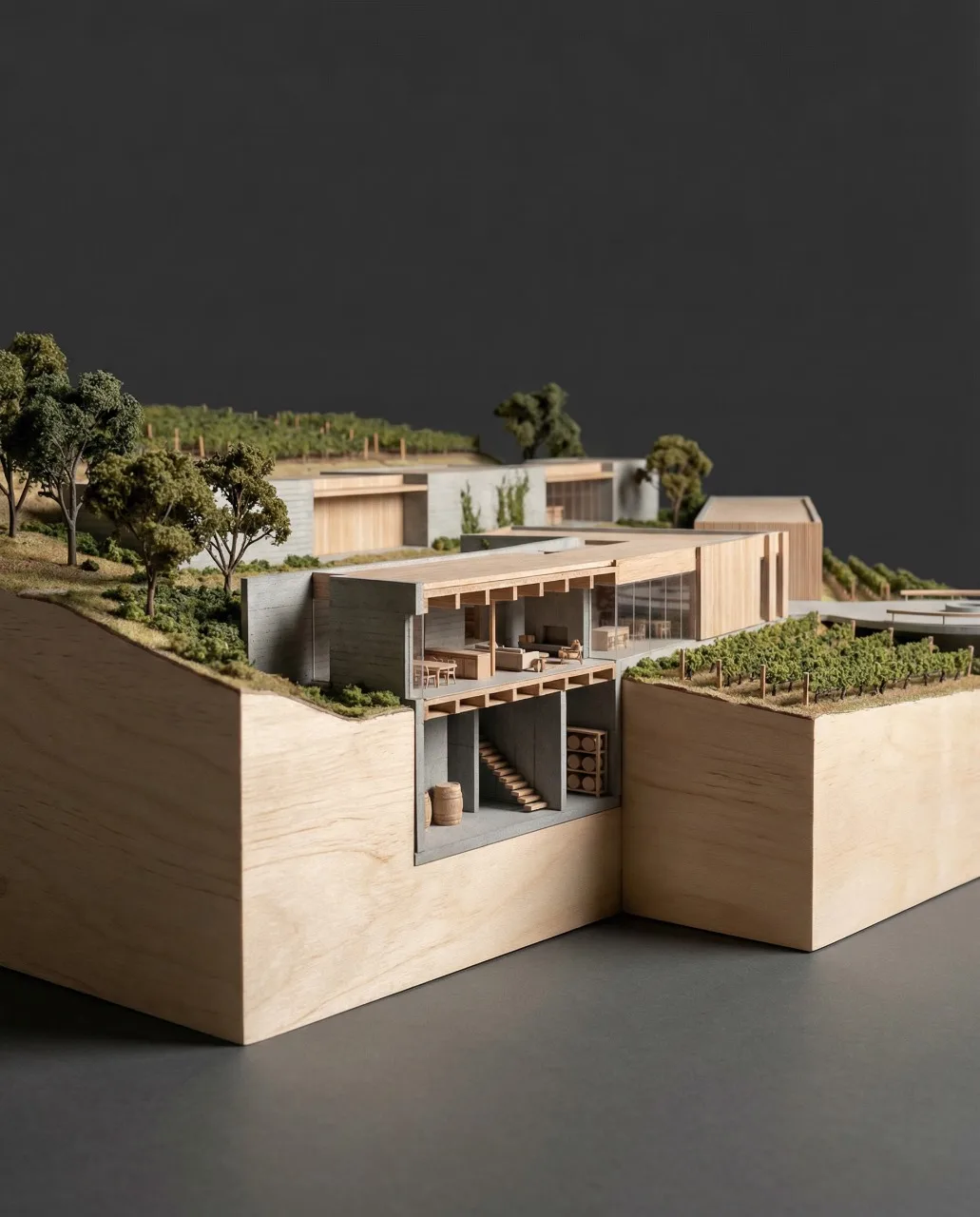
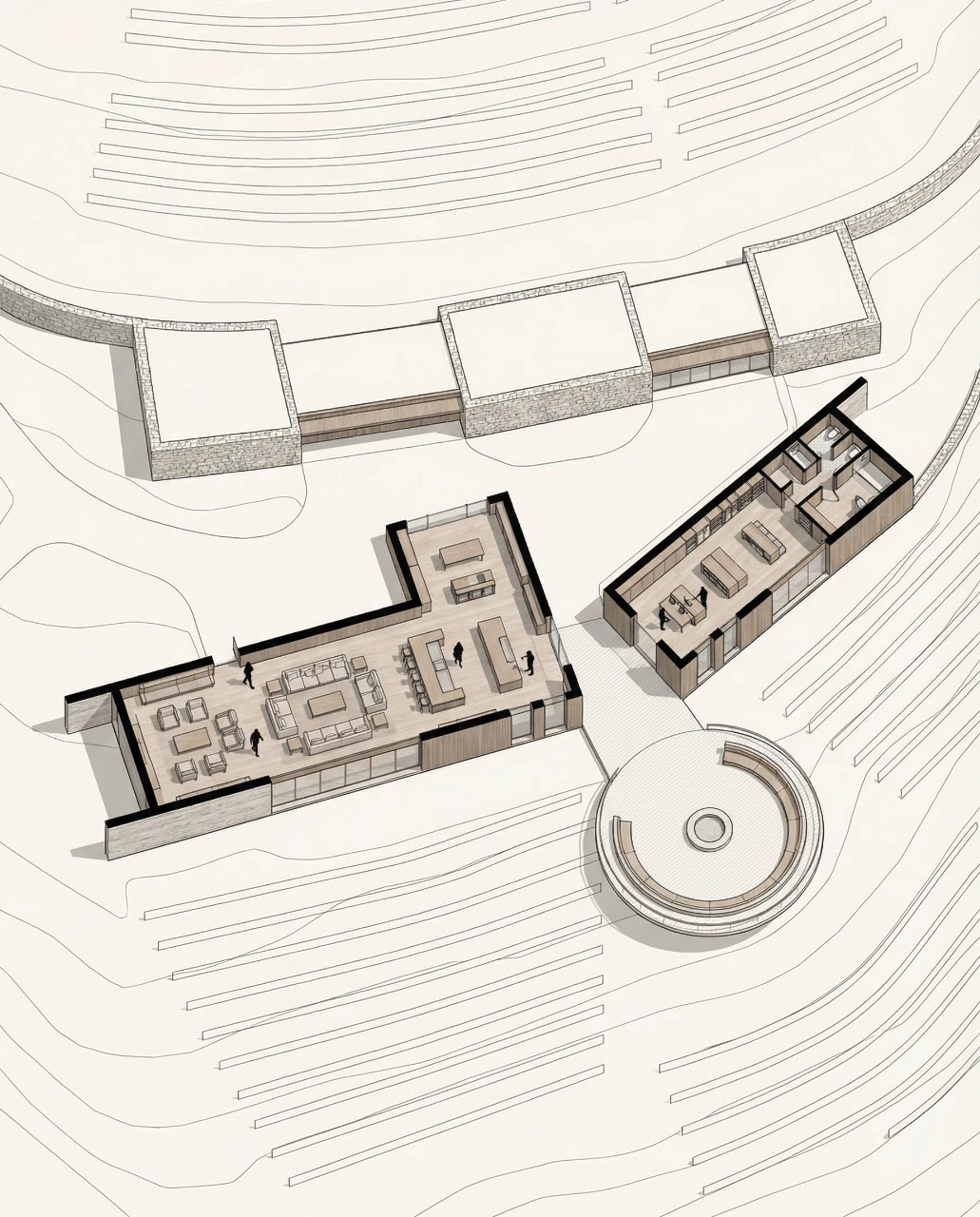
The architecture and urban planning project is what defines what becomes a destination: what is preserved, what is built, and which facilities anchor the visitation. Culture, hospitality, gastronomy, and production do not appear by chance. They are program decisions, taken before the first construction, that determine whether the land will generate flow and at what cost. Without that design, the destination is only an intention.
That is why the strategic decision precedes the decision to sell. Evaluating the asset by the recurring value it can generate, and not only by the liquidation value in lots, is an exercise that changes the math before any deed. A caveat of honesty is in order: no numerical financial comparison between lot and destination should be asserted without a source. The argument of this series is strategic in nature, supported by real archetypes, not by invented return statistics.
This is the opening of a series. The next articles detail how to read the vocation of a piece of land and how to design the program of a rural destination, from the diagnosis of the territory to the definition of the facilities that sustain the visitation. The question left for the next text is the first of all: how to know, looking at a specific farm, what kind of destination it calls for.
Sources consulted
All URLs verified on June 15, 2026.
- Inhotim Institute, official site. Open-air contemporary art museum integrated into a botanical garden, Brumadinho, Minas Gerais.
- Inhotim, Botanical Garden, official institutional page on the botanical garden.
- Inhotim Botanical Garden, Brazilian Network of Botanical Gardens, record of the official title.
- Embrapa Uva e Vinho, IP Vale dos Vinhedos. First GI in Brazil, IP in 2002, DO in 2012, area of 81.23 km².
- Embrapa, Geographical Indications of Wines of Brazil, overview of DO and IP.
- Embrapa, chapter on the delimitation of the Vale dos Vinhedos Denomination of Origin, PDF.
- Ministry of Tourism, official portal. Rural tourism as a structured segment.
- Tourism Regionalization Program, Guidelines, Ministry of Tourism, PDF.
- Hotel-fazenda, reference entry on the typology of rural property with hospitality.
- Caminhos de Pedra, Bento Gonçalves, description of the rural and cultural tourism route.
Updated on June 15, 2026. Declared pending: the literal official definition of Rural Tourism from the Ministry of Tourism was not confirmed against a primary source in this research and is therefore not quoted; it appears only as an attributed paraphrase. No figures for visitors, revenue, or ticket sales for Inhotim, bottles per year for the Vale dos Vinhedos, or visitors for the Caminhos de Pedra were asserted, for lack of a verifiable primary source. The argument is strategic and rests on the archetypes, without return statistics.