A serra took on the name of a wine
On January 16, 2026, the Official Gazette of Rio de Janeiro published a short, technical-looking law. It created the designation of origin "Serra do Rio" for wines produced with grapes grown or processed in the Serra Fluminense. It is State Law No. 11.104/2026, born from Bill 6.345/2025, authored by state representative Rodrigo Amorim, approved by the Legislative Assembly on December 18, 2025 and signed into law by Governor Cláudio Castro.
A wine label does not usually interest an architecture firm.
This one does.
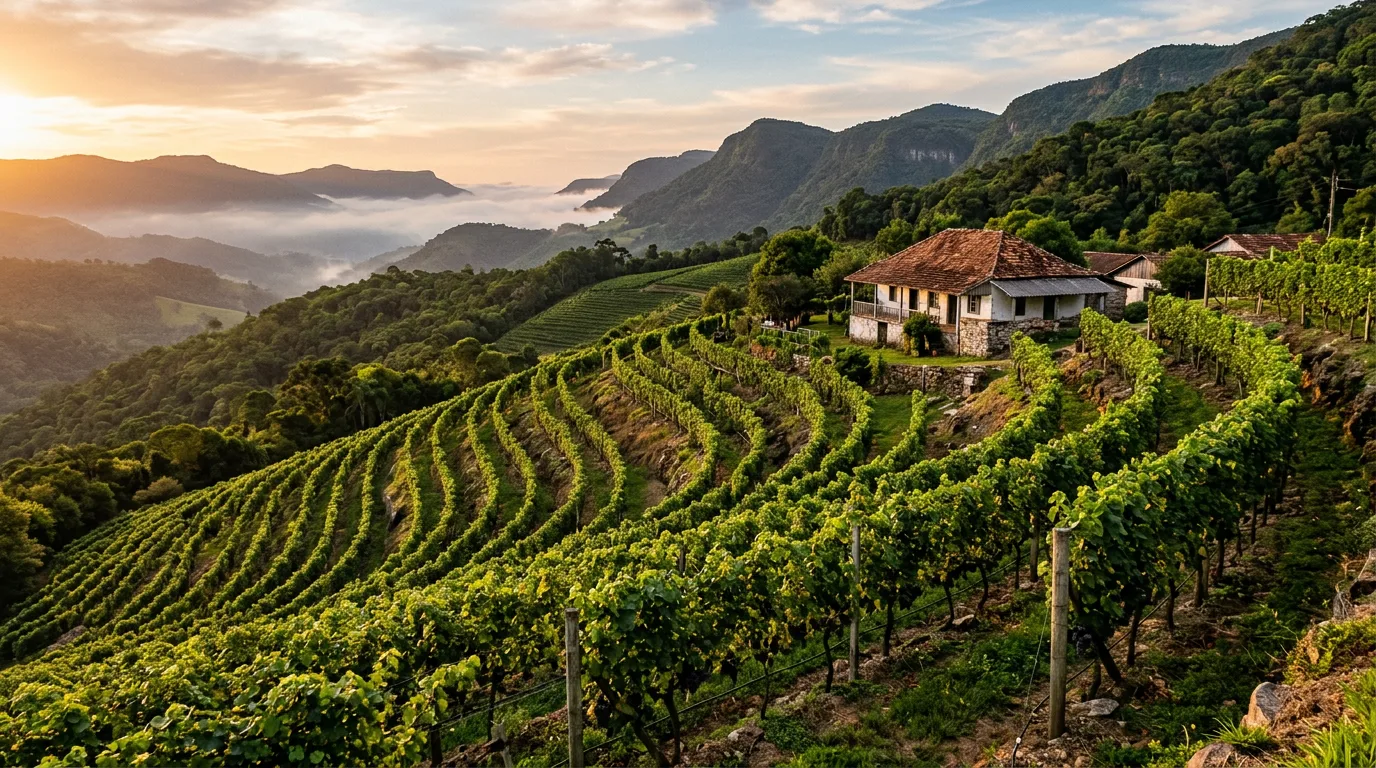
Because behind the label there is topography, slope, granite and a new generation of buildings climbing the mountain a few kilometers from our Zona da Mata. For those who read territory before drawing, "Serra do Rio" is a case study.
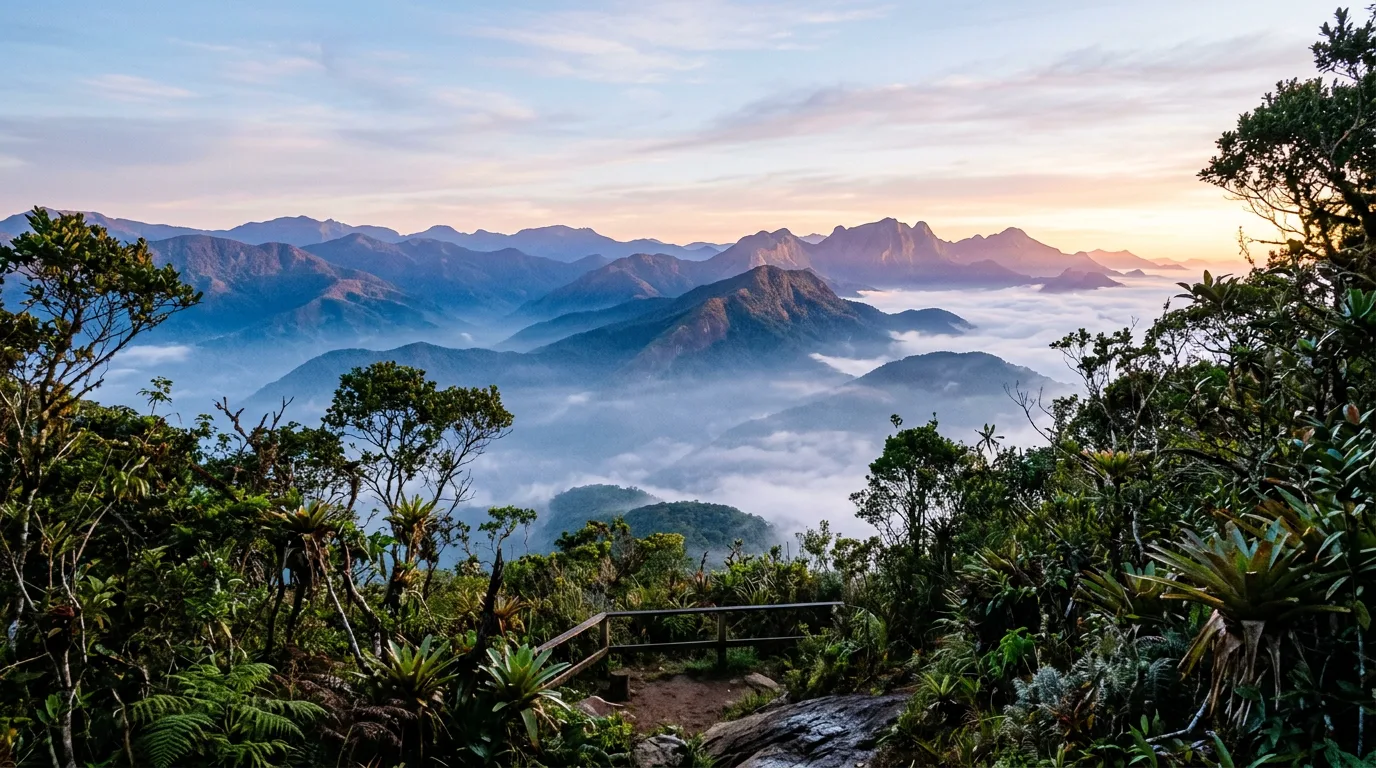
Where it is, and why proximity matters
The designation is anchored in the state of Rio de Janeiro. The law delimits the region covering at least 26 municipalities of the Região Serrana, among them Petrópolis, Teresópolis, Nova Friburgo, Areal, Três Rios, Paraíba do Sul and São José do Vale do Rio Preto. The most visited axis is Petrópolis and Areal, the latter locally recognized as the state's "grape capital".
The region's numbers have no official survey. According to a September 2025 report by the Diário do Rio de Janeiro, there would be about 30 ventures and a little over 85 hectares of vineyards. We did not locate any publication by AVIVA, Emater-Rio, Pesagro, the State Secretariat of Agriculture or IBGE confirming these figures.
| Indicator | Serra do Rio |
|---|---|
| Instrument | Designation of origin, Rio de Janeiro State Law No. 11.104/2026 |
| Delimitation | Serra Fluminense, at least 26 municipalities of the state of Rio |
| Ventures | About 30, according to a press report (no official data), gathered in the AVIVA association |
| Vineyards | More than 85 hectares, according to a press report (no official data) |
| Altitude | There is no official survey of the average altitude of the vine plots |
| Founding milestone | Inconfidência Winery, Paraíba do Sul, 2010 |
The detail that brings it close to us: this serra is the same one that descends to the border with Minas. On the other side, in the Zona da Mata of Minas, a similar movement has been growing since 2020 under another name, "Vinho da Mata". The technique is the same. The geography is neighboring. What changes is the administrative boundary.
Double pruning, or how grapes are harvested in winter
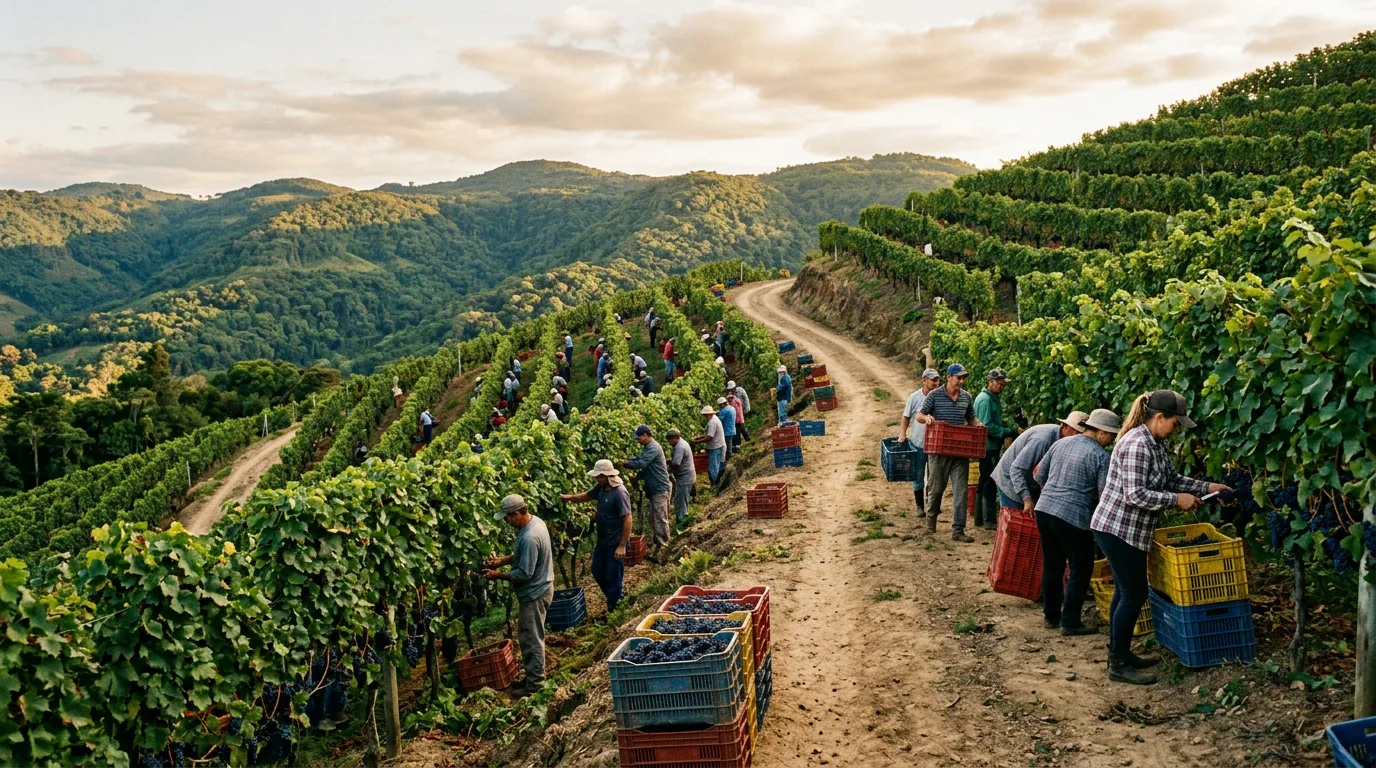
None of these wines would exist without a reversal of the calendar. The technique that sustains the movement is called dupla poda, double pruning, or inverted pruning: instead of one pruning per year, two are done, which shifts the grape's ripening and harvest to the dry winter. That is when it rains less and the difference in temperature between day and night is greater, a condition that gives the reds more structure, acidity and longevity.
The technique was adapted and validated by Epamig, the agricultural research agency of Minas Gerais, and is credited to the agronomist Murillo de Albuquerque Regina, trained in viticulture in Bordeaux. It calls for high-altitude regions, between 600 and 1,000 meters. Not by chance, the Serra Fluminense qualifies.
The result already shows in the awards. At the 2026 Decanter World Wine Awards, Brazil had its best performance in the history of the competition, with 221 medals, 78 of them for winter-harvest wines.
The winery as a slope project
Here the subject stops being enology and becomes our craft.
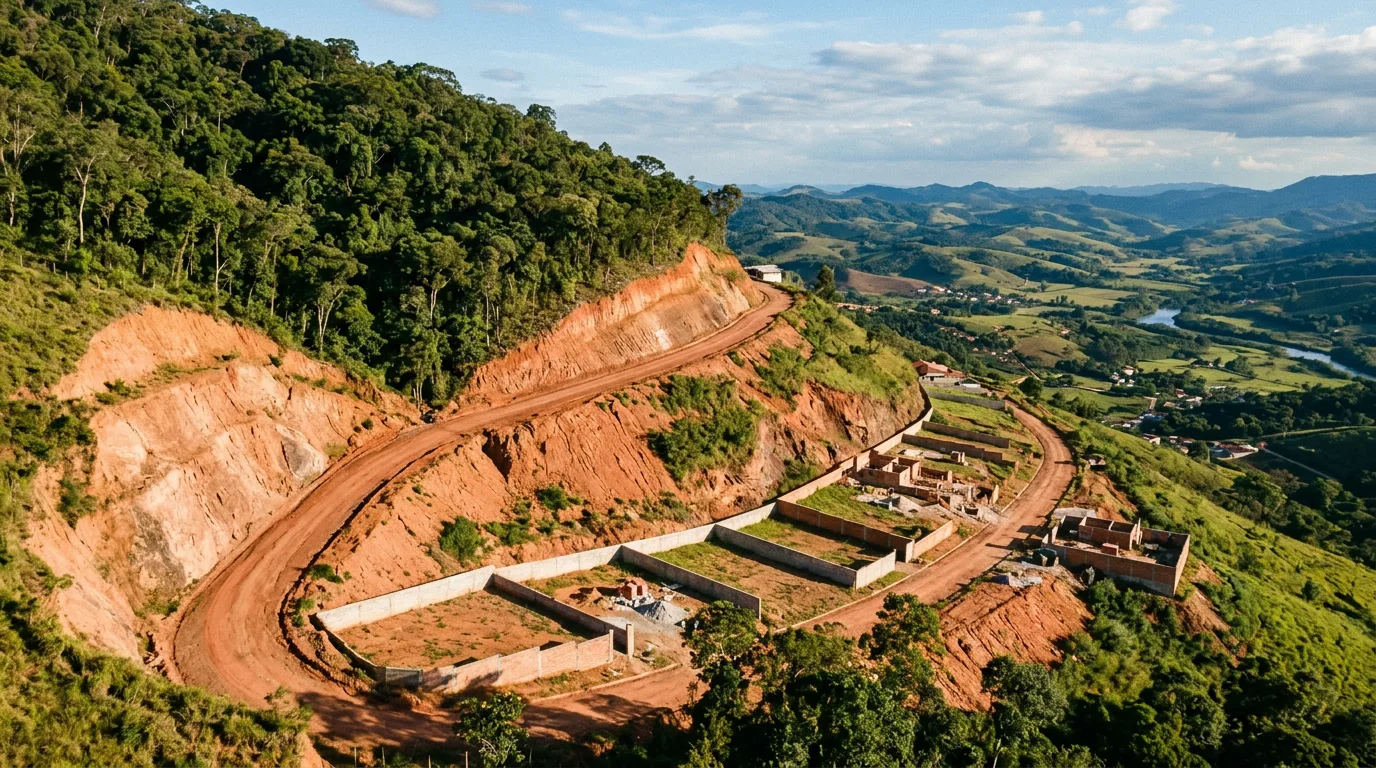
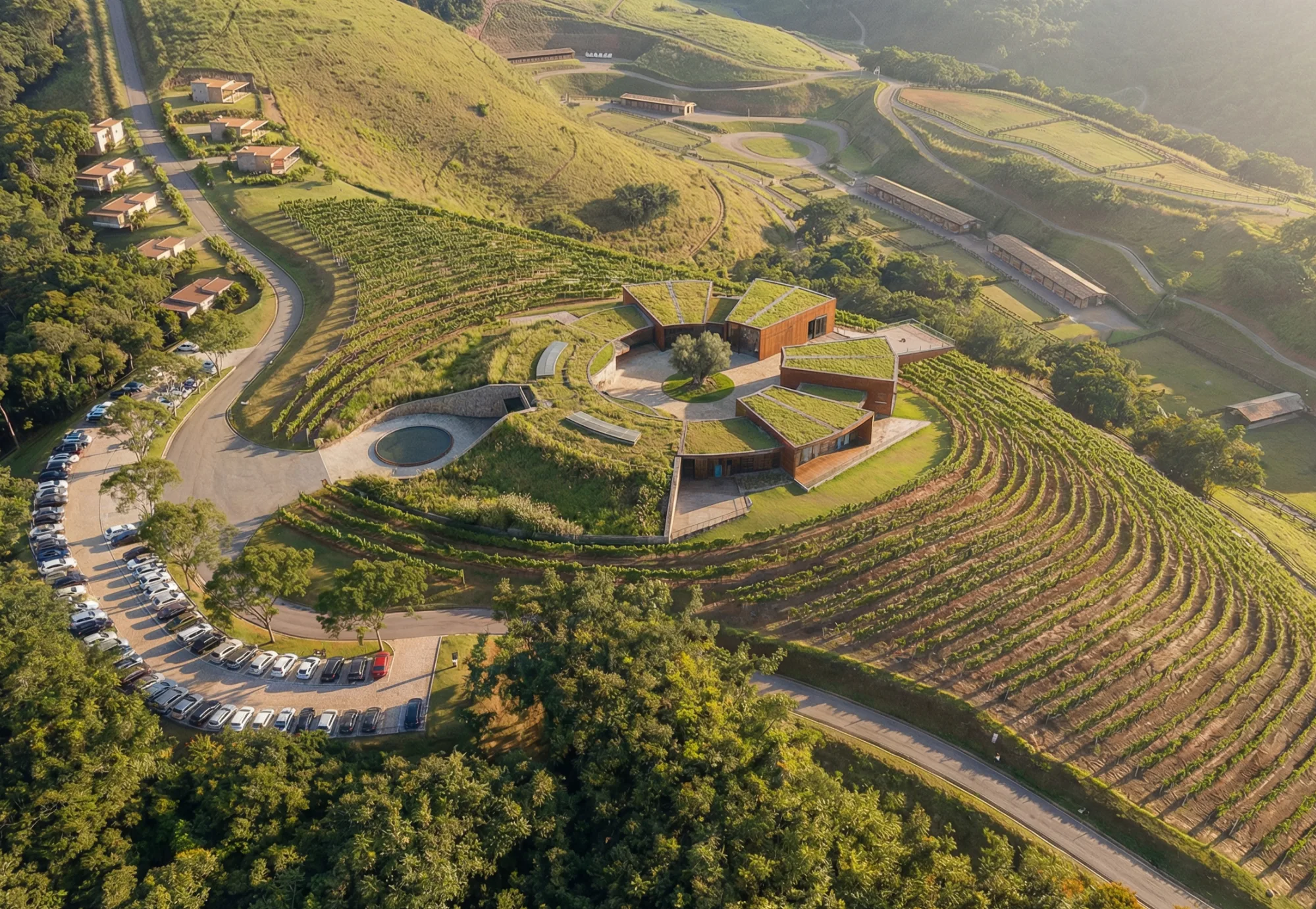
A high-altitude winery is not a shed with a vineyard next to it. It is a complete hospitality program, set on steep terrain and soil of granitic origin. A vineyard, yes, but also a restaurant, a wine cellar, a hotel and a lookout. Each of these uses demands siting, drainage, access and view resolved before any facade.
The Maturano Winery, opened to the public in Teresópolis at the end of 2025, is the most explicit example. Its design is organized into two pavilions drawn to follow the mountainous, granitic topography, integrating construction and landscape instead of flattening the terrain. CNN Brasil called it a "cinematic winery". Not by chance: its founder comes from decades in the real estate market and knows that physical experience sells as much as the wine.
Borgo Del Vino, in Areal, with vineyards split between Areal and Itaipava, operates as an entire complex: vineyard, hotel, restaurant, pizzeria and wine cellar at the same address. Tassinari, in São José do Vale do Rio Preto, makes the high-altitude view of the valley its main argument.
It is the same question we ask in any serra project, now applied to wine: to build on the slope, or to build with the slope?
A designation of origin protects a name. Architecture is what makes the visitor climb the serra again.
How a landscape is named
Naming a region is the first act of design for a territory. Before the January law, there was an earlier attempt: in September 2025, a bill proposed calling the area "Serra dos Vinhedos do Estado do Rio de Janeiro". "Serra do Rio" won, shorter, more of a brand.
One distinction is worth making, the kind enthusiasm tends to run over. What exists today is a designation of origin established by state law. It is not yet a Geographical Indication registered with the INPI, the federal instrument that gives stronger legal protection. The law itself provides for seeking that registration in the future, with the INPI and the Ministry of Agriculture. It is a collective brand under construction, not a consolidated seal.
The state, in any case, bought the narrative: in April 2026, it declared the "Serra do Rio, Região Serrana of Rio de Janeiro" the State Capital of Wine. Naming, here, is development policy.
Wine tourism calls for architecture
The wine has already proven it can. In 2026, the Syrah "Cinco" 2023, by Borgo Del Vino, became the first wine from the state of Rio to win a relevant international award, at a high-altitude wine competition in Vale d'Aosta, Italy. The product is ready.
What is missing is the other half: the built experience. An award-winning label does not make anyone drive two hours up the serra. The restaurant with a view, the walk through the cellar, the lookout in late afternoon. That is architecture, and it is what turns a good bottle into a destination.
Sebrae Rio has already read the movement and launched, in May 2025, the state's first structured winery route. The route exists. The designation exists. What is being drawn now, building by building, is the physical form of this economy. And it is born one serra away from Juiz de Fora.
What opens up from here
This overview opens three fronts that deserve their own text, and that will become the next articles on the Blog Arsenic:
- The winery as a slope project. The architectural reading of the wine building on steep terrain, from the siting concept to drainage.
- How a landscape is named. Designation of origin, Geographical Indication and the identity of a territory that decides how it wants to be called.
- Wine tourism calls for architecture. Why the project, and not just the label, decides whether the visitor returns.
Every Arsenic project begins with the same question, and it applies to a winery on the serra as well:
What does this place want to be?
It is not poetry.
It is the work.
Sources consulted
Consulted on July 8, 2026.
- Assembleia Legislativa do Rio de Janeiro (ALERJ). Official note on the Serra do Rio designation of origin, Law 11.104/2026.
- LegisWeb. Record of Law No. 11.104, of January 15, 2026 (Rio de Janeiro).
- Tribuna do Sertão, January 16, 2026. Wines produced in the state will carry the Serra do Rio seal.
- Diário do Rio. Wines of the Região Serrana now have the Serra do Rio designation of origin.
- Monitor Mercantil. Wines of the Região Serrana will have the Serra do Rio designation of origin (list of municipalities).
- Jornal da Região. Approval at ALERJ on December 18, 2025.
- Diário do Rio. Região Serrana of Rio gains the official title of State Capital of Wine (April 2026).
- Diário do Rio. A bill proposed the earlier name, Serra dos Vinhedos do Estado do Rio de Janeiro (September 2025).
- BarraUp. Borgo Del Vino, Syrah as identity and the award in Vale d'Aosta.
- CNN Brasil. Cinematic winery is born among the mountains and vineyards of RJ (Maturano, Teresópolis).
- Viagens e Andanças. Tassinari Winery, in São José do Vale do Rio Preto.
- Blog Judice Araújo. Wineries in the Serra do Rio: founding milestone (Inconfidência, 2010) and number of houses.
- Vinhos com Fernando Lima. Areal, the grape capital of Rio de Janeiro (AVIVA).
- Sebrae Rio. Rio de Janeiro gains its first structured winery route (May 2025).
- Agência Minas / Epamig. The dupla poda (double pruning) technique adapted by Epamig.
- Agência Minas / Epamig. Winter-harvest wines featured at the Decanter World Wine Awards 2026.
- Bloomberg Línea. The agronomist Murillo de Albuquerque Regina and the consolidation of the sector.
- Diário do Comércio. The Zona da Mata of Minas in the winemaking scene (Vinho da Mata).
Updated on July 16, 2026. Corrections: (1) the law delimits at least 26 municipalities, not about 27, under art. 3, §1; (2) the figures for planted area and number of ventures are now presented as attributed to the press, due to the absence of an official survey; (3) the claim about the altitude of the vine plots was removed, due to the absence of a primary source.