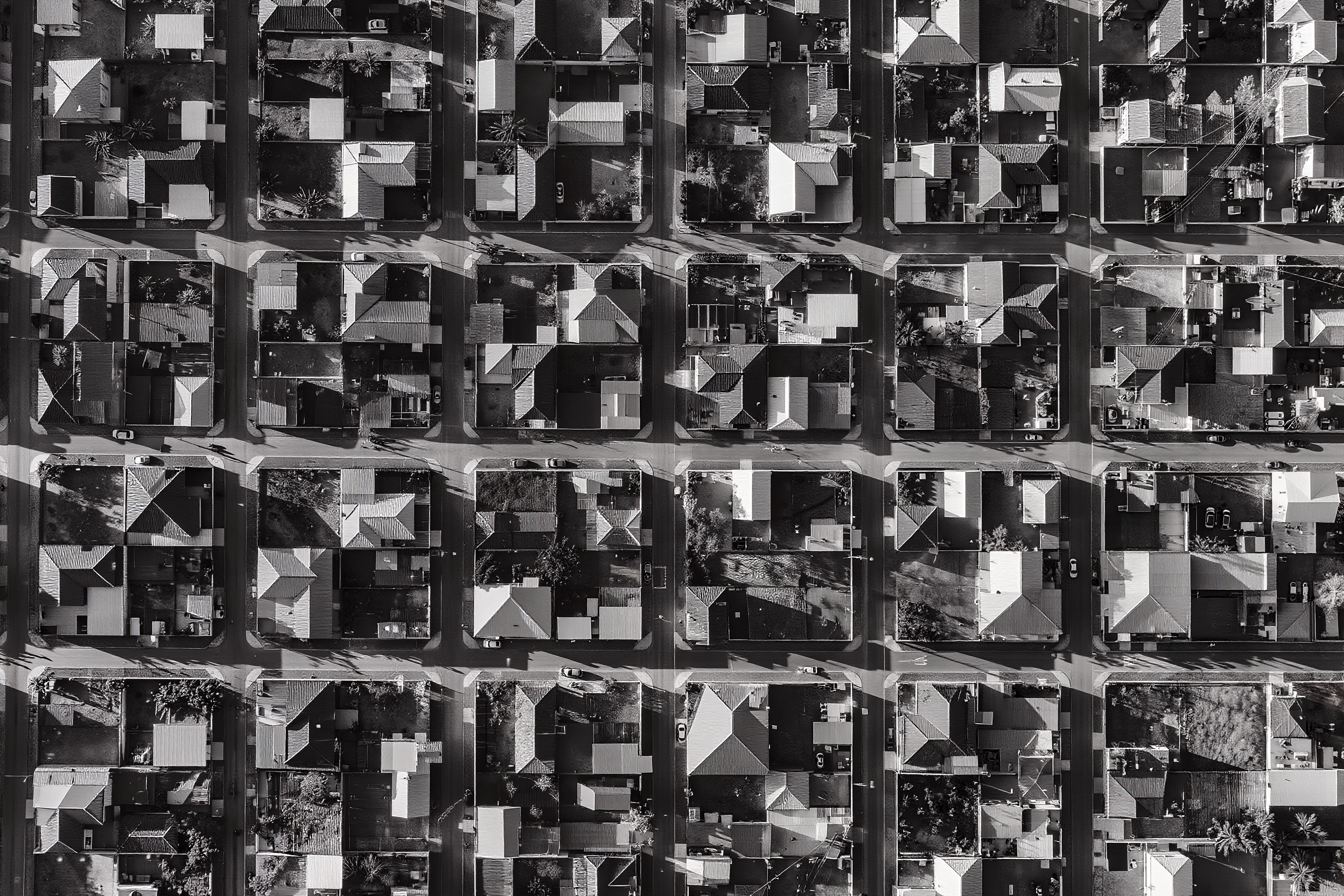
Full transcription of Title II of Law 13,465, of July 11, 2017, as published in consolidated form on the Planalto portal. Parenthetical notations indicate the statute that gave new wording, added or repealed each provision. Provisions with a gray strikethrough have been repealed or superseded by later wording.
Chapter I General Provisions
Art. 9º
The general rules and procedures applicable to Urban Land Regularization (Reurb) are hereby established in the national territory, covering legal, urban-planning, environmental and social measures aimed at incorporating informal urban settlements into the urban territorial ordering and at titling their occupants.
§ 1º The public authorities shall formulate and develop in urban space the policies within their competence in accordance with the principles of economic, social and environmental sustainability and territorial ordering, seeking the efficient occupation of land, combining its use in a functional manner.
§ 2º Reurb promoted by means of land legitimization may only be applied to informal urban settlements demonstrably existing, in the manner of this Law, by December 22, 2016.
Art. 10.
The objectives of Reurb, to be observed by the Federal Union, States, the Federal District and Municipalities, are:
I, to identify the informal urban settlements that should be regularized, organize them and ensure the provision of public services to their occupants, so as to improve the urban-planning and environmental conditions in relation to the previous informal occupation situation;
II, to create real estate units compatible with the urban territorial ordering and to constitute on them real rights in favor of their occupants;
III, to expand access to urbanized land for the low-income population, in such a way as to prioritize the permanence of the occupants in the regularized informal urban settlements themselves;
IV, to promote social integration and the generation of employment and income;
V, to encourage extrajudicial conflict resolution, in support of consensus and cooperation between the State and society;
VI, to guarantee the social right to dignified housing and to adequate living conditions;
VII, to guarantee the realization of the social function of property;
VIII, to order the full development of the social functions of the city and to ensure the well-being of its inhabitants;
IX, to give effect to the constitutional principle of efficiency in the occupation and use of land;
X, to prevent and discourage the formation of new informal urban settlements;
XI, to grant real rights, preferably in the name of women;
XII, to grant participation of interested parties in the stages of the land regularization process.
Art. 11.
For the purposes of this Law, the following are considered:
I, urban settlement: human settlement, with urban use and characteristics, composed of real estate units of an area smaller than the minimum subdivision fraction provided in Law 5,868, of December 12, 1972, regardless of the ownership of the land, even if located in an area qualified or registered as rural;
II, informal urban settlement: a clandestine or irregular settlement, or one in which it has not been possible, in any way, to title its occupants, even when the legislation in force at the time of its implementation or regularization was observed;
III, consolidated informal urban settlement: one of difficult reversal, considering the time of occupation, the nature of the buildings, the location of the circulation routes and the presence of public equipment, among other circumstances to be assessed by the Municipality;
IV, urban demarcation: a procedure intended to identify the public and private properties covered by the informal urban settlement and to obtain the consent of the respective holders of rights registered on the title record of the occupied properties, culminating in an annotation on the title record of these properties of the feasibility of the land regularization, to be promoted at the discretion of the Municipality;
V, Land Regularization Certificate (CRF): a document issued by the Municipality at the end of the Reurb procedure, composed of the approved land regularization project, the commitment of execution and, in the case of land legitimization and possession legitimization, the list of occupants of the regularized informal urban settlement, their proper qualification and the real rights conferred upon them;
VI, possession legitimization: an act of the public power intended to confer title, by which the possession of the property that is the object of Reurb is recognized, convertible into acquisition of real right of property under the terms of this Law, with the identification of its occupants, the time of occupation and the nature of possession;
VII, land legitimization: a mechanism for recognizing the original acquisition of the real right of property over a real estate unit that is the object of Reurb;
VIII, occupant: one who maintains de facto power over a lot or ideal fraction of public or private lands in informal urban settlements.
§ 1º For purposes of Reurb, Municipalities may waive the requirements regarding the percentage and dimensions of areas designated for public use or the size of regularized lots, as well as other urban-planning and building parameters.
§ 2º Once the existence of an informal urban settlement located, totally or partially, in a permanent preservation area or in an area of a sustainable-use conservation unit or watershed protection area defined by the Federal Union, States or Municipalities is verified, Reurb shall also observe the provisions of arts. 64 and 65 of Law 12,651, of May 25, 2012, in which case the preparation of technical studies, within the scope of Reurb, that justify the environmental improvements in relation to the previous informal occupation situation becomes mandatory, including by means of environmental compensation, where applicable.
§ 3º If Reurb covers an area of a sustainable-use conservation unit that, under the terms of Law 9,985, of July 18, 2000, admits regularization, the consent of the unit's managing body shall also be required, provided that a technical study proves that these land regularization interventions imply the improvement of environmental conditions in relation to the previous informal occupation situation.
§ 4º In Reurb where occupation has occurred along the margins of artificial water reservoirs intended for power generation or public supply, the strip of the permanent preservation area shall consist of the distance between the normal maximum operating level and the maximum maximorum elevation.
§ 5º This Law does not apply to informal urban settlements located in areas indispensable to national security or of defense interest, as recognized in a decree of the federal Executive Branch.
§ 6º The provisions of this Law apply to properties located in rural areas, provided that the real estate unit has an area smaller than the minimum subdivision fraction provided in Law 5,868, of December 12, 1972.
Art. 12.
The municipal approval of Reurb corresponds to the urban-planning approval of the land regularization project and, when the Municipality has a qualified environmental body, to the environmental approval. (Wording given by Law 14,118, of 2021)
§ 1º A qualified environmental body is considered the municipal body that has on its staff or at its disposal professionals with technical attributions to analyze and approve the studies referred to in art. 11, regardless of the existence of an agreement with the States or the Federal Union.
§ 2º The studies referred to in art. 11 shall be prepared by a legally qualified professional, shall be compatible with the land regularization project and shall contain, as appropriate, the elements set forth in arts. 64 or 65 of Law 12,651, of May 25, 2012.
§ 3º The technical studies referred to in art. 11 apply only to those portions of the informal urban settlements located in permanent preservation areas, sustainable-use conservation units or watershed protection areas, and may be carried out in phases or stages, with the portion of the informal urban settlement not affected by these studies being permitted to have its project approved and registered separately.
§ 4º The environmental approval of Reurb provided in this article may be carried out by the States in the event that the Municipality does not have the technical capacity to approve the studies referred to in art. 11.
Art. 13.
Reurb comprises two modalities:
I, Reurb of Social Interest (Reurb-S), land regularization applicable to informal urban settlements occupied predominantly by low-income population, as so declared in an act of the municipal Executive Branch; and
II, Reurb of Specific Interest (Reurb-E), land regularization applicable to informal urban settlements occupied by population not qualified in the hypothesis of item I of this article.
§ 1º The following registry acts relating to Reurb-S shall be exempt from court costs and registry fees, among others:
I, the first registration of Reurb-S, which confers real rights on its beneficiaries;
II, the registration of the land legitimization;
III, the registration of the title of possession legitimization and its conversion into title of property;
IV, the registration of the CRF and of the land regularization project, with opening of a property title record for each regularized urban real estate unit;
V, the first annotation of residential construction, provided the limit of up to seventy square meters is respected;
VI, the acquisition of the first real right over a real estate unit derived from Reurb-S;
VII, the first registration of the real right of slab (laje) within the scope of Reurb-S; and
VIII, the provision of registration certificates for the acts provided in this article.
§ 2º The acts referred to in this article do not depend on proof of payment of taxes or tax penalties, with the registrar of real estate being forbidden from requiring such proof.
§ 3º The provisions of §§ 1º and 2º of this article also apply to Reurb-S whose object is housing complexes or social-interest condominiums built by the public power, directly or through the indirect public administration, that were already implemented on December 22, 2016.
§ 4º In Reurb, the Municipalities and the Federal District may permit mixed-use activities as a way of promoting social integration and the generation of employment and income in the regularized informal urban settlement.
§ 5º The classification of interest is intended exclusively for the identification of those responsible for the implementation or adaptation of the essential infrastructure works and for the recognition of the right to free notarial and registry costs and fees in favor of those to whom the ownership of the regularized real estate units is attributed.
§ 6º Registry offices that do not comply with the provisions of this article, that delay or do not effect the registration in accordance with the rules provided in this Law, by unjustified act, shall be subject to the sanctions provided in art. 44 of Law 11,977, of July 7, 2009, observing the provisions of §§ 3º-A and 3º-B of art. 30 of Law 6,015, of December 31, 1973.
§ 7º Upon the availability of equipment and infrastructure for the provision of public services of water supply, sewage collection, electricity distribution, or other public services, the beneficiaries of Reurb are required to connect the building to the water, sewage collection or electricity distribution network and to adopt the other measures necessary for the use of the service, unless otherwise provided in municipal legislation.
Art. 14.
The following may request Reurb:
I, the Federal Union, the States, the Federal District and the Municipalities, directly or through entities of the indirect public administration;
II, their beneficiaries, individually or collectively, directly or through housing cooperatives, residents' associations, foundations, social organizations, civil society organizations of public interest or other civil associations whose purpose is activities in the areas of urban development or urban land regularization;
III, the owners of properties or land, subdividers or developers;
IV, the Public Defender's Office, on behalf of disadvantaged beneficiaries; and
V, the Public Prosecutor's Office.
§ 1º The legitimated parties may promote all acts necessary for land regularization, including requesting registration acts.
§ 2º In cases of land subdivision, housing complex or informal condominium, undertaken by a private party, the conclusion of Reurb confers a right of recourse on those who bear its costs and obligations against those responsible for the implementation of the informal urban settlements.
§ 3º The request to initiate Reurb by owners of land, subdividers and developers who have caused the formation of informal urban settlements, or their successors, shall not exempt them from administrative, civil or criminal liability.
Chapter II On Reurb Instruments
Art. 15.
The following legal institutes may be used within the scope of Reurb, without prejudice to others that may be appropriate:
I, land legitimization and possession legitimization, under the terms of this Law;
II, adverse possession, under the terms of arts. 1,238 to 1,244 of Law 10,406, of January 10, 2002 (Civil Code), of arts. 9º to 14 of Law 10,257, of July 10, 2001, and of art. 216-A of Law 6,015, of December 31, 1973;
III, expropriation in favor of the possessors, under the terms of §§ 4º and 5º of art. 1,228 of Law 10,406, of January 10, 2002 (Civil Code);
IV, the appropriation of vacant property, under the terms of art. 1,276 of Law 10,406, of January 10, 2002 (Civil Code);
V, the real estate consortium, under the terms of art. 46 of Law 10,257, of July 10, 2001;
VI, expropriation for social interest, under the terms of item IV of art. 2º of Law 4,132, of September 10, 1962;
VII, the right of preemption, under the terms of item I of art. 26 of Law 10,257, of July 10, 2001;
VIII, the transferable development rights, under the terms of item III of art. 35 of Law 10,257, of July 10, 2001;
IX, requisition, in case of imminent public danger, under the terms of § 3º of art. 1,228 of Law 10,406, of January 10, 2002 (Civil Code);
X, intervention by the public power in clandestine or irregular subdivision, under the terms of art. 40 of Law 6,766, of December 19, 1979;
XI, the disposal of real estate by the public administration directly to its holder, under the terms of subitem f of item I of art. 17 of Law 8,666, of June 21, 1993;
XII, the special concession of use for housing purposes;
XIII, the concession of real right of use;
XIV, donation; and
XV, purchase and sale.
Art. 16.
In Reurb-E, promoted over public property, if there is a consensual solution, the acquisition of real rights by the private party shall be conditional on the payment of the fair value of the regularized real estate unit, to be determined as established in an act of the Executive Branch holding ownership, without considering the value of accessions and improvements made by the occupant and the appreciation resulting from the implementation of those accessions and improvements.
Sole paragraph. Areas owned by the public power, registered at the Real Estate Registry, that are the subject of judicial proceedings regarding their ownership may be the object of Reurb, provided a judicial or extrajudicial agreement is reached, in the manner of this Law, ratified by the judge.
Art. 17.
In Reurb-S promoted over public property, the registration of the land regularization project and the constitution of real rights in the name of the beneficiaries may be carried out in a single act, at the discretion of the public entity sponsoring it.
Sole paragraph. In the cases provided in the caput of this article, the instrument indicating the real right constituted, the list of occupants who will be beneficiaries of Reurb and their respective qualifications, with indication of the respective units, shall be forwarded to the registry, with the presentation of an individualized registry title and copies of the documentation concerning the qualification of each beneficiary being waived.
Art. 18.
The Municipality and the Federal District may establish Special Zones of Social Interest (ZEIS) as an urban-planning instrument, within the scope of the municipal territorial-ordering policy.
§ 1º For the purposes of this Law, ZEIS is considered the portion of urban area established by the Master Plan or defined by another municipal law, intended predominantly for the low-income population and subject to specific rules of subdivision, use and occupation of land.
§ 2º Reurb is not conditional on the existence of ZEIS.
Art. 19.
The public power may use the urban demarcation procedure, based on the survey of the situation of the area to be regularized and on the characterization of the informal urban settlement to be regularized.
§ 1º The urban demarcation record shall be accompanied by the following documents:
I, plan and descriptive memorial of the area to be regularized, containing its perimeter measurements, total area, abutters, georeferenced coordinates of the vertices defining its limits, numbers of the affected title records or transcriptions, indication of the identified owners and occurrence of situations of private domain with unidentified owners due to imprecise descriptions of prior registrations;
II, plan of overlay of the demarcated property with the situation of the area as recorded in the real estate registry.
§ 2º The urban demarcation record may cover part or all of one or more properties included in one or more of the following situations:
I, private domain with unidentified owners, due to imprecise descriptions of prior registrations;
II, private domain that is the subject of due registration in the competent real estate registry, even if of distinct owners; or
III, public domain.
§ 3º The procedures of urban demarcation do not constitute a condition for the processing and effectiveness of Reurb.
Art. 20.
The public power shall notify the holders of ownership and the abutters of the demarcated area, personally or by post, with acknowledgment of receipt, at the address shown on the title record or transcription, so that they may, if they so wish, submit an impugnment to the urban demarcation, within a common period of thirty days.
§ 1º Any holders of ownership or abutters who are not identified, not found or who refuse to accept the notification by post shall be notified by edict, so that they may, if they so wish, submit an impugnment to the urban demarcation, within a common period of thirty days.
§ 2º The edict referred to in § 1º of this article shall contain a summary of the urban demarcation record, with a description that allows the identification of the area to be demarcated and a simplified drawing of it.
§ 3º The absence of a response from those indicated in this article shall be interpreted as consent to the urban demarcation.
§ 4º If an impugnment is raised only with respect to a portion of the area subject to the urban demarcation record, the public power is allowed to proceed with the procedure with respect to the unimpugned portion.
§ 5º At the discretion of the municipal public power, the measures dealt with in this article may be carried out by the real estate registry of the location of the informal urban settlement to be regularized.
§ 6º The notification shall contain a warning that the absence of impugnment shall imply the loss of any right that the notified party may hold over the property that is the object of Reurb.
Art. 21.
If an impugnment is raised, an extrajudicial procedure of conflict resolution may be adopted.
§ 1º If there is a judicial dispute in which the impugning party is a party and that concerns real or possessory rights relating to the property covered by the urban demarcation, the party shall inform the public power, which shall communicate to the court the existence of the procedure dealt with in the caput of this article.
§ 2º To support the procedure dealt with in the caput of this article, a survey shall be made of any tax, environmental and administrative liabilities associated with the properties subject to impugnment, as well as of existing possessions, with a view to identifying cases of acquisitive prescription of property.
§ 3º Mediation shall observe the provisions of Law 13,140, of June 26, 2015, with the public power being permitted to promote the modification of the urban demarcation record or to adopt any other measure that may remove the opposition of the owner or abutters to the regularization of the occupied area.
§ 4º If no agreement is reached at the mediation stage, the use of arbitration is permitted.
Art. 22.
Once the deadline has elapsed without impugnment, or once the opposition to the procedure has been overcome, the urban demarcation record shall be forwarded to the real estate registry and annotated on the title records it reaches.
§ 1º The annotation shall inform:
I, the total area and the perimeter corresponding to the informal urban settlement to be regularized;
II, the title records reached by the urban demarcation record and, where possible, the area covered in each of them; and
III, the existence of areas whose origin has not been identified due to imprecisions of prior registrations.
§ 2º If the urban demarcation record covers properties not yet entered on a title record, prior to the annotation, a title record shall be opened, which shall reflect the situation of the registered property, with the rectification of the descriptive memorial and the calculation of the remaining area being waived.
§ 3º In cases of prior registration carried out in another jurisdiction, for the opening of the title record dealt with in § 2º of this article, the officer shall request, on his own initiative, updated certificates from that registry.
§ 4º If the urban demarcation covers properties located in more than one real estate jurisdiction, the registry officer responsible for the procedure shall communicate with the other real estate jurisdictions involved for annotation of the urban demarcation on the respective affected title records.
§ 5º The urban demarcation shall be annotated even if the area covered by the urban demarcation record exceeds the area available in prior registrations.
§ 6º For the annotation of the urban demarcation, no rectification shall be required of the area not covered by the urban demarcation record, with the calculation of the remainder remaining the responsibility of the owner of the affected property.
Art. 23.
Land legitimization constitutes an original form of acquisition of the real right of property conferred by an act of the public power, exclusively within the scope of Reurb, on the person who holds in a public area or possesses in a private area, as his own, a real estate unit with urban use, forming part of a consolidated informal urban settlement existing on December 22, 2016.
§ 1º Only in Reurb-S, land legitimization shall be granted to the beneficiary, provided the following conditions are met:
I, the beneficiary is not a concessionaire, leaseholder or owner of an urban or rural property;
I, the beneficiary is not a concessionaire, leaseholder or exclusive owner of an urban or rural property; (Wording given by Law 14,118, of 2021)
II, the beneficiary has not been awarded possession or land legitimization of an urban property for the same purpose, even if located in a different urban settlement; and
III, in the case of an urban property for non-residential purposes, the public interest in its occupation is recognized by the public power.
§ 2º Through land legitimization, in any of the modalities of Reurb, the occupant acquires the real estate unit with urban use, free and clear of any burdens, real rights, encumbrances or registrations that may exist in its original title record, except when they concern the legitimized person himself.
§ 3º The registrations, unavailabilities or encumbrances existing in the registration of the larger original area shall be transferred to the title records of the real estate units that have not been acquired by land legitimization.
§ 4º In Reurb-S of public properties, the Federal Union, the States, the Federal District and the Municipalities, and their related entities, when holders of ownership, are authorized to recognize the right of property of the occupants of the regularized informal urban settlement by means of land legitimization.
§ 5º In the cases provided in this article, the public power shall forward the CRF for immediate registration of the acquisition of property, with the presentation of an individualized title and copies of the documentation concerning the qualification of the beneficiary, the approved land regularization project, the list of occupants and their proper qualification and the identification of the areas they occupy being waived.
§ 6º The public power may attribute ownership acquired by land legitimization to occupants who have not been included in the initial list, by means of a complementary registration, without prejudice to the rights of those included in the initial list.
Art. 24.
In the cases of urban land regularization provided for in Law 11,952, of June 25, 2009, the Municipalities may use land legitimization and other instruments provided in this Law to confer ownership on the occupants.
Art. 25.
Possession legitimization, an instrument for exclusive use for land regularization purposes, constitutes an act of the public power intended to confer title, by which possession of the property that is the object of Reurb is recognized, with the identification of its occupants, the time of occupation and the nature of the possession, which is convertible into a real right of property, under the terms of this Law.
§ 1º Possession legitimization may be transferred by causa mortis or by inter vivos act.
§ 2º Possession legitimization does not apply to urban properties located in areas owned by the public power.
Art. 26.
Without prejudice to the rights arising from the exercise of peaceful and undisturbed possession over time, the holder of a title of possession legitimization, after the period of five years from its registration, shall have it automatically converted into a title of property, provided the terms and conditions of art. 183 of the Federal Constitution are met, regardless of prior application or registration act.
§ 1º In cases not covered by art. 183 of the Federal Constitution, the title of possession legitimization may be converted into a title of property, provided the requirements of adverse possession established in the legislation in force are met, at the request of the interested party, before the competent real estate registry.
§ 2º Possession legitimization, once converted into property, constitutes an original form of acquisition of real right, so that the real estate unit with urban use regularized shall be free and clear of any burdens, real rights, encumbrances or registrations that may exist in its original title record, except when they concern the beneficiary himself.
Art. 27.
The title of possession legitimization may be canceled by the issuing public power when it is found that the conditions stipulated in this Law have ceased to be met, with no indemnity being due to the party who irregularly benefited from the instrument.
Chapter III On the Administrative Procedure
Art. 28.
Reurb shall comply with the following phases:
I, request of the legitimated parties;
II, administrative processing of the request, in which a period shall be granted for the response of holders of real rights over the property and of abutters;
III, preparation of the land regularization project;
IV, remediation of the administrative process;
V, decision of the competent authority, by formal act, to be publicized;
VI, issuance of the CRF by the Municipality; and
VII, registration of the CRF and of the approved land regularization project before the officer of the real estate registry where the regularized urban-use real estate unit is located.
Sole paragraph. The non-existence of a specific municipal law dealing with measures or local-interest postures applicable to urban land regularization projects shall not impede Reurb, in the manner established in this Law.
Art. 29.
In order to foster the effective implementation of Reurb measures, federated entities may enter into agreements or other similar instruments with the Ministry of Cities, with a view to cooperating for the faithful execution of the provisions of this Law.
Art. 30.
It is incumbent upon the Municipalities in which the informal urban settlements to be regularized are located to:
I, classify, case by case, the modalities of Reurb;
II, process, analyze and approve the land regularization projects; and
III, issue the CRF.
§ 1º In Reurb requested by the Federal Union or by the States, the classification provided in item I of the caput of this article shall be the responsibility of the initiating federated entity.
§ 2º The Municipality shall classify and set, within a period of up to one hundred and eighty days, one of the modalities of Reurb or reject the request, with reasons.
§ 3º The inaction of the Municipality implies the automatic setting of the modality of classification of Reurb indicated by the legitimated party in its request, as well as the continuation of the administrative procedure of Reurb, without prejudice to a future review of that classification by the Municipality, by means of a technical study justifying it.
§ 4º For the lands of their property, the bodies of direct administration and the entities of indirect administration of the Federal Union, States, Federal District and Municipalities are authorized to initiate, process and approve Reurb-S or Reurb-E and to use the other instruments provided in this Law. (Added by Law 14,620, of 2023)
Art. 31.
Once Reurb is initiated, the Municipality shall proceed with the necessary searches to determine the title of ownership of the properties where the informal urban settlement to be regularized is located.
§ 1º In the case of public or private properties, it shall be the responsibility of the Municipalities to notify the holders of ownership, those responsible for the implementation of the informal urban settlement, the abutters and any interested third parties so that, if they wish, they may submit an impugnment within the period of thirty days, counted from the date of receipt of the notification.
§ 2º In the case of municipal public properties, the Municipality shall notify the abutters and any interested third parties so that, if they wish, they may submit an impugnment within the period of thirty days, counted from the date of receipt of the notification.
§ 3º If an impugnment is submitted, the extrajudicial procedure of conflict resolution provided in this Law shall be initiated.
§ 4º The notification of the owner and the abutters shall be made by post, with acknowledgment of receipt, at the address shown on the title record or transcription, and shall be considered effected when delivery at that address is proven.
§ 5º Notification of Reurb shall also be made through publication of an edict, with a period of thirty days, which shall contain, in summary form, the description of the area to be regularized, in the following cases:
I, when the owner and the abutters are not found; and
II, when there is refusal of the notification for any reason.
§ 6º The absence of a response from those referred to in §§ 1º and 4º of this article shall be interpreted as consent to Reurb.
§ 7º If any of the affected or abutting properties is not entered on a title record or transcription at the registry, the Federal District or the Municipalities shall make inquiries at the previously competent registries, by presenting the plan of the regularized perimeter, so that their current legal situation may be certified, if possible.
§ 8º The request for initiation of Reurb or, in the form of regulation, the expression of interest in this direction by any of the legitimated parties, shall guarantee before the public power, for the occupants of the informal urban settlements located in public areas to be regularized, permanence in their respective real estate units, preserving the existing factual situations until the eventual definitive archiving of the procedure.
§ 9º The provisions of this article are waived if the procedures of urban demarcation are adopted.
Art. 32.
Reurb shall be initiated by decision of the Municipality, by means of a request, in writing, from one of the legitimated parties dealt with in this Law.
Sole paragraph. If the request to initiate Reurb is rejected, the decision of the Municipality shall indicate the measures to be adopted with a view to reformulating and reassessing the request, where appropriate.
Art. 33.
Once Reurb is initiated, it is incumbent upon the Municipality to approve the land regularization project, which shall set forth the responsibilities of the parties involved.
Sole paragraph. The preparation and funding of the land regularization project and the implementation of the essential infrastructure shall comply with the following procedures: (Repealed by Provisional Measure 996, of 2020)
I, in Reurb-S: (Repealed by Provisional Measure 996, of 2020)
a) operating on an area owned by a public entity, the responsibility for preparing the land regularization project, under the terms of the agreement to be entered into, and for implementing the essential infrastructure, when necessary, shall rest with the said public entity or the sponsoring Municipality or the Federal District; and (Repealed by Provisional Measure 996, of 2020) (Repealed by Law 14,118, of 2021)
b) operating on an area owned by a private party, the responsibility for preparing and funding the land regularization project and for implementing the essential infrastructure, when necessary, shall rest with the Municipality or the Federal District; (Repealed by Provisional Measure 996, of 2020) (Repealed by Law 14,118, of 2021)
II, in Reurb-E, the land regularization shall be contracted and funded by its potential beneficiaries or private applicants; and (Repealed by Provisional Measure 996, of 2020)
III, in Reurb-E over public areas, if there is public interest, the Municipality may proceed with the preparation and funding of the land regularization project and of the implementation of the essential infrastructure, with later charging to its beneficiaries. (Repealed by Provisional Measure 996, of 2020)
§ 1º The preparation and funding of the land regularization project and the implementation of the essential infrastructure shall comply with the following procedures: (Added by Provisional Measure 996, of 2020)
I, in Reurb-S, the responsibility for preparing and funding the land regularization project and for implementing the essential infrastructure, when necessary, shall rest with the Municipality or the Federal District; (Added by Provisional Measure 996, of 2020)
II, in Reurb-E, the land regularization shall be contracted and funded by its potential beneficiaries or private applicants; and (Added by Provisional Measure 996, of 2020)
III, in Reurb-E over public areas, if there is public interest, the Municipality may proceed with the preparation and funding of the land regularization project and of the implementation of the essential infrastructure, with later charging to its beneficiaries. (Added by Provisional Measure 996, of 2020)
§ 1º The preparation and funding of the land regularization project and the implementation of the essential infrastructure shall comply with the following procedures: (Added by Law 14,118, of 2021)
I, in Reurb-S, the responsibility for preparing and funding the land regularization project and for implementing the essential infrastructure, when necessary, shall rest with the Municipality or the Federal District; (Wording given by Law 14,118, of 2021)
a) (repealed); (Wording given by Law 14,118, of 2021)
b) (repealed); (Wording given by Law 14,118, of 2021)
II, in Reurb-E, the land regularization shall be contracted and funded by its potential beneficiaries or private applicants; and
III, in Reurb-E over public areas, if there is public interest, the Municipality may proceed with the preparation and funding of the land regularization project and of the implementation of the essential infrastructure, with later charging to its beneficiaries.
§ 2º In Reurb-S, the legitimated parties are allowed to promote, at their expense, the projects and other technical documents necessary for the regularization of their property. (Added by Provisional Measure 996, of 2020)
§ 2º In Reurb-S, the legitimated parties are allowed to promote, at their expense, the projects and other technical documents necessary for the regularization of their property, including the essential infrastructure works under the terms of § 1º of art. 36 of this Law. (Added by Law 14,118, of 2021)
Art. 34.
Municipalities may create chambers for the prevention and administrative resolution of conflicts, within the scope of the local administration, including by entering into agreements with the State Courts of Justice, which shall have competence to settle conflicts relating to Reurb, by consensual solution.
§ 1º The composition and operation of the chambers dealt with in the caput of this article shall be established by an act of the municipal Executive Branch and, in the absence of the act, by the provisions of Law 13,140, of June 26, 2015.
§ 2º If consensus is reached between the parties, the agreement shall be reduced to writing and shall constitute a condition for the conclusion of Reurb, with the consequent issuance of the CRF.
§ 3º The Municipalities may initiate, on their own initiative or upon provocation, collective mediation procedures of conflicts relating to Reurb.
§ 4º The initiation of administrative proceedings for the consensual resolution of conflicts within the scope of Reurb suspends prescription.
§ 5º The Municipalities and the Federal District may, by entering into an agreement, use the Judicial Centers for Conflict Resolution and Citizenship or the mediation chambers accredited with the Courts of Justice.
Art. 35.
The land regularization project shall contain, at a minimum:
I, planialtimetric and cadastral survey, with georeferencing, signed by a competent professional, accompanied by a Technical Responsibility Annotation (ART) or Technical Responsibility Registration (RRT), which shall demonstrate the units, the buildings, the road system, the public areas, the geographical features and the other elements characterizing the settlement to be regularized;
II, plan of the perimeter of the informal urban settlement with demonstration of the affected title records or transcriptions, when possible;
III, preliminary study of the non-conformities and of the legal, urban-planning and environmental situation;
IV, urban-planning project;
V, descriptive memorials;
VI, proposal of solutions for environmental, urban-planning and resettlement issues for the occupants, where appropriate;
VII, technical study for risk situations, where appropriate;
VIII, technical environmental study, for the purposes provided in this Law, where appropriate;
IX, physical schedule of services and implementation of essential infrastructure works, urban-planning, environmental and other compensations, where applicable, defined upon approval of the land regularization project; and
X, commitment to be signed by those responsible, public or private, for compliance with the physical schedule defined in item IX of this article.
Sole paragraph. The land regularization project shall consider the characteristics of the occupation and of the occupied area to define specific urban-planning and environmental parameters, in addition to identifying the lots, the circulation routes and the areas designated for public use, where appropriate.
Art. 36.
The urban-planning project of land regularization shall contain, at a minimum, indication:
I, of the occupied areas, of the road system and of the real estate units, existing or projected;
II, of the real estate units to be regularized, their characteristics, area, abutters, location, street name and number of their cadastral designation, if any;
III, where applicable, of the blocks and their subdivisions into lots or the ideal fractions tied to the regularized unit;
IV, of the streets, open spaces, areas designated for public buildings and other urban equipment, where applicable;
V, of any areas already acquired by adverse possession;
VI, of the adaptation measures for correcting non-conformities, where necessary;
VII, of the adaptation measures for mobility, accessibility, infrastructure and relocation of buildings, where necessary;
VIII, of the essential infrastructure works, where necessary;
IX, of other requirements that may be defined by the Municipality.
§ 1º For the purposes of this Law, essential infrastructure is considered the following equipment:
I, potable water supply system, collective or individual;
II, sewage collection and treatment system, collective or individual;
III, household electricity network;
IV, drainage solutions, where necessary; and
V, other equipment to be defined by the Municipalities according to local needs and regional characteristics.
§ 2º Reurb may be implemented in stages, covering the informal urban settlement in whole or in part.
§ 3º The works for the implementation of essential infrastructure, community equipment and housing improvements, as well as their maintenance, may be carried out before, during or after the conclusion of Reurb.
§ 4º The Municipality shall define the requirements for the preparation of the regularization project, with regard to the drawings, the descriptive memorial and the physical schedule of works and services to be carried out, where appropriate.
§ 5º The plan and the descriptive memorial shall be signed by a legally qualified professional, with the presentation of a Technical Responsibility Annotation (ART) at the Regional Council of Engineering and Agronomy (Crea) or of a Technical Responsibility Registration (RRT) at the Council of Architecture and Urbanism (CAU) being waived when the technical officer is a public servant or employee.
§ 6º If the public power uses technical pieces and land regularization projects prepared by private companies and individuals in general, the consent of the authors or of those holding the copyright shall be required for the issuance of the Land Regularization Certificate (CRF). (Added by Law 14,620, of 2023)
§ 7º The unoccupied and uncommercialized units of the original holder of ownership of the area covered by Reurb, in the manner of item I of the caput of this article, may be pledged or annotated in fiduciary disposition and put forward as a guarantee for the essential infrastructure works, with the public power being recorded as beneficiary of the guarantee established. (Added by Law 14,620, of 2023)
Art. 37.
In Reurb-S, it shall be incumbent upon the competent public power, directly or through the indirect public administration, to implement the essential infrastructure, the community equipment and the housing improvements provided for in the regularization projects, as well as to bear the costs of their maintenance, with public and private financial resources being permitted. (Wording given by Law 14,620, of 2023)
§ 1º The projects and works of essential infrastructure in Reurb-S or Reurb-E, including access routes, public lighting, sewage and stormwater drainage solutions, household connections of water supply and electricity, and amounts spent on indemnities to the former owners, may be financed with resources from the Brazilian Savings and Loan System (SBPE), the Severance Guarantee Fund (FGTS), the Residential Leasing Fund (FAR) and the Social Development Fund (FDS), as well as from other public, private or international financing sources. (Added by Law 14,620, of 2023)
§ 2º Provided that the full restitution of the amounts made available is foreseen, the federal, state and municipal bodies, including mixed-capital companies, that operate in the execution of housing and connected infrastructure policy are authorized to carry out the financial operations for the infrastructure works referred to in § 1º. (Added by Law 14,620, of 2023)
§ 3º The guarantees for the financial operations for the essential infrastructure and improvement works for Reurb are those provided in art. 17 of Law 9,514, of November 20, 1997, and shall be included in the Land Regularization Certificate (CRF). (Added by Law 14,620, of 2023)
§ 4º The calculation of the amounts due by the beneficiaries of Reurb may be carried out adopting as a criterion the areas of the regularized properties, considered individually. (Added by Law 14,620, of 2023)
Art. 37-A.
The transfer of the right to build corresponding to the building potential that may be used in another location, provided in art. 35 of Law 10,257, of July 10, 2001 (City Statute), is authorized for the purpose of making feasible the preparation of projects, the indemnification and the carrying out of infrastructure works in Reurb-S projects. (Added by Law 14,620, of 2023)
Sole paragraph. The municipalities may receive properties for the fulfillment of the purposes provided in this article, offering as a counterpart to the owner the possibility of transferring the building potential of the donated or amicably expropriated property. (Added by Law 14,620, of 2023)
Art. 38.
In Reurb-E, the Federal District or the Municipalities shall define, upon approval of the land regularization projects, within the limits of the governing legislation, those responsible for:
I, implementation of the road systems;
II, implementation of essential infrastructure and public or community equipment, where appropriate; and
III, implementation of the urban-planning and environmental mitigation and compensation measures, and of the technical studies, where appropriate.
§ 1º The responsibilities dealt with in the caput of this article may be assigned to the beneficiaries of Reurb-E.
§ 2º Those responsible for adopting urban-planning and environmental mitigation and compensation measures shall enter into a commitment with the competent authorities as a condition of approval of Reurb-E.
Art. 39.
For Reurb of informal urban settlements, or of portions thereof, located in areas of geotechnical risk, flood risk or other risks specified in law to be approved, technical studies shall be carried out in order to examine the possibility of eliminating, correcting or managing risks in the portion affected by them.
§ 1º In the hypothesis of the caput of this article, the implementation of the measures indicated in the technical studies carried out is an indispensable condition for the approval of Reurb.
§ 2º In Reurb-S involving risk areas that do not permit elimination, correction or management, the Municipalities shall proceed with the relocation of the occupants of the informal urban settlement to be regularized.
Art. 40.
The pronouncement of the competent authority that decides on the administrative processing of Reurb shall:
I, indicate the interventions to be carried out, where appropriate, in accordance with the approved land regularization project;
II, approve the land regularization project resulting from the land regularization process; and
III, identify and declare the occupants of each real estate unit with urban use regularized, and the respective real rights.
Art. 41.
The Land Regularization Certificate (CRF) is the administrative act of approval of the regularization, which shall accompany the approved project and shall contain, at a minimum:
I, the name of the regularized urban settlement;
II, the location;
III, the modality of the regularization;
IV, the responsibilities of the works and services included in the schedule;
V, the numerical indication of each regularized unit, where applicable;
VI, the list with the names of the occupants who have acquired the respective unit, by title of land legitimization or by single act of registration, as well as their civil status, profession, taxpayer registration number with the Ministry of Finance and identity card general registration number, and parentage.
Chapter IV On the Registration of Land Regularization
Art. 42.
The registration of the CRF and of the approved land regularization project shall be requested directly from the officer of the real estate registry of the property's location and shall be effected regardless of a judicial determination or determination of the Public Prosecutor's Office.
Sole paragraph. In case of refusal of the registration, the officer of the real estate registry shall issue a reasoned return note, indicating the reasons for the refusal and formulating requirements under the terms of this Law.
Art. 43.
If Reurb covers properties located in more than one real estate jurisdiction, the procedure shall be carried out before each of the real estate registry officers.
Sole paragraph. When the regularized properties are located at the boundary of the real estate jurisdictions, the new title records of the real estate units shall be the competence of the officer of the real estate registry in whose jurisdiction the larger portion of the regularized real estate unit is located.
Art. 44.
Upon receipt of the CRF, it shall be incumbent upon the officer of the real estate registry to enter it in the pre-registration record, to draw it up, to initiate the registration procedure and, within fifteen days, to issue the respective notice of requirements or to perform the acts leading to the registration.
§ 1º The registration of the approved Reurb project entails:
I, opening of a new title record, where applicable;
II, opening of individualized title records for the lots and public areas resulting from the approved regularization project; and
III, registration of the real rights indicated in the CRF in the title records of the respective lots, with the presentation of an individualized title being waived.
§ 2º When the regularized urban settlement covers more than one title record, the officer of the real estate registry shall open a new title record for the area subject to regularization, as provided in item I of § 1º of this article, separating off the area covered in the original title record, with the calculation of remainders being waived.
§ 3º The registration of the CRF waives proof of payment of taxes or tax penalties of the responsibility of the legitimated parties.
§ 4º The registration of the approved CRF is independent of the prior annotation of the cancellation of the rural property registration at the National Institute of Colonization and Agrarian Reform (Incra).
§ 5º The registration procedure shall be concluded within sixty days, extendable by an equal period, upon reasoned justification of the officer of the real estate registry.
§ 6º The registration officer is waived from notifying the holders of ownership, abutters and any interested third parties, once that procedure has been carried out by the Municipality, as provided in art. 31 of this Law.
§ 7º The officer of the real estate registry, after registering the CRF, shall notify Incra, the Ministry of the Environment and the Brazilian Federal Revenue Service so that these bodies cancel, partially or totally, the respective records existing in the Rural Environmental Registry (CAR) and in other registries related to rural property, with respect to the regularized real estate units.
§ 8º The officer of the real estate registry, when opening the individual title records resulting from the land regularization project, shall, in the title records of real estate units whose occupant is not informed in the list of CRF beneficiaries, record the original holder of the title record as previous owner, not inserting the same owner as current holder of the title record opened, but only inserting, in the field relating to the current owner, text informing that the future owner will be duly named in the title record when complementary lists of beneficiaries are submitted. (Added by Law 14,620, of 2023)
Art. 45.
When the property is subject to a general condominium regime to be divided into lots with indication, on the title record, of the area allocated to each condominium owner, the Municipality may indicate, in an individual or collective manner, the real estate units corresponding to the registered ideal fractions, under its exclusive responsibility, for the specification of the areas registered in common.
Sole paragraph. If the information provided in the caput of this article is not included in the land regularization project approved by the Municipality, the new title records of the real estate units shall be opened upon request for specification submitted by the legitimated parties dealt with in this Law, with the granting of a public deed for indication of the block and lot being waived.
Art. 46.
For compliance with the principle of specificity, the officer of the real estate registry shall adopt the descriptive memorial of the tract submitted with the land regularization project and shall annotate it on the existing title record, prior to the registration of the project, regardless of provocation, rectification, notification, unification or calculation of availability or remainder.
§ 1º If there is doubt as to the extent of the registered tract, due to the precarious nature of the table description, the officer of the real estate registry shall open a new title record for the area separated off and shall annotate said separation on the master title record.
§ 2º The notifications shall be issued in a simplified manner, indicating the identification data of the urban settlement to be regularized, without the attachment of plans, projects, memorials or other documents, inviting the notified party to appear at the registry to take cognizance of the CRF, with the warning that non-appearance and non-submission of impugnment within the legal period shall imply consent to the registration.
§ 3º If the land regularization project does not cover the entirety of the registered property, the registration shall be made based on the plan and descriptive memorial referring to the area subject to regularization, and the separation on the title record of the total area shall be annotated.
Art. 47.
The standards of the descriptive memorials, plans and other graphic representations, including the scales adopted and other technical details, shall follow the guidelines established by the competent municipal or district authority, which shall be considered met upon issuance of the CRF.
Sole paragraph. Notarization of signatures shall not be required in the documents that comprise the CRF or the individual term of land legitimization when submitted by the Federal Union, States, Federal District, Municipalities or entities of the indirect administration.
Art. 48.
The registration of the CRF shall produce the effect of instituting and specifying a condominium, where applicable, governed by the specific legal provisions, in which case the condominium owners are permitted to approve a condominium agreement.
Art. 49.
The registration of the CRF shall be made on all title records affected by the approved land regularization project, and the parcels corresponding to each title record shall be informed when possible.
Art. 50.
In the title records opened for each parcel, the fields relating to the prior registration and to the owner shall contain:
I, when possible, the exact identification of the origin of the parcel registered, by means of an overlay plan of the subdivision with the existing registrations, the prior title record and the name of its owner;
II, when it is not possible to identify the exact origin of the parcel registered, all the prior title records affected by Reurb and the expression "unidentified owner", with the requirements of items 4 and 5 of item II of art. 167 of Law 6,015, of December 31, 1973, being waived in that case.
Art. 51.
Once the CRF is qualified, and there are no requirements or impediments, the officer of the real estate registry shall record it on the title record of the properties whose areas have been totally or partially affected.
Sole paragraph. If the transcriptions or title records of the regularized area are not identified, the registry officer shall open a title record with the description of the perimeter of the informal urban settlement contained in the CRF and shall make the registration therein.
Art. 52.
Once the CRF is registered, a title record shall be opened for each of the regularized real estate units.
Sole paragraph. For the current occupants of the real estate units that are the object of Reurb, the purchase and sale commitments, assignments and promises of assignment shall be valid as title suitable for the acquisition of property, when accompanied by proof of settlement of the acquirer's obligations, and shall be registered on the title records of the corresponding real estate units resulting from the land regularization.
Art. 53.
With the registration of the CRF, public streets, areas designated for common use of the people, public buildings and urban equipment shall be automatically incorporated into the public estate, in the manner indicated in the approved land regularization project.
Sole paragraph. At the request of the Municipality, the registry officer shall open a title record for the areas that have entered the public domain.
Art. 54.
The unoccupied and uncommercialized units covered by Reurb shall have their title records opened in the name of the original holder of ownership of the area.
Sole paragraph. The unbuilt units that have been commercialized by any means shall have their title records opened in the name of the acquirer, in accordance with the procedure provided in arts. 84 and 99 of this Law.
Sole paragraph. The unbuilt units that have been commercialized by any means shall have their title records opened in the name of the acquirer, in accordance with the procedure provided in art. 84 and art. 98. (Wording given by Provisional Measure 996, of 2020)
Sole paragraph. The unbuilt units that have been commercialized by any means shall have their title records opened in the name of the acquirer, in accordance with the procedure provided in arts. 84 and 98 of this Law. (Wording given by Law 14,118, of 2021)
Chapter V On the Real Right of Slab (Laje)
Art. 55.
Law 10,406, of January 10, 2002 (Civil Code), shall be in force with the following amendments:
"Art. 1.225. ...........................................................
......................................................................................
XII, the concession of real right of use; and
XIII, the slab (laje)." (NR)
.....................................................................................
.....................................................................................
'Art. 1.510-A. The owner of a base-construction may assign the upper or lower surface of his construction so that the holder of the slab may maintain a unit distinct from that originally built on the soil.
§ 1º The real right of slab covers the airspace or subsoil of public or private land, taken in vertical projection, as an autonomous real estate unit, not covering the other built or unbuilt areas belonging to the owner of the base-construction.
§ 2º The holder of the real right of slab shall be liable for the charges and taxes that fall on his unit.
§ 3º The holders of the slab, an autonomous real estate unit established on its own title record, may use, enjoy and dispose of it.
§ 4º The establishment of the real right of slab does not imply the attribution of an ideal fraction of land to the holder of the slab or proportional participation in already built areas.
§ 5º The Municipalities and the Federal District may regulate building and urban-planning postures associated with the real right of slab.
§ 6º The holder of the slab may assign the surface of his construction for the establishment of a successive real right of slab, provided there is express authorization from the holders of the base-construction and the other slabs, respecting the building and urban-planning postures in force.'
'Art. 1.510-B. The holder of the slab is expressly forbidden from harming, with new works or with lack of repair, the safety, architectural line or aesthetic arrangement of the building, observing the postures provided in local legislation.'
'Art. 1.510-C. Without prejudice, where applicable, to the rules applicable to building condominiums, for the purposes of the real right of slab, the expenses necessary for the conservation and enjoyment of the parts that serve the entire building and for the payment of common-interest services shall be shared between the owner of the base-construction and the holder of the slab, in the proportion to be stipulated in contract.
§ 1º The parts that serve the entire building are:
I, the foundations, columns, pillars, master walls and all remaining parts that constitute the structure of the building;
II, the roof or the cover terraces, even when intended for the exclusive use of the holder of the slab;
III, the general facilities of water, sewage, electricity, heating, air conditioning, gas, communications and similar that serve the entire building; and
IV, in general, the things that are affected to the use of the entire building.
§ 2º The right of any interested party to promote urgent repairs to the construction is assured, in any case, in the manner of the sole paragraph of art. 249 of this Code.'
'Art. 1.510-D. In case of disposal of any of the overlaid units, the holders of the base-construction and of the slab, in that order, shall have the right of preference, on equal conditions with third parties, and shall be informed in writing so that they may respond within the period of thirty days, unless the contract provides otherwise.
§ 1º The holder of the base-construction or of the slab who is not informed of the disposal may, upon deposit of the corresponding price, acquire for himself the part disposed of to third parties, if so requested within the decadential period of one hundred and eighty days, counted from the date of disposal.
§ 2º If there is more than one slab, the holders of the ascending slabs and the holders of the descending slabs, in that order, shall have preference, with priority assured to the slab closest to the overlaid unit to be disposed of.'
'Art. 1.510-E. The ruin of the base-construction implies the extinction of the real right of slab, except:
I, if it has been established on the subsoil;
II, if the base-construction is not rebuilt within the period of five years.
Sole paragraph. The provisions of this article do not preclude the right to any civil reparation against the party responsible for the ruin.'"
Art. 56.
Law 6,015, of December 31, 1973, shall be in force with the following amendments:
"Art. 167. ..............................................................
I, ...........................................................................
.....................................................................................
39. (VETOED)
.....................................................................................
43. of the Land Regularization Certificate (CRF);
44. of the land legitimization.
...........................................................................” (NR)
"Art. 171. Acts relating to railways shall be registered in the real estate jurisdiction where the property is located.
Sole paragraph. At the request of the interested party, the officer of the real estate registry of the jurisdiction referred to in the caput of this article shall open the title record for the corresponding area, based on plan, descriptive memorial and updated certificate of the title record or transcription of the property, if it exists, with the calculation of the remainder being permitted to occur at a later time." (NR)
"Art. 176. .............................................................
......................................................................................
§ 9º The establishment of the real right of slab shall take place through the opening of its own title record at the real estate registry and through the annotation of that fact on the title record of the base-construction and on the title records of prior slabs, with reciprocal references." (NR)
"Art. 195-A. The Municipality may request the competent real estate registry to open a title record for part or all of public properties originating from implemented urban land subdivision, even if not inscribed or registered, by means of a request accompanied by the following documents:
.....................................................................................
IV, plan of the subdivision or of the public property to be registered, signed by the subdivider or prepared and signed by a public agent of the city hall, accompanied by a declaration that the subdivision is implemented, in the event that it has not been inscribed or registered.
......................................................................................
§ 6º If there is a remaining area, its calculation may occur at a later time.
§ 7º The procedure defined in this article may be adopted for the opening of a title record for municipal tracts acquired by law or by other legally permitted means, including for unclaimed lands transferred to the Municipality by virtue of state or federal legislation, with the administrative or judicial discriminatory procedure being waived.
§ 8º The provisions of this article apply, in particular, to areas of public use used by the road system of irregular urban subdivision." (NR)
"Art. 195-B. The Federal Union, the States and the Federal District may request the competent real estate registry to open a title record for part or all of urban properties without prior registration, whose ownership has been assured to them by legislation, by means of a request accompanied by the documents provided in items I, II and III of the caput of art. 195-A, including for unclaimed lands, with the administrative or judicial discriminatory procedure being waived.
§ 1º Once the request is received in the manner provided in the caput of this article, the officer of the real estate registry shall open the title record in the name of the applicant, observing the provisions of §§ 5º and 6º of art. 195-A.
......................................................................................
§ 3º The procedure dealt with in this article may be adopted by the Federal Union for the registration of rural properties of its ownership, observing the provisions of §§ 3º, 4º, 5º, 6º and 7º of art. 176 of this Law.
§ 4º For the opening of a title record in the name of the Federal Union based on this article, the proof dealt with in item II of the caput of art. 195-A shall be carried out, where appropriate, by means of the notification procedure provided in arts. 12-A and 12-B of Decree-Law 9,760, of September 5, 1946, with reservation as to the period for submission of any impugnments, which shall be fifteen days, in the case of personal notification, and thirty days, in the case of notification by edict." (NR)
Art. 57.
The caput of art. 799 of Law 13,105, of March 16, 2015 (Code of Civil Procedure), shall be in force as supplemented by the following items X and XI:
"Art. 799. .............................................................
.....................................................................................
X, to request the summons of the holder of the base-construction, as well as, where applicable, of the holder of prior slabs, when the attachment falls on the real right of slab;
XI, to request the summons of the holders of the slabs, when the attachment falls on the base-construction." (NR)
Chapter VI On the Lot Condominium
Art. 58.
Law 10,406, of January 10, 2002 (Civil Code), shall be in force as supplemented by Section IV in Chapter VII of Title III of Book III of the Special Part:
"Section IV
On the Lot Condominium
'Art. 1.358-A. There may be, in lands, parts designated as lots that are exclusive property and parts that are common property of the condominium owners.
§ 1º The ideal fraction of each condominium owner may be proportional to the area of the soil of each autonomous unit, to the respective building potential or to other criteria indicated in the act of establishment.
§ 2º The provisions on building condominiums in this Chapter apply, where appropriate, to the lot condominium, respecting urban-planning legislation.
§ 3º For the purposes of real estate development, the implementation of all infrastructure shall be the responsibility of the developer.'"
Chapter VII On Housing Complexes
Art. 59.
Informal urban settlements that have been constituted for the disposal of units already built by the developer itself, public or private, shall be regularized as housing complexes.
§ 1º Housing complexes may be composed of land subdivisions with isolated built units, land subdivisions with condominium buildings, horizontal or vertical condominiums, or both subdivision and condominium modalities.
§ 2º The units resulting from the regularization of housing complexes shall be attributed to the recognized occupants, except when the public entity sponsoring the housing program demonstrates that, during the land regularization process, there are pending obligations, in which case the regularized real estate units shall be attributed to it.
Art. 60.
For the approval and registration of housing complexes that compose Reurb, the submission of the habite-se (certificate of occupancy) is waived and, in the case of Reurb-S, the respective certificates of clearance from taxes and social security contributions.
Chapter VIII On the Simple Urban Condominium
Art. 61.
When a single property contains constructions of houses or rooms, a simple urban condominium may be established, including for the purposes of Reurb, respecting the local urban-planning parameters, and there shall be discriminated, on the title record, the part of the land occupied by the buildings, the parts of exclusive use and the areas that constitute passage to the public roads or to the units between them.
Sole paragraph. The simple urban condominium shall be governed by this Law, with the application, where appropriate, of the provisions of civil legislation, such as arts. 1,331 to 1,358 of Law 10,406, of January 10, 2002 (Civil Code).
Art. 62.
The establishment of the simple urban condominium shall be registered on the title record of the respective property, in which the common parts at ground level, the common parts internal to the building, if any, and the respective autonomous units shall be identified, with the presentation of a condominium agreement being waived.
§ 1º After the registration of the establishment of the simple urban condominium, a title record shall be opened for each autonomous unit, to which shall correspond, as an inseparable part, an ideal fraction of the land and the other common parts, if any, represented as a percentage.
§ 2º The autonomous units established on their own title record may be freely disposed of and encumbered by their holders.
§ 3º No autonomous unit may be deprived of access to the public road.
§ 4º The management of the common parts shall be carried out by mutual agreement among the condominium owners, and may be formalized by private instrument.
Art. 63.
In the case of Reurb-S, the annotation of the buildings may be carried out from a mere notice, at the request of the interested party, which contains the built area and the number of the real estate unit, with the presentation of the habite-se (certificate of occupancy) and of certificates of clearance from taxes and social security contributions being waived.
Chapter IX On the Appropriation of Abandoned Properties
Art. 64.
Private abandoned urban properties whose owners do not have the intention of keeping them in their estate shall be subject to appropriation by the Municipality or by the Federal District as vacant property.
§ 1º The intention referred to in the caput of this article shall be presumed when the owner, having ceased the acts of possession over the property, does not pay the tax burdens established on the urban building and land property for five years.
§ 2º The procedure for the appropriation of abandoned urban properties shall comply with the provisions of an act of the municipal or district Executive Branch and shall observe, at a minimum:
I, opening of an administrative process to deal with the appropriation;
II, proof of the time of abandonment and of tax default;
III, notification to the holder of ownership to, if he wishes, submit impugnment within the period of thirty days, counted from the date of receipt of the notification.
§ 3º The absence of a response from the holder of ownership shall be interpreted as consent to the appropriation.
§ 4º Respecting the appropriation procedure, the Municipality may carry out, directly or through third parties, the investments necessary for the appropriated urban property to promptly achieve the social objectives for which it is intended.
§ 5º If the owner reclaims possession of the property declared abandoned, during the three-year period referred to in art. 1,276 of Law 10,406, of January 10, 2002 (Civil Code), the right is assured to the municipal or district Executive Branch to prior reimbursement, in updated value, of all expenses possibly incurred, including tax expenses, in connection with the exercise of provisional possession.
Art. 65.
The properties appropriated by the Municipalities or by the Federal District may be designated for housing programs, for the provision of public services, for the fostering of Reurb-S, or shall be the object of concession of real right of use to civil entities that demonstrably have philanthropic, assistance, educational, sports or other purposes, in the interest of the Municipality or of the Federal District.
Chapter X On the Regularization of Fiduciary Ownership of the Residential Leasing Fund (FAR)
Art. 66.
Law 11,977, of July 7, 2009, shall be in force as supplemented by the following arts. 7º-A, 7º-B and 7º-C:
"Art. 7º-A. The beneficiaries of PMCMV operations, with resources arising from the payment-in of quotas in FAR, are required to occupy the acquired properties within thirty days, counted from the signing of the purchase and sale contract with a fiduciary disposition clause as guarantee, signed with FAR.
Sole paragraph. Should the deadline dealt with in the caput of this article be missed, FAR is automatically authorized to declare the contract resolved and to dispose of the property to a different beneficiary, to be indicated in accordance with the National Housing Policy."
"Art. 7º-B. The following cause the early maturity of the debt arising from a purchase and sale contract with a fiduciary disposition clause as guarantee, signed, within the scope of PMCMV, with FAR:
I, the disposal or assignment, by any means, of the properties that are the object of operations carried out with resources arising from the payment-in of quotas in FAR before the settlement dealt with in item III of § 5º of art. 6º-A of this Law;
II, the use of the properties that are the object of operations carried out with resources arising from the payment-in of quotas in FAR for a purpose other than the housing of the beneficiaries of the subsidy dealt with in item I of art. 2º of this Law and of the respective families; and
III, delay of more than ninety days in the payment of the obligations under the contract signed, within the scope of PMCMV, with FAR, including contractual and legal charges, and including the taxes and condominium contributions that fall on the property."
"Art. 7º-C. Once the debt is early-matured, FAR, as fiduciary creditor, equipped with a certificate proving administrative proceedings attesting to the occurrence of one of the hypotheses provided in art. 7º-B of this Law, shall request the competent officer of the real estate registry to summon the beneficiary, or his legal representative or duly constituted attorney, to satisfy, within the period provided in § 1º of art. 26 of Law 9,514, of November 20, 1997, the entirety of the debt, including the return of the subsidy duly adjusted under the terms of art. 7º of this Law.
§ 1º Once the period dealt with in the caput of this article has elapsed without payment of the early-matured debt, the contract shall be deemed automatically resolved as of right, and the competent officer of the real estate registry, certifying that fact, shall annotate on the property's title record the consolidation of fiduciary ownership in the name of FAR, respecting Law 9,514, of November 20, 1997.
§ 2º Once fiduciary ownership is consolidated in the name of FAR, action shall be taken in accordance with the provisions of § 9º of art. 6º-A of this Law, and the property must be immediately returned to it, on pain of dispossession.
§ 3º FAR, in its own regulation, shall provide for the administrative process dealt with in the caput of this article.
§ 4º The summons dealt with in the caput of this article may be promoted, at the request of the officer of the real estate registry, by the officer of the title and document registry of the jurisdiction of the property or of the domicile of the person to receive it or by the agent accredited by them, or by mail, with acknowledgment of receipt.
§ 5º When, twice, the officer of the real estate registry or the title and document registry or the agent accredited by them has sought the summoned party at his domicile or residence without finding him, he shall, if there is reasonable suspicion of concealment, summon any family member or, in the absence thereof, any neighbor that, on the immediate business day, he will return to the property in order to effect the summons at the time he designates, with the subsidiary application of the provisions of arts. 252, 253 and 254 of Law 13,105, of March 16, 2015 (Code of Civil Procedure).
§ 6º In building condominiums or other kinds of real estate complexes with access control, the summons dealt with in this article may be made to the doorman responsible for receiving correspondence.
§ 7º If personal summons or summons by certain hour is not effected, the officer of the real estate registry or of title and document registry or the agent accredited by them shall promote the summons of the fiduciary debtor by edict, published for at least three days in one of the newspapers of greater circulation or in another of an easily accessible jurisdiction, if there is no daily press at the location, with the period for the early payment of the debt counted from the date of the last publication of the edict."
Art. 67.
Law 9,514, of November 20, 1997, shall be in force with the following amendments:
"Art. 24. ...............................................................
Sole paragraph. If the value of the property agreed upon by the parties under the terms of item VI of the caput of this article is lower than that used by the competent body as the basis for the calculation of the inter vivos transfer tax, payable as a result of the consolidation of property in the name of the fiduciary creditor, the latter shall be the minimum value for the purpose of selling the property at the first auction." (NR)
"Art. 26. ...............................................................
.....................................................................................
§ 3º-A. When, twice, the officer of the real estate registry or of the title and document registry or the agent accredited by them has sought the summoned party at his domicile or residence without finding him, he shall, if there is reasonable suspicion of concealment, summon any family member or, in the absence thereof, any neighbor that, on the immediate business day, he will return to the property in order to effect the summons at the time he designates, with the subsidiary application of the provisions of arts. 252, 253 and 254 of Law 13,105, of March 16, 2015 (Code of Civil Procedure).
§ 3º-B. In building condominiums or other kinds of real estate complexes with access control, the summons dealt with in § 3º-A may be made to the doorman responsible for receiving correspondence.
............................................................................” (NR)
"Art. 26-A. The procedures for collection, purgation of default and consolidation of fiduciary ownership relating to housing financing operations, including the operations of the Minha Casa, Minha Vida Program, established by Law 11,977, of July 7, 2009, with resources arising from the payment-in of quotas in the Residential Leasing Fund (FAR), shall be subject to the special rules established in this article.
§ 1º The consolidation of property in the name of the fiduciary creditor shall be annotated at the real estate registry thirty days after the expiration of the period for purgation of default dealt with in § 1º of art. 26 of this Law.
§ 2º Until the date of the annotation of the consolidation of fiduciary ownership, the fiduciary debtor is assured the right to pay the overdue installments of the debt and the expenses dealt with in item II of § 3º of art. 27, in which case the fiduciary disposition contract shall be reinstated."
"Art. 27. .................................................................
§ 1º If at the first public auction the highest bid offered is lower than the value of the property, stipulated in the manner of item VI and of the sole paragraph of art. 24 of this Law, a second auction shall be held in the following fifteen days.
......................................................................................
§ 2º-A. For the purposes of the provisions of §§ 1º and 2º of this article, the dates, times and places of the auctions shall be communicated to the debtor by correspondence addressed to the addresses set forth in the contract, including the electronic address.
§ 2º-B. After the annotation of the consolidation of fiduciary ownership in the estate of the fiduciary creditor and until the date of the second auction, the fiduciary debtor is assured the right of preference to acquire the property at a price corresponding to the value of the debt, plus the charges and expenses dealt with in § 2º of this article, the amounts corresponding to the inter vivos transfer tax and the laudemium, where applicable, paid for the effect of consolidation of fiduciary ownership in the estate of the fiduciary creditor, and the expenses inherent in the collection and auction procedure, with the fiduciary debtor also being responsible for the payment of the tax charges and expenses required for the new acquisition of the property, dealt with in this paragraph, including court costs and registry fees.
......................................................................................
§ 9º The provisions of § 2º-B of this article apply to the consolidation of fiduciary ownership of properties of FAR, in the manner provided in Law 11,977, of July 7, 2009." (NR)
"Art. 30. ................................................................
Sole paragraph. In real estate financing operations, including the operations of the Minha Casa, Minha Vida Program, established by Law 11,977, of July 7, 2009, with resources arising from the payment-in of quotas in the Residential Leasing Fund (FAR), once the consolidation of fiduciary ownership is annotated, judicial actions whose object is controversies about contractual stipulations or procedural requirements of collection and auction, except for the requirement of notification of the fiduciary debtor, shall be resolved in damages and shall not prevent the repossession dealt with in this article." (NR)
"Art. 37-A. The fiduciary debtor shall pay to the fiduciary creditor, or to whoever succeeds it, as a fee for the occupation of the property, per month or fraction, an amount corresponding to 1% (one percent) of the value referred to in item VI or in the sole paragraph of art. 24 of this Law, calculated and payable from the date of consolidation of fiduciary ownership in the estate of the fiduciary creditor until the date when it, or its successors, comes to be placed in possession of the property.
Sole paragraph. The provisions of the caput of this article apply to the operations of the Minha Casa, Minha Vida Program, established by Law 11,977, of July 7, 2009, with resources arising from the payment-in of quotas in the Residential Leasing Fund (FAR)." (NR)
"Art. 39. To the credit operations included in the real estate financing system, to which this Law refers:
...................................................................................
II, the provisions of arts. 29 to 41 of Decree-Law 70, of November 21, 1966, apply, exclusively to the procedures for the execution of credits secured by mortgage." (NR)
Chapter XI Final and Transitional Provisions
Art. 68.
To the Federal District are attributed the competences, rights and responsibilities reserved for the States and the Municipalities, in the manner of this Law.
Art. 69.
The tracts subdivided for urban purposes prior to December 19, 1979, that do not have registration, may have their legal situation regularized through the registration of the subdivision, provided it is implemented and integrated into the city, and may, for that purpose, use the instruments provided in this Law.
§ 1º The interested party shall request the officer of the real estate registry to effect the registration of the subdivision, equipped with the following documents:
I, plan of the area undergoing regularization signed by the interested party responsible for the regularization and by a legally qualified professional, accompanied by a Technical Responsibility Annotation (ART) at the Regional Council of Engineering and Agronomy (Crea) or a Technical Responsibility Registration (RRT) at the Council of Architecture and Urbanism (CAU), containing the perimeter of the area to be regularized and the subdivisions of the blocks, lots and public areas, with the dimensions and numbering of the lots, streets, open spaces and other areas with specific use, if any, with the ART or RRT being waived when the technical officer is a public servant or employee;
II, technical description of the perimeter of the area to be regularized, of the lots, public areas and other areas with specific use, where appropriate;
III, document issued by the Municipality, attesting that the subdivision was implemented before December 19, 1979, and that it is integrated into the city.
§ 2º The submission of the documentation provided in § 1º of this article waives the submission of the land regularization project, the technical environmental study, the CRF or any other expressions of opinion, approvals, licenses or permits issued by public bodies.
Art. 70.
The provisions of Law 6,766, of December 19, 1979, do not apply to Reurb, except as provided in arts. 37, 38, 39, in the caput and in §§ 1º, 2º, 3º and 4º of art. 40 and in arts. 41, 42, 44, 47, 48, 49, 50, 51 and 52 of the said Law.
Art. 71.
For the purposes of Reurb, the de-affectation and the requirements provided in item I of the caput of art. 17 of Law 8,666, of June 21, 1993, are waived.
Art. 72.
Art. 11 of Law 11,124, of June 16, 2005, shall be in force as supplemented by the following § 4º:
"Art. 11. ................................................................
......................................................................................
§ 4º The FNHIS is authorized to allocate resources for the compensation, total or partial, of the costs relating to the registration acts of the Urban Land Regularization of Social Interest (Reurb-S)." (NR)
Art. 73.
The States shall create and regulate specific funds intended for the compensation, total or partial, of the costs relating to the registration acts of Reurb-S provided in this Law.
Sole paragraph. For the state funds to access the resources of the National Housing of Social Interest Fund (FNHIS), created by Law 11,124, of June 16, 2005, they shall sign an adhesion term, in the manner to be regulated by the federal Executive Branch.
Art. 74.
Occupations that fall on areas that are the object of judicial demands concerning real rights of guarantee or judicial restrictions, blockages and unavailabilities shall be regularized, in the manner of this Law, except in the case of a specific judicial decision that prevents the analysis, approval and registration of the urban land regularization project.
Art. 75.
The rules and procedures established in this Law may be applied to the administrative land regularization processes initiated by the competent public entities by the date of publication of this Law, being governed, at their discretion, by arts. 288-A to 288-G of Law 6,015, of December 31, 1973, and by arts. 46 to 71-A of Law 11,977, of July 7, 2009.
Brasília, July 11, 2017; 196th of Independence and 129th of the Republic.
MICHEL TEMER
Torquato Jardim
Henrique Meirelles
Dyogo Henrique de Oliveira
Eliseu Padilha
Bruno Cavalcanti de Araújo
This text does not replace the one published in the Official Federal Gazette of July 12, 2017, extra edition.