THE PRESIDENT OF THE REPUBLIC, I hereby make known that the NATIONAL CONGRESS decrees and I sanction the following Law:
Art. 1º
Land subdivision (parceling) for urban purposes shall be governed by this Law.
Sole paragraph. The States, the Federal District and the Municipalities may establish complementary rules relating to municipal land subdivision to adapt the provisions of this Law to regional and local peculiarities.
Chapter I Preliminary Provisions
Art. 2º
Urban land subdivision (parceling) may be carried out through subdivision (loteamento) or lot split (desmembramento), observing the provisions of this Law and the relevant state and municipal legislation.
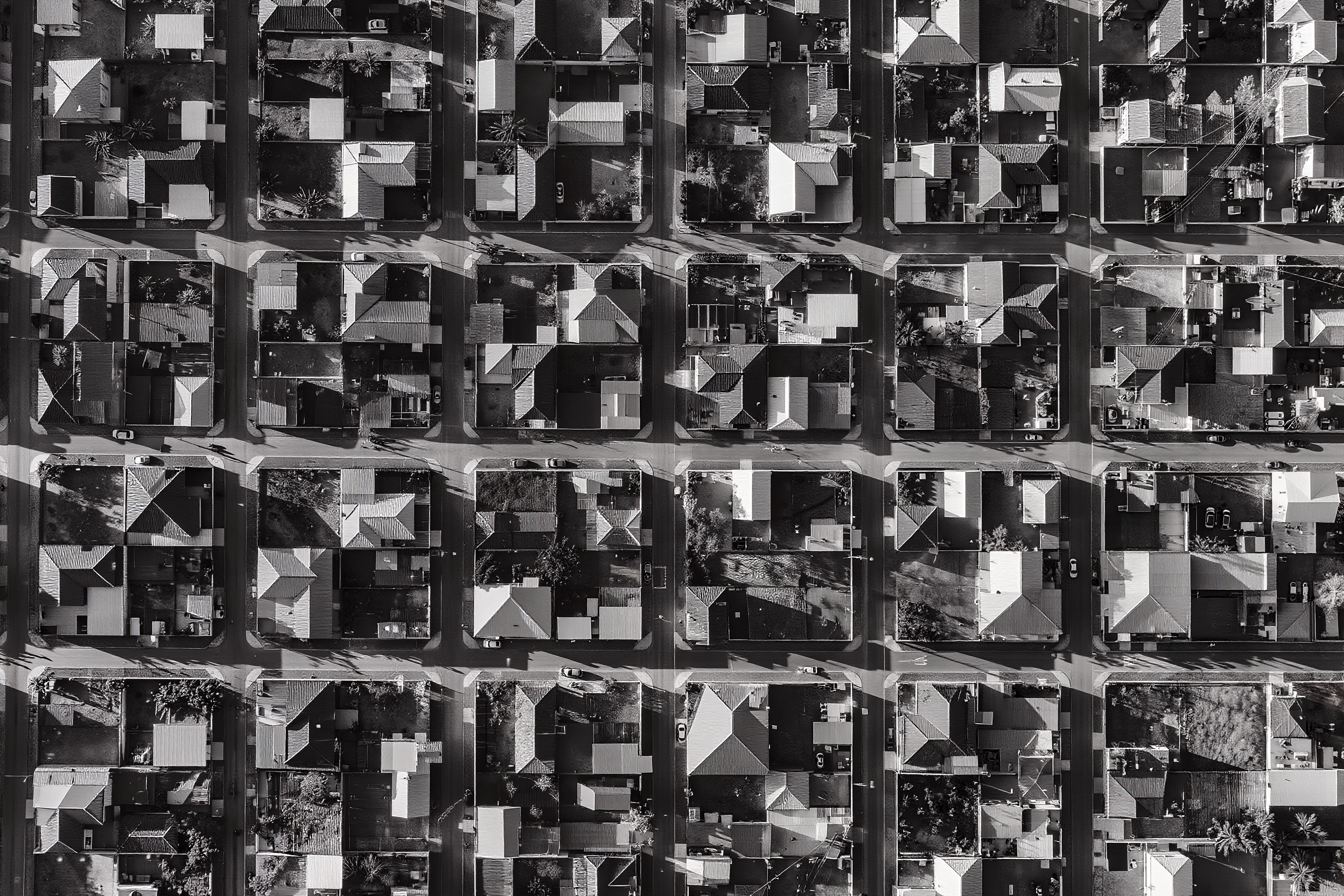
§ 1º Subdivision (loteamento) is considered the partition of a raw land parcel into lots intended for building, with the opening of new circulation streets, public spaces or extension, modification or expansion of existing streets.
§ 2º Lot split (desmembramento) is considered the partition of a raw land parcel into lots intended for building, using the existing street system, provided it does not imply the opening of new streets and public spaces, nor the extension, modification or expansion of existing ones.
§ 3º (VETOED) (Included by Law 9,785, of 1999)
§ 4º A lot is considered the land served with basic infrastructure whose dimensions meet the urban planning indices defined by the master plan or municipal law for the zone in which it is located. (Included by Law 9,785, of 1999)
§ 5º The basic infrastructure of subdivisions consists of the urban equipment of stormwater drainage, public lighting, sewage collection, potable water supply, public and household electricity, and circulation streets. (Wording given by Law 11,445, of 2007)
§ 6º The basic infrastructure of subdivisions located in housing zones declared by law as of social interest (ZHIS) shall consist, at a minimum, of: (Included by Law 9,785, of 1999)
- circulation streets;
- stormwater drainage;
- potable water supply network; and
- solutions for sewage collection and household electricity.
§ 7º The lot may be constituted in the form of an autonomous property or as a real estate unit forming part of a lot condominium. (Included by Law 13,465, of 2017)
§ 8º Controlled-access subdivision is the modality of subdivision, defined under § 1º of this article, whose access control shall be regulated by an act of the Municipal public authority, with the prohibition of access for pedestrians or vehicle drivers, non-residents, duly identified or registered, prohibited. (Included by Law 13,465, of 2017)
Art. 2º-A (Included by Law 14,118, of 2021)
For the purposes of urban land subdivision, the developer is considered the party responsible for the implementation of the subdivision, who, in addition to those indicated by regulation, may be:
- the owner of the property to be subdivided;
- the prospective buyer, assignee or prospective assignee, or the leaseholder, provided the owner expresses their consent to the development and is subrogated in the obligations of the prospective buyer, assignee or prospective assignee, or leaseholder, in case of termination of the contract;
- the entity of the direct or indirect public administration authorized to promote expropriation for the purpose of implementing housing subdivision or carrying out social interest land regularization, provided the regular taking of possession has occurred;
- the individual or legal entity contracted by the owner of the property to be subdivided or by the public authority to execute the subdivision or land regularization, in the form of partnership, under joint and several liability regime, with the contract to be recorded in the property title record of the property at the competent real estate registry;
- the housing cooperative or neighborhood association, when authorized by the title holder, or association of owners or buyers that assumes responsibility for the implementation of the subdivision.
Art. 3º
Land subdivision for urban purposes shall be permitted only in urban zones, urban expansion zones or specific urbanization zones, as defined by the master plan or approved by municipal law. (Wording given by Law 9,785, of 1999)
Sole paragraph. Land subdivision shall not be permitted:
- on flood-prone land subject to floods, before measures have been taken to ensure water drainage;
- on land that has been filled with material harmful to public health, without being previously sanitized;
- on land with a gradient equal to or greater than 30% (thirty percent), unless specific requirements of the competent authorities are met;
- on land where the geological conditions do not advise construction;
- in ecological preservation areas or in those where pollution prevents bearable sanitary conditions, until its correction.
Chapter II Of the Urban Requirements for Subdivision
Art. 4º
Subdivisions shall meet, at least, the following requirements:
- I · the areas intended for circulation systems, for the implementation of urban and community equipment, as well as free spaces for public use, shall be proportional to the density of occupation provided for in the master plan or approved by municipal law for the zone in which they are located. (Wording given by Law 9,785, of 1999)
- II · lots shall have a minimum area of 125m² (one hundred twenty-five square meters) and minimum frontage of 5 (five) meters, except when the subdivision is intended for specific urbanization or construction of social interest housing developments, previously approved by the competent public bodies;
- III · along the public right-of-way of highways, the reservation of a non-buildable buffer of at least 15 (fifteen) meters on each side may be reduced by municipal or district law that approves the territorial planning instrument, up to a minimum limit of 5 (five) meters on each side. (Wording given by Law 13,913, of 2019)
- III-A · along the railway right-of-way, the reservation of a non-buildable buffer of at least 15 (fifteen) meters on each side shall be mandatory; (Wording given by Law 14,285, of 2021)
- III-B · along flowing and still waters, the non-buildable buffer areas shall comply with the municipal or district law that approves the territorial planning instrument and that defines and regulates the width of the marginal buffers of natural watercourses in consolidated urban areas, pursuant to Law 12,651, of May 25, 2012, with the mandatory reservation of a non-buildable strip for each stretch of bank, indicated in a socio-environmental assessment prepared by the Municipality; (Included by Law 14,285, of 2021)
- IV · the streets of the subdivision shall articulate with adjacent official streets, existing or planned, and harmonize with the local topography.
§ 1º Municipal legislation shall define, for each zone into which the territory of the Municipality is divided, the permitted uses and the urban indices of land subdivision and occupation, which shall include, mandatorily, the minimum and maximum lot areas and the maximum floor area ratios (FAR). (Wording given by Law 9,785, of 1999)
§ 2º Public equipment for education, culture, health, leisure and similar are considered community equipment.
§ 3º If necessary, the reservation of a non-buildable strip linked to pipelines shall be required within the respective environmental licensing, observing criteria and parameters that ensure the safety of the population and the protection of the environment, in accordance with the relevant technical norms. (Included by Law 10,932, of 2004)
§ 4º In the case of lots that are part of a lot condominium, administrative limitations and real rights over other people's property may be instituted for the benefit of the public authority, the general population and the protection of the urban landscape, such as easements of passage, usufructs and restrictions on the construction of walls. (Included by Law 13,465, of 2017)
§ 5º Buildings located in areas contiguous to the public right-of-way of highway stretches that cross urban perimeters or urbanized areas susceptible to being included within an urban perimeter, provided they were built by the date of enactment of this paragraph, are exempt from compliance with the requirement provided for in item III of the caput of this article, except by a duly substantiated act of the municipal or district public authority. (Included by Law 13,913, of 2019)
Art. 5º
The competent Public Authority may additionally require, in each subdivision, the reservation of a non aedificandi strip intended for urban equipment.
Sole paragraph. Urban equipment is considered the public equipment for water supply, sewage services, electricity, stormwater collection, telephone network and piped gas.
Chapter III Of the Subdivision Project
Art. 6º
Before preparing the subdivision project, the interested party shall request the Municipal Hall, or the Federal District where applicable, to define the guidelines for the use of the land, layout of the lots, of the street system, of free spaces and of the areas reserved for urban and community equipment, presenting, for this purpose, a request and plan of the property containing, at a minimum:
- the boundaries of the raw land parcel to be subdivided;
- contour lines at an adequate distance, when required by state or municipal law;
- the location of watercourses, woods and existing constructions;
- the indication of streets contiguous to the entire perimeter, the location of communication streets, free areas, urban and community equipment existing on the site or in its vicinity, with the respective distances from the area to be subdivided;
- the type of predominant use for which the subdivision is intended;
- the characteristics, dimensions and location of the contiguous use zones.
Art. 7º
The Municipal Hall, or the Federal District where applicable, shall indicate, on the plans submitted with the application, in accordance with state and municipal planning guidelines:
- existing or planned streets or roads, which compose the street system of the city and the municipality, related to the intended subdivision and to be respected;
- the basic layout of the main street system;
- the approximate location of the land intended for urban and community equipment and free areas for public use;
- the sanitary strips of the land necessary for stormwater drainage and non-buildable strips;
- the zone or zones of predominant use of the area, with indication of compatible uses.
Sole paragraph. The guidelines issued shall be in force for a maximum period of four years. (Wording given by Law 9,785, of 1999)
Art. 8º
Municipalities with fewer than fifty thousand inhabitants and those whose master plan contains urbanization guidelines for the zone in which the subdivision is located may waive, by law, the guideline-setting phase provided for in Arts. 6º and 7º of this Law. (Wording given by Law 9,785, of 1999)
Art. 9º
Guided by the official layout and guidelines, where they exist, the project, containing drawings, descriptive memorandum and works execution schedule with a maximum duration of four years, shall be submitted to the Municipal Hall, or to the Federal District where applicable, accompanied by an updated property title record certificate of the raw land parcel, issued by the competent Real Estate Registry Office, by a negative certificate of municipal taxes and by the competent guarantee instrument, except as provided in § 4º of Art. 18. (Wording given by Law 9,785, of 1999)
§ 1º The drawings shall contain at least:
- the subdivision of blocks into lots, with their respective dimensions and numbering;
- the street system with its hierarchy;
- the linear and angular dimensions of the project, with radii, chords, arcs, points of tangency and central angles of the streets;
- the longitudinal and transversal profiles of all circulation streets and squares;
- the indication of the alignment and leveling markers located in the angles of curves and planned streets;
- the indication on plan and profiles of all stormwater drainage lines.
§ 2º The descriptive memorandum shall mandatorily contain, at a minimum:
- the brief description of the subdivision, with its characteristics and the establishment of the zone or zones of predominant use;
- the urban conditions of the subdivision and the limitations that affect the lots and their buildings, in addition to those contained in the guidelines set;
- the indication of the public areas that shall pass to the domain of the municipality at the time of registration of the subdivision;
- the enumeration of urban, community equipment and public or public utility services already existing in the subdivision and surroundings.
§ 3º If, at any time, it is found that the property title record certificate submitted as current no longer corresponds with the registry records and entries at the time of its submission, in addition to the applicable criminal consequences, both the previously issued guidelines and the consequent approvals shall be considered void. (Included by Law 9,785, of 1999)
Chapter IV Of the Lot Split Project
Art. 10
For the approval of a lot split project, the interested party shall submit a request to the Municipal Hall, or to the Federal District where applicable, accompanied by an updated property title record certificate of the raw land parcel, issued by the competent Real Estate Registry Office, except as provided in § 4º of Art. 18, and a plan of the property to be split containing: (Wording given by Law 9,785, of 1999)
- the indication of existing streets and nearby subdivisions;
- the indication of the type of predominant use at the site;
- the indication of the lot division intended for the area.
Art. 11
The urban provisions in force for the regions in which they are located, or, in the absence of these, the urban provisions for subdivisions, shall apply to lot splits, as applicable. (Wording given by Law 9,785, of 1999)
Sole paragraph. The Municipality, or the Federal District where applicable, shall set the requirements applicable to the approval of lot splits of lots arising from a subdivision whose allocation of the public area was less than the minimum provided for in § 1º of Art. 4º of this Law.
Chapter V Of the Approval of the Subdivision and Lot Split Project
Art. 12
The subdivision and lot split project shall be approved by the Municipal Hall, or by the Federal District where applicable, which is also responsible for setting the guidelines referred to in Arts. 6º and 7º of this Law, except as provided for in the following article.
§ 1º The approved project shall be executed within the period set in the execution schedule, under penalty of lapse of approval. (Included by Law 12,608, of 2012)
§ 2º In Municipalities included in the national register of municipalities with areas susceptible to the occurrence of large-impact landslides, sudden floods or related geological or hydrological processes, the approval of the project referred to in the caput shall be subject to compliance with the requirements contained in the geotechnical aptitude charter for urbanization. (Included by Law 12,608, of 2012)
§ 3º The approval of subdivision and lot split projects in risk areas defined as non-buildable, in the master plan or in legislation derived from it, is prohibited. (Included by Law 12,608, of 2012)
Art. 13
The States shall be responsible for regulating the approval by Municipalities of subdivisions and lot splits under the following conditions: (Wording given by Law 9,785, of 1999)
- when located in areas of special interest, such as those protecting watersheds or cultural, historical, landscape and archaeological heritage, as defined by state or federal legislation;
- when the subdivision or lot split is located in an area bordering the municipality, or belongs to more than one municipality, in metropolitan regions or urban agglomerations, defined by state or federal law;
- when the subdivision covers an area greater than 1,000,000 m².
Sole paragraph. In the case of a subdivision or lot split located in an area of a municipality forming part of a metropolitan region, the examination and prior consent for the approval of the project shall be the responsibility of the metropolitan authority.
Art. 14
The States shall define, by decree, the special protection areas provided for in item I of the previous article.
Art. 15
The States shall establish, by decree, the rules to which the subdivision and lot split projects in the areas provided for in Art. 13 must comply, observing the provisions of this Law.
Sole paragraph. In the regulation of the rules provided for in this article, the State shall seek to meet the urban requirements of municipal planning.
Art. 16
Municipal law shall define the deadlines for an submitted subdivision project to be approved or rejected and for the executed works to be accepted or refused. (Wording given by Law 9,785, of 1999)
§ 1º Once the deadlines have elapsed without manifestation by the Public Authority, the project shall be considered rejected or the works refused, with indemnification for any damages arising from the omission ensured. (Included by Law 9,785, of 1999)
§ 2º In Municipalities whose legislation is silent, the deadlines shall be ninety days for approval or rejection and sixty days for the acceptance or substantiated refusal of urbanization works. (Included by Law 9,785, of 1999)
Art. 17
Free spaces for common use, streets and squares, areas intended for public buildings and other urban equipment, contained in the project and descriptive memorandum, cannot have their destination altered by the developer, from the approval of the subdivision, except in cases of lapse of the license or withdrawal by the developer, in which case the requirements of Art. 23 of this Law shall be observed.
Chapter VI Of the Registration of the Subdivision and Lot Split
Art. 18
Once the subdivision or lot split project is approved, the developer shall submit it to the real estate registry within 180 (one hundred and eighty) days, under penalty of lapse of approval, accompanied by the following documents:
- title of ownership of the property or property title record certificate, except as provided in §§ 4º and 5º; (Wording given by Law 9,785, of 1999)
- history of the property's titles, covering the last 20 (twenty) years, accompanied by the respective supporting documents;
- negative certificates:
- of federal, state and municipal taxes levied on the property;
- of real actions referring to the property, for the period of 10 (ten) years;
- of criminal actions regarding the crime against property and against Public Administration.
- certificates:
- from the title protest registries, in the name of the developer, for the period of 5 (five) years; (Wording given by Law 14,382, of 2022)
- of civil actions relating to the developer, for the period of 10 (ten) years; (Wording given by Law 14,382, of 2022)
- of the current legal situation of the property; and (Wording given by Law 14,382, of 2022)
- of criminal actions against the developer, for the period of 10 (ten) years; (Wording given by Law 14,382, of 2022)
- copy of the act of approval of the subdivision and proof of the verification term, by the Municipality or by the Federal District, of the execution of the works required by municipal legislation, which shall include, at a minimum, the execution of the circulation streets of the subdivision, demarcation of lots, blocks and public spaces and stormwater drainage works or the approval of a schedule, with a maximum duration of 4 (four) years, extendable for another 4 (four) years, accompanied by the competent guarantee instrument for the execution of the works; (Wording given by Law 14,118, of 2021)
- copy of the standard contract of promise of sale, or assignment or promise of assignment, which shall mandatorily contain the indications provided for in Art. 26 of this Law;
- declaration by the spouse of the applicant consenting to the registration of the subdivision.
§ 1º The periods referred to in items III, point b, and IV, points a and d, shall be based on the date of the application for registration of the subdivision, and shall all be issued in the name of those who, in the mentioned periods, have been holders of real rights over the property.
§ 2º The existence of protests, personal actions or criminal actions, except those referring to crimes against property and against administration, shall not prevent the registration of the subdivision if the applicant proves that these protests or actions cannot harm the acquirers of the lots. If the Real Estate Registry Officer considers the proof insufficient, they shall raise the doubt before the competent judge.
§ 3º The declaration referred to in item VII of this article shall not waive the consent of the declarant for acts of alienation or promise of alienation of lots, or of rights relating thereto, that may be carried out by their spouse.
§ 4º The title of ownership shall be waived in the case of popular subdivision, intended for lower-income classes, on a property declared of public utility, with a judicial expropriation process in course and provisional taking of possession, provided it is promoted by the Union, States, Federal District, Municipalities or their delegated entities, authorized by law to implement housing projects. (Included by Law 9,785, of 1999)
§ 5º In the case provided for in § 4º, the request for registration of the subdivision, in addition to the documents mentioned in items V and VI of this article, shall be instructed with authentic copies of the decision that granted the provisional taking of possession, the expropriation decree, proof of its publication in the official press and, when made by delegated entities, the law of creation and its constitutive acts. (Included by Law 9,785, of 1999)
§ 6º In the event that the developer is a public company, the certificates referred to in point c of item III and in points a, b and d of item IV of the caput of this article may be replaced by submission of the quarterly information and annual financial statements contained on the website of the Securities and Exchange Commission. (Included by Law 14,382, of 2022)
§ 7º When it sufficiently demonstrates the state of the proceedings and the economic impact of the dispute, the clarifying certificate of civil or criminal action may be replaced by a printout of the progress of the digital proceedings. (Included by Law 14,382, of 2022)
§ 8º The same property may serve as guarantee to the Municipality or to the Federal District in the execution of infrastructure works and to credits constituted in favor of the creditor in financing operations for the production of the urbanized lot. (Included by Law 14,711, of 2023)
Art. 18-A (Included by Law 14,620, of 2023)
At the discretion of the developer, the subdivision may be submitted to the affectation regime, under which the land and infrastructure, as well as other assets and rights linked to it, shall remain separate from the developer's patrimony and shall constitute a patrimony of affectation, intended for the achievement of the corresponding subdivision and the delivery of urbanized lots to the respective acquirers.
§ 1º The patrimony of affectation does not communicate with the other assets, rights and obligations of the general patrimony of the developer or other patrimonies of affectation constituted by the developer and is only liable for debts and obligations linked to the respective subdivision and the delivery of the urbanized lots to the respective acquirers.
§ 2º The developer is liable for the damages they cause to the patrimony of affectation.
§ 3º Assets and rights forming part of the subdivision may only be the subject of real guarantee in a credit operation whose proceeds are fully allocated to the implementation of the corresponding infrastructure and to the delivery of the urbanized lots to the respective acquirers.
§ 4º In the case of full or fiduciary assignment of credit rights arising from the commercialization of the lots forming part of the subdivision, the proceeds of the assignment shall also form part of the patrimony of affectation.
§ 5º The financial resources forming part of the patrimony of affectation shall be administered by the developer.
§ 6º In financed subdivisions, the commercialization of lots shall have the consent or knowledge of the financing institution, as established in the financing contract.
§ 7º The contracting of financing and the constitution of guarantees, including by transmission, to the creditor, of fiduciary ownership over the lots forming part of the subdivision, as well as the full or fiduciary assignment of credit rights arising from the commercialization of these lots, do not imply the transfer to the creditor of any of the obligations or responsibilities of the assigning developer, who remains the sole responsible party for the obligations and duties attributable to them.
Art. 18-B (Included by Law 14,620, of 2023)
The patrimony of affectation is considered constituted by registration, at any time, in the Real Estate Registry, of a term signed by the developer and, where applicable, also by the holders of real rights to acquire lots subject to the subdivision.
Sole paragraph. The registration shall not be hindered by the existence of real encumbrances that have been constituted on the property subject to the subdivision to guarantee the payment of the price of its acquisition or the fulfillment of the obligation to implement the development.
Art. 18-C (Included by Law 14,620, of 2023)
The Representatives Commission, the Municipal Hall and the infrastructure financing institution may appoint, at their own expense, an individual or legal entity to inspect and monitor the patrimony of affectation.
§ 1º The appointment referred to in the caput does not transfer to the appointer any responsibility for the quality of the implementation of the infrastructure, for the deadline of the verification term of its execution or for any other obligation arising from the developer's responsibility, whether legal or arising from the lot alienation contracts, works contracts and other contracts eventually linked to the subdivision.
§ 2º The person who, as a result of the inspection referred to in the caput of this article, obtains access to the commercial, tax or any other nature of information regarding the affected patrimony shall be liable for failure of zeal, dedication and secrecy of this information.
§ 3º The person appointed by the financing institution shall provide a copy of their report or opinion to the Representatives Commission, at the latter's request, and this provision does not constitute a breach of the secrecy referred to in § 2º of this article.
Art. 18-D (Included by Law 14,620, of 2023)
It is the responsibility of the developer:
- to promote all acts necessary for the good administration and preservation of the patrimony of affectation, including through the adoption of judicial measures;
- to keep separate the assets and rights subject of each subdivision;
- to seek the capture of the resources necessary for the subdivision, ensuring the preservation of the resources necessary for the conclusion of the infrastructure;
- to deliver to the Representatives Commission, at least every 3 (three) months, a demonstration of the state of the works and its correspondence with the agreed deadline or with the financial resources forming part of the patrimony of affectation received in the period, signed by qualified professionals, except for any modifications suggested by the developer and approved by the Representatives Commission;
- to maintain and move the financial resources of the patrimony of affectation in at least 1 (one) deposit account opened specifically for this purpose;
- to deliver to the Representatives Commission balance sheets coinciding with the calendar quarter, related to each patrimony of affectation;
- to ensure the person appointed under Art. 18-C free access to the works, as well as to the books, contracts, movement of the exclusive deposit account referred to in item V of this article and any other documents related to the patrimony of affectation;
- to maintain complete accounting records, even if exempted by tax legislation.
Art. 18-E (Included by Law 14,620, of 2023)
The patrimony of affectation shall be extinguished by the registration of the verification term issued by the competent public body, by the registration of the titles of domain or right of acquisition in the name of the respective acquirers and, where applicable, by the extinction of the developer's obligations to any institution financing the works.
Art. 18-F (Included by Law 14,620, of 2023)
The effects of the declaration of bankruptcy or civil insolvency of the developer do not affect the constituted patrimonies of affectation, and the land, the works carried out until then and the other assets, credit rights, obligations and charges subject of the subdivision do not form part of the bankruptcy estate.
Art. 19
The real estate registry officer, after examining the documentation and finding it in order, shall send a communication to the Municipal Hall and shall publish, in summary and with a small location drawing of the area, the registration application notice on 3 (three) consecutive days, which may be challenged within 15 (fifteen) consecutive days, counted from the date of the last publication. (Wording given by Law 14,382, of 2022)
§ 1º Once the period has elapsed without challenge, registration shall be made immediately. If there is a challenge from third parties, the Real Estate Registry Officer shall summon the applicant and the Municipal Hall, or the Federal District where applicable, to manifest on it within 5 (five) days, under penalty of filing the case. With such manifestations, the case shall be sent to the competent judge for decision.
§ 2º After hearing the Public Prosecutor's Office within 5 (five) days, the judge shall decide outright or after summary instruction, and shall refer the interested party to the ordinary procedures if the matter requires greater inquiry.
§ 3º In the capitals, the publication of the notice shall be made in the Official Gazette of the State and in one of the daily-circulation newspapers. In the other municipalities, the publication shall be made only in one of the local newspapers, if any, or, in the absence thereof, in a regional newspaper.
§ 4º The Real Estate Registry Officer who performs registration in disagreement with the requirements of this Law shall be subject to a fine equivalent to 10 (ten) times the regimental fees set for the registration, at the time the penalty is applied by the judge in charge of the registry, without prejudice to applicable criminal and administrative sanctions.
§ 5º Once the subdivision is registered, the Registry Officer shall communicate, by certificate, its registration to the Municipal Hall.
Art. 20
The registration of the subdivision shall be made, by extract, in the proper book.
Sole paragraph. At the Real Estate Registry, the registration of the subdivision shall be made, with one indication for each lot, the recording of alterations, the opening of streets and squares and the areas intended for free spaces or urban equipment.
Art. 21
When the subdivided area is located in more than one real estate circumscription, registration shall be requested first before the one in which the largest part of the subdivided area is located. Once registration has been carried out in that circumscription, the interested party shall successively request the registration of the subdivision in each of the others, demonstrating to each one the registration carried out in the previous one, until the subdivision is registered in all. If registration is denied in any of the circumscriptions, this decision shall be communicated, by the Real Estate Registry Officer, to the others for the purpose of canceling the registrations made, unless the hypothesis provided for in § 4º of this article occurs.
§ 1º No lot may be located in more than one circumscription.
§ 2º The interested party is prohibited from simultaneously processing, before different circumscriptions, applications for registration of the same subdivision, with acts performed in violation of this rule being void.
§ 3º While all registrations referred to in this article have not been carried out, the subdivision shall be considered unregistered for the effects of this Law.
§ 4º The denial of subdivision registration in one circumscription shall not determine the cancellation of the registration carried out in another, if the reason for the denial in the former does not extend to the area located under the jurisdiction of the latter, and provided the interested party requests the maintenance of the registration obtained, with the remainder of the subdivision submitted to prior approval before the Municipal Hall, or the Federal District where applicable.
Art. 22
From the date of registration of the subdivision, streets and squares, free spaces and areas intended for public buildings and other urban equipment, contained in the project and descriptive memorandum, shall pass to the domain of the Municipality.
§ 1º In the case of land subdivision implemented and not registered, the Municipality may request, by submitting a subdivision plan prepared by the developer or approved by the Municipality and a declaration that the subdivision is implemented, the registration of the areas intended for public use, which shall thus pass to its domain. (Included by Law 12,424, of 2011; renumbered by Law 14,620, of 2023)
§ 2º From the date of registration of the subdivision, the Municipality shall update the property register of the raw land parcel that served as the basis for the approval of the subdivision and of the areas that passed to its domain. (Included by Law 14,620, of 2023)
§ 3º Only from the issuance of the Works Verification and Execution Term (TVEO), the Municipality shall promote the individualization of the lots in the municipal property register in the name of the acquirer or prospective buyer in the case of commercialized lots and, in the name of the owner of the raw land parcel, in the case of non-commercialized lots. (Included by Law 14,620, of 2023)
Art. 23
The registration of the subdivision may only be canceled:
- by judicial decision;
- at the request of the developer, with consent of the Municipal Hall, or the Federal District where applicable, while no lot has been subject to a contract;
- at the joint request of the developer and all the acquirers of lots, with consent of the Municipal Hall, or the Federal District where applicable, and of the State.
§ 1º The Municipal Hall and the State may only oppose cancellation if proven inconvenience for urban development results from it or if any improvement has already been carried out in the subdivided area or surroundings.
§ 2º In the cases of items II and III, the Real Estate Registry Officer shall publish, in summary, a cancellation application notice, which may be challenged within 30 (thirty) days from the date of the last publication. Once the period has elapsed, with or without challenge, the case shall be sent to the competent judge for approval of the cancellation request, after hearing the Public Prosecutor's Office.
§ 3º The approval referred to in the previous paragraph shall be preceded by a judicial inspection intended to prove the absence of installed acquirers in the subdivided area.
Art. 24
The subdivision case and the contracts deposited at the Registry Office may be examined by any person, at any time, regardless of the payment of costs or fees, even for search purposes.
Chapter VII Of the Contracts
Art. 25
The promises of purchase and sale, assignments and promises of assignment are irrevocable, which grant the right to compulsory awarding and, once registered, confer real right opposable to third parties.
Art. 26
The promises of purchase and sale, assignments or promises of assignment may be made by public deed or by private instrument, in accordance with the model deposited as provided in item VI of Art. 18 and shall contain, at a minimum, the following indications:
- name, civil registry, tax registration with the Ministry of Finance, nationality, marital status and residence of the contracting parties;
- denomination and situation of the subdivision, number and date of registration;
- description of the lot or lots subject of promises, boundaries, area and other characteristics;
- price, term, form and place of payment as well as the amount of the down payment;
- interest rate applicable on the outstanding debt and on installments due and not paid, as well as the penalty clause, never exceeding 10% (ten percent) of the debt and only enforceable in cases of judicial intervention or default exceeding 3 (three) months;
- indication of who is responsible for the payment of taxes and fees levied on the committed lot;
- declaration of the conventional urban restrictions of the subdivision, supplementary to the relevant legislation.
§ 1º The contract shall be signed in 3 (three) copies or extracted in 3 (three) copies, one for each party and the third for archiving in the real estate registry, after the registration and proper entries.
§ 2º When the contract has been signed by an attorney of any of the parties, the filing of the power of attorney in the real estate registry shall be mandatory.
§ 3º The assignment of possession in which the Union, the States, the Federal District, the Municipalities and their delegated entities are provisionally taken is admitted, which may occur by private instrument, to which is attributed, in the case of popular subdivisions, for all legal purposes, the character of public deed, with the provision of Art. 108 of Law 10,406, of January 10, 2002 (Civil Code) not applicable. (Wording given by Law 14,620, of 2023)
§ 4º The assignment of possession referred to in § 3º, once the obligations of the assignee are fulfilled, constitutes a credit against the expropriator, of mandatory acceptance as guarantee of housing financing contracts. (Included by Law 9,785, of 1999)
§ 5º With the registration of the judgment that, in an expropriation proceeding, sets the value of the indemnification, the possession referred to in § 3º shall be converted into ownership and its assignment, into a promise of purchase and sale or purchase and sale, depending on whether there are obligations to be fulfilled or whether they are fulfilled, circumstance that, demonstrated to the Real Estate Registry, shall be recorded in the property title record relating to the lot. (Included by Law 9,785, of 1999)
§ 6º The promises of purchase and sale, assignments and promises of assignment shall be valid as title for the registration of ownership of the acquired lot, when accompanied by the respective proof of payment. (Included by Law 9,785, of 1999)
Art. 26-A (Included by Law 13,786, of 2018)
The contracts of purchase and sale, assignment or promise of assignment of subdivision must begin with a summary table, which shall contain, in addition to the indications contained in Art. 26 of this Law:
- the total price to be paid for the property;
- the amount referring to brokerage, its payment conditions and the precise identification of its beneficiary;
- the form of payment of the price, with clear indication of the values and due dates of the installments;
- the monetary correction indices applicable to the contract and, when there are multiple indices, the period of application of each;
- the consequences of contract termination, whether through distract or through contractual resolution motivated by default of the acquirer or of the developer, with bold highlight for the applicable penalties and for the deadlines for returning amounts to the acquirer;
- the interest rates eventually applied, whether monthly or annual, whether nominal or effective, their period of application and the amortization system;
- information about the possibility of exercise, by the acquirer of the property, of the right of withdrawal provided for in Art. 49 of Law 8,078, of September 11, 1990 (Consumer Defense Code), in all contracts signed at sales stands and outside the developer's headquarters or commercial establishment;
- the deadline for the fulfillment of obligations by the acquirer after obtaining the works inspection term;
- information about the encumbrances on the property;
- the registration number of the subdivision or lot split, the property title record of the property and the identification of the competent real estate registry office;
- the final term for the execution of the project referred to in § 1º of Art. 12 of this Law and the date of submission of the request for issuance of the works inspection term.
§ 1º Once the absence of any of the information provided for in the caput of this article is identified, a period of 30 (thirty) days shall be granted for the amendment of the contract and remediation of the omission, after which, this omission, if not corrected, shall characterize just cause for contractual rescission by the acquirer.
§ 2º The realization of the consequences of contract termination, mentioned in item V of the caput of this article, shall depend on the prior and specific consent of the acquirer regarding them, through signing next to these clauses, which shall be drafted in accordance with § 4º of Art. 54 of Law 8,078, of September 11, 1990 (Consumer Defense Code).
Art. 27
If the party who undertook to conclude a contract of promise of sale or assignment does not fulfill the obligation, the creditor may notify the debtor to grant the contract or offer a challenge within 15 (fifteen) days, under penalty of proceeding with the registration of the pre-contract, with the relations between the parties to be governed by the standard contract.
§ 1º For the purposes of this article, the promise of assignment, the purchase proposal, the lot reservation or any other instrument, in which the manifestation of the parties' will, the indication of the lot, the price and method of payment, and the promise to contract are stated, shall have the same value as a pre-contract.
§ 2º The registration referred to in this article shall not be carried out if the party requesting it does not prove that they have fulfilled their performance, nor offer it in due form, unless it is not yet due.
§ 3º If there is a challenge from the party who undertook to conclude the contract, the provisions of Arts. 639 and 640 of the Code of Civil Procedure shall be observed.
Art. 28
Any alteration or partial cancellation of the registered subdivision shall depend on agreement between the developer and the acquirers of lots affected by the alteration, as well as on the approval by the Municipal Hall, or the Federal District where applicable, and shall be deposited at the Real Estate Registry, in supplement to the original project with the proper recording.
Art. 29
Whoever acquires the subdivided property through inter vivos act, or by causa mortis succession, shall succeed the transferor in all their rights and obligations, being required to respect the promises of purchase and sale or the promises of assignment, in all their clauses, with any provision to the contrary being null, except for the heir's or legatee's right to renounce the inheritance or legacy.
Art. 30
The declaratory sentence of bankruptcy or insolvency of either party shall not rescind the contracts of promise of purchase and sale or promise of assignment that have as object the subdivided area or lots of the same. If the bankruptcy or insolvency is of the owner of the subdivided area or of the holder of right over it, the trustee or administrator shall be responsible for fulfilling said contracts; if of the acquirer of the lot, their rights shall be taken to auction.
Art. 31
The private contract may be transferred by simple endorsement, recorded on the back of the copies in the parties' possession, or by separate instrument, declaring the number of the subdivision registration, the value of the assignment and the qualification of the assignee, for due registration.
§ 1º The assignment is independent of the developer's consent but, in relation to the latter, its effects are only produced after being notified, in writing, by the parties or when the assignment is registered.
§ 2º Once the assignment is registered, made without the developer's consent, the Registry Officer shall give notice in writing, within 10 (ten) days.
Art. 32
Once the installment has matured and not been paid, the contract shall be considered rescinded 30 (thirty) days after the debtor is placed in default.
§ 1º For the purposes of this article, the debtor-acquirer shall be summoned, at the request of the creditor, by the Real Estate Registry Officer, to satisfy the installments due and those that shall mature until the date of payment, the agreed interest and the summons costs.
§ 2º Once the default is cured, the contract shall be restored.
§ 3º With the certificate that payment has not been made at the registry office, the seller shall request the Registry Officer to cancel the registration.
Art. 32-A (Included by Law 13,786, of 2018)
In the case of contractual resolution due to fact attributable to the acquirer, respecting the provisions of § 2º of this article, the amounts paid by them shall be returned, updated based on the index contractually established for the monetary correction of the property price installments, and the following items may be deducted from the amounts paid:
- the amounts corresponding to the eventual fruition of the property, up to the equivalent of 0.75% (seventy-five hundredths percent) on the updated value of the contract, whose period shall be counted from the date of transmission of possession of the property to the acquirer until its restitution to the developer;
- the amount due for penalty clause and administrative expenses, including arrhae or down payment, limited to a discount of 10% (ten percent) of the updated value of the contract;
- the default charges relating to installments paid in arrears by the acquirer;
- the debts of urban real estate taxes, condominium, association or other contributions of equal nature equated to these and tariffs linked to the lot, as well as taxes, costs and fees levied on the restitution and/or rescission;
- the brokerage commission, provided it is integrated into the price of the lot.
§ 1º The payment of the restitution shall occur in up to 12 (twelve) monthly installments, starting after the following grace period:
- in subdivisions with works in progress: within a maximum of 180 (one hundred and eighty) days after the period provided for in the contract for the conclusion of the works;
- in subdivisions with completed works: within a maximum of 12 (twelve) months after the formalization of the contractual rescission.
§ 2º Registration of a new sale contract shall only be carried out if the start of the restitution of the amount paid by the seller to the holder of the canceled registration is proven in the form and conditions agreed upon in the distract, with this proof waived in cases where the acquirer is not located or has not manifested, in accordance with Art. 32 of this Law.
§ 3º The procedure provided for in this article does not apply to contracts and deeds of purchase and sale of lots under the modality of fiduciary alienation under Law 9,514, of November 20, 1997.
Art. 33
If the creditor of the installments refuses to receive them or avoids their receipt, they shall be placed in default by notification from the Real Estate Registry Officer to come and receive the amounts deposited by the debtor at the Real Estate Registry itself. After 15 (fifteen) days from receipt of the summons, the payment shall be considered effected, unless the creditor challenges the deposit and, alleging default of the debtor, requests their summons for the purposes of Art. 32 of this Law.
Art. 34
In any case of rescission due to default of the acquirer, the necessary or useful improvements made by them on the property shall be indemnified, with any contractual provision to the contrary having no effect.
§ 1º Improvements made in disagreement with the contract or with the law shall not be indemnified. (Wording given by Law 13,786, of 2018)
§ 2º Within 60 (sixty) days, counted from the placement in default, in the case of the caput of this article, the developer is required to alienate the property through judicial or extrajudicial auction, in accordance with Law 9,514, of November 20, 1997. (Included by Law 13,786, of 2018)
Art. 35
If the registration is canceled due to contract default, and payment of more than 1/3 (one third) of the agreed price has been made, the real estate registry officer shall mention this fact and the amount paid in the cancellation act, and a new registration relating to the same lot shall only be made upon submission of the distract signed by the parties and proof of payment of the single installment or the first installment of the amount to be returned to the acquirer, in the form of Art. 32-A of this Law, to the holder of the canceled registration, or through cash deposit at their disposal at the real estate registry. (Wording given by Law 13,786, of 2018)
§ 1º If the deposit referred to in this article occurs, the Real Estate Registry Officer shall summon the interested party to come and receive it within 10 (ten) days, under penalty of being returned to the depositor.
§ 2º If the interested party is not found, the Real Estate Registry Officer shall deposit the amount in a credit establishment, according to the order provided for in item I of Art. 666 of the Code of Civil Procedure, in an account with incidence of interest and monetary correction.
§ 3º The obligation of prior proof of payment of the single installment or the first installment as a condition for the effectuation of a new registration, provided for in the caput of this article, may be waived if the parties agree differently and expressly in the distract document signed by them. (Included by Law 13,786, of 2018)
Art. 36
The registration of the promise, assignment or promise of assignment may only be canceled:
- by judicial decision;
- at the joint request of the contracting parties;
- when there is proven rescission of the contract.
Art. 36-A (Included by Law 13,465, of 2017)
The activities developed by associations of property owners, holders of rights or residents in subdivisions or similar developments, provided they are not profit-oriented, as well as by civil entities organized based on the solidarity of collective interests of this public with the objective of administration, conservation, maintenance, discipline of use and coexistence, aimed at the valuation of the properties that make up the development, in view of their legal nature, are linked, by criteria of affinity, similitude and connection, to the activity of property administration.
Sole paragraph. The administration of properties in the form of the caput of this article subjects their holders to the regulation and discipline contained in their constitutive acts, contributing in the form of these acts to support the achievement of their objectives.
Chapter VIII General Provisions
Art. 37
It is prohibited to sell or promise to sell a parcel of unregistered subdivision or lot split.
Art. 38
Once it is verified that the subdivision or lot split is not registered or regularly executed or notified by the Municipal Hall, or by the Federal District where applicable, the acquirer of the lot shall suspend the payment of the remaining installments and notify the developer to remedy the failure.
§ 1º When the suspension of payment of the remaining installments occurs, in the form of the caput of this article, the acquirer shall make the deposit of the installments due at the competent Real Estate Registry, which shall deposit them in a credit establishment, according to the order provided for in item I of Art. 666 of the Code of Civil Procedure, in an account with incidence of interest and monetary correction, whose movement shall depend on prior judicial authorization.
§ 2º The Municipal Hall, or the Federal District where applicable, or the Public Prosecutor's Office, may promote the notification to the developer provided for in the caput of this article.
§ 3º Once the subdivision is regularized by the developer, the latter shall judicially seek authorization to withdraw the deposited installments, with the increments of monetary correction and interest, with the citation of the Municipal Hall, or the Federal District where applicable, being necessary to integrate the judicial proceedings provided for here, as well as the hearing of the Public Prosecutor's Office.
§ 4º After judicial recognition of regularity of the subdivision, the developer shall notify the acquirers of the lots, through the competent Real Estate Registry, so that they begin to pay the remaining installments directly, from the date of notification.
§ 5º In the case of the developer failing to meet the notification by the contractual deadline, or when the subdivision or lot split is regularized by the Municipal Hall, or by the Federal District where applicable, under Art. 40 of this Law, the developer may not, under any title, demand receipt of the deposited installments.
Art. 39
The clause of contractual rescission for default of the acquirer shall be null by full right, when the subdivision is not regularly registered.
Art. 40
The Municipal Hall, or the Federal District where applicable, if not met by the developer to the notification, may regularize subdivision or lot split not authorized or executed without observance of the determinations of the administrative licensing act, to avoid harm to its urban development standards and in defense of the rights of the acquirers of lots.
§ 1º The Municipal Hall, or the Federal District where applicable, that promotes the regularization, in the form of this article, shall obtain judicially the withdrawal of the deposited installments, with the respective increments of monetary correction and interest, under § 1º of Art. 38 of this Law, as reimbursement of the amounts spent on urban equipment or expropriations necessary to regularize the subdivision or lot split.
§ 2º The amounts spent by the Municipal Hall, or by the Federal District where applicable, to regularize the subdivision or lot split, if not fully reimbursed as provided in the previous paragraph, shall be demanded in the missing part from the developer, applying the provisions of Art. 47 of this Law.
§ 3º In the case of the developer not complying with the provisions of the previous paragraph, the Municipal Hall, or the Federal District where applicable, may receive the installments from the acquirers, up to the amount due.
§ 4º The Municipal Hall, or the Federal District where applicable, to ensure the regularization of the subdivision or lot split, as well as the full reimbursement of amounts spent, or to be spent, may judicially promote the precautionary procedures necessary to the aims pursued.
§ 5º The regularization of a subdivision by the Municipal Hall, or the Federal District where applicable, cannot contradict the provisions of Arts. 3º and 4º of this Law, except as provided in § 1º of the latter. (Included by Law 9,785, of 1999)
Art. 41
Once the subdivision or lot split is regularized by the Municipal Hall, or by the Federal District where applicable, the acquirer of the lot, demonstrating the deposit of all installments of the agreed price, may obtain the registration of ownership of the acquired lot, with the duly signed promise of purchase and sale being valid for this purpose.
Art. 42
In expropriations, lands not yet sold or committed, subject to unregistered subdivision or lot split, shall not be considered as subdivided or able to be subdivided, for the purpose of indemnification.
Art. 43
If unapproved subdivision execution occurs, the allocation of public areas required in item I of Art. 4º of this Law cannot be altered without prejudice to the application of the administrative, civil and criminal sanctions provided for.
Sole paragraph. In this case, the developer shall reimburse the Municipal Hall or the Federal District where applicable, in cash or in equivalent area, twice the difference between the total of public areas required and those effectively allocated. (Included by Law 9,785, of 1999)
Art. 44
The Municipality, the Federal District and the State may expropriate urban areas or urban expansion areas for re-subdivision, demolition, reconstruction and incorporation, except for the preference of the expropriated parties for the acquisition of new units.
Art. 45
The developer, even if they have already sold all the lots, or the neighbors, are legitimate parties to promote action aimed at preventing construction in disagreement with legal or contractual restrictions.
Art. 46
The developer may not base any action or defense on this Law without presentation of the registrations and contracts to which it refers.
Art. 47
If the developer is part of an economic or financial group, any individual or legal entity of this group, benefiting in any way from the irregular subdivision or lot split, shall be jointly and severally liable for the damages caused by it to the lot buyers and to the Public Authority.
Art. 48
The competent forum for the judicial procedures provided for in this Law shall be the district of the location of the lot.
Art. 49
The summonses and notifications provided for in this Law shall be made personally to the summoned or notified party, who shall sign the receipt acknowledgment, and may equally be promoted through the Title and Document Registry Offices of the District of the location of the property or of the domicile of whoever is to receive them.
§ 1º If the recipient refuses to give receipt or avoids receipt, or if their whereabouts are unknown, the officer in charge of the diligence shall inform this circumstance to the competent Officer who shall certify it, under their responsibility.
§ 2º Once the occurrence of the facts mentioned in the previous paragraph is certified, the summons or notification shall be made by notice in the form of this Law, with the period beginning to run 10 (ten) days after the last publication.
Chapter IX Penal Provisions
Art. 50
The following constitutes a crime against Public Administration:
- to initiate, in any way, or to carry out subdivision or lot split of land for urban purposes, without authorization from the competent public body, or in disagreement with the provisions of this Law or with the relevant rules of the Federal District, States and Municipalities;
- to initiate, in any way, or to carry out subdivision or lot split of land for urban purposes without observance of the determinations contained in the administrative licensing act;
- to make or convey in proposal, contract, prospectus or communication to the public or to interested parties, false assertion about the legality of subdivision or lot split of land for urban purposes, or fraudulently conceal a fact relating to it.
Penalty: Imprisonment, from 1 (one) to 4 (four) years, and fine of 5 (five) to 50 (fifty) times the highest minimum wage in force in the country.
Sole paragraph. The crime defined in this article is qualified, if committed:
- by means of sale, promise of sale, lot reservation or any other instruments that manifest the intention to sell a lot in subdivision or lot split not registered in the competent Real Estate Registry;
- with the absence of legitimate title of ownership of the subdivided or split property, except as provided in Art. 18, §§ 4º and 5º, of this Law, or with fraudulent omission of fact relating to it, if the fact does not constitute a more serious crime. (Wording given by Law 9,785, of 1999)
Penalty: Imprisonment, from 1 (one) to 5 (five) years, and fine of 10 (ten) to 100 (one hundred) times the highest minimum wage in force in the country.
Art. 51
Whoever, in any way, contributes to the practice of the crimes provided for in the previous article of this Law incurs the penalties set forth therein, considering in particular the acts performed in the capacity of attorney of the developer, director or manager of company.
Sole paragraph. (VETOED) (Included by Law 9,785, of 1999)
Art. 52
To register subdivision or lot split not approved by the competent bodies, register the promise of purchase and sale, the assignment or promise of assignment of rights, or carry out registration of a sale contract of unregistered subdivision or lot split.
Penalty: Detention, from 1 (one) to 2 (two) years, and fine of 5 (five) to 50 (fifty) times the highest minimum wage in force in the country, without prejudice to applicable administrative sanctions.
Chapter X Final Provisions
Art. 53
All changes of use of rural land to urban purposes shall depend on prior hearing of INCRA (National Institute of Colonization and Agrarian Reform), of the Metropolitan Body, if any, where the Municipality is located, and on the approval of the Municipal Hall, or the Federal District where applicable, according to the requirements of the relevant legislation.
Art. 53-A (Included by Law 9,785, of 1999)
Subdivisions linked to housing plans or programs initiated by Municipal Halls and the Federal District, or entities authorized by law, especially the regularizations of subdivisions and settlements, are considered of public interest.
Sole paragraph. The actions and interventions referred to in this article shall not require documentation other than that minimum necessary and essential for the registrations at the competent registry office, including in the form of certificates, with the requirements and sanctions relating to private parties prohibited, especially those aimed at ensuring the carrying out of works and services, or aimed at preventing issues of domain of raw land parcels, which shall be presumed ensured by the respective Public Authority.
Art. 54
This Law shall enter into force on the date of its publication.
Art. 55
Provisions to the contrary are repealed.
Brasília, December 19, 1979; 158th of Independence and 91st of the Republic.
JOÃO FIGUEIREDO
Petrônio Portella
Angelo Amaury Stábile
Mário David Andreazza
This text does not replace the one published in the Official Federal Gazette of December 20, 1979.