The third path to the same square meter
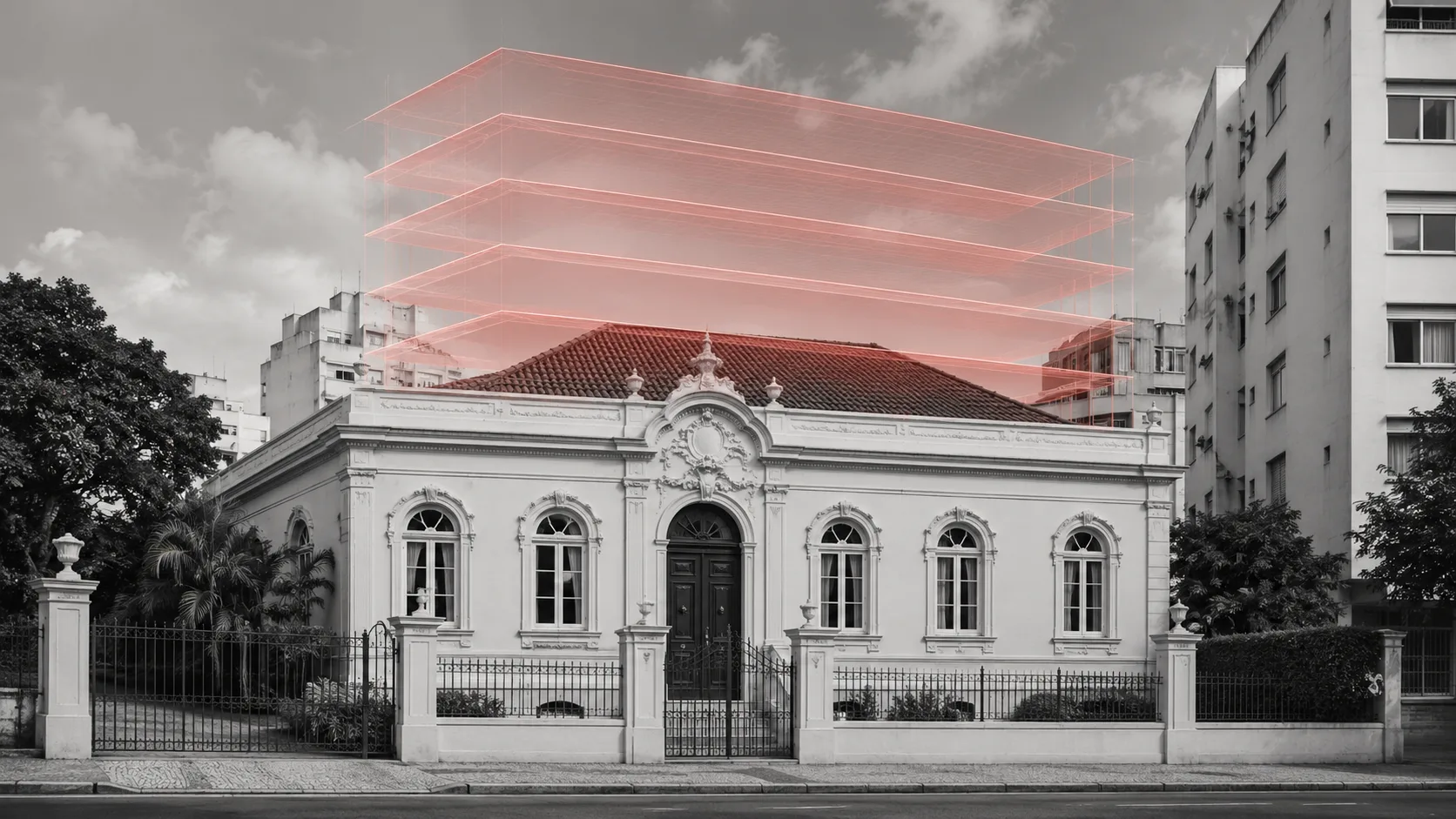
The two previous articles in this series described two ways to build above the basic coefficient. Paying a counterpart to the municipality, the onerous concession. Or buying a tradable certificate inside an urban operation, the CEPAC. In both, the additional potential comes from the public authority, in different formats. There is a third path, older in spirit and stranger in mechanics: the potential comes from another property. A listed mansion that cannot grow, a lot donated to the city, a building frozen by preservation. That potential, which would otherwise be lost, the law lets travel. This is the transfer of the right to build, Transferable Development Rights (TDR), set out in art. 35 of the City Statute.
What art. 35 says, word by word
The legal provision for TDR is in a single article of the City Statute, Section XI, right after the onerous concession (Section IX) and the consorted urban operations (Section X). It is short and answers everything that matters.
The article answers three questions. The caput answers who can transfer and how: the owner of a property necessary for a public purpose may exercise the right to build elsewhere or alienate it, always by public deed. The items answer in which situations: urban facilities, preservation, and social programs. The § 1 adds a fourth door, the donation of the property to the public authority. And the § 2 hands the ruler to the municipality: none of this works without a specific municipal law based on the master plan. Art. 42, II of the same Statute reinforces that the master plan must contain the provisions of art. 35, and art. 4, V, "o" lists the transfer among the instruments of urban policy. Without local law, the federal provision sleeps.
Created land: the right to build detaches from the property
Why can a right to build travel from one lot to another? Because Brazilian urban doctrine accepts, today without controversy, the separation between the right of property and the right to build on the land. The land belongs to the owner. How much can be built on it is a public measure, defined by the master plan through use coefficients. This is the thesis of created land, inspired by the French experience of the legal density ceiling, the plafond legal de densité, and consolidated in Brazil by the Carta do Embu, approved in 1976 at the seminar promoted by the Fundação Prefeito Faria Lima and by CEPAM.
Once the right to build detaches from the land and comes to be measured by coefficients, it becomes autonomous and capable of being traded, independently of the ownership of the lot that serves as its support. The onerous concession, CEPAC, and TDR are three children of this same thesis. The source and the format change; the premise is the same.
The land belongs to the owner.
The right to build is a measure of the city.
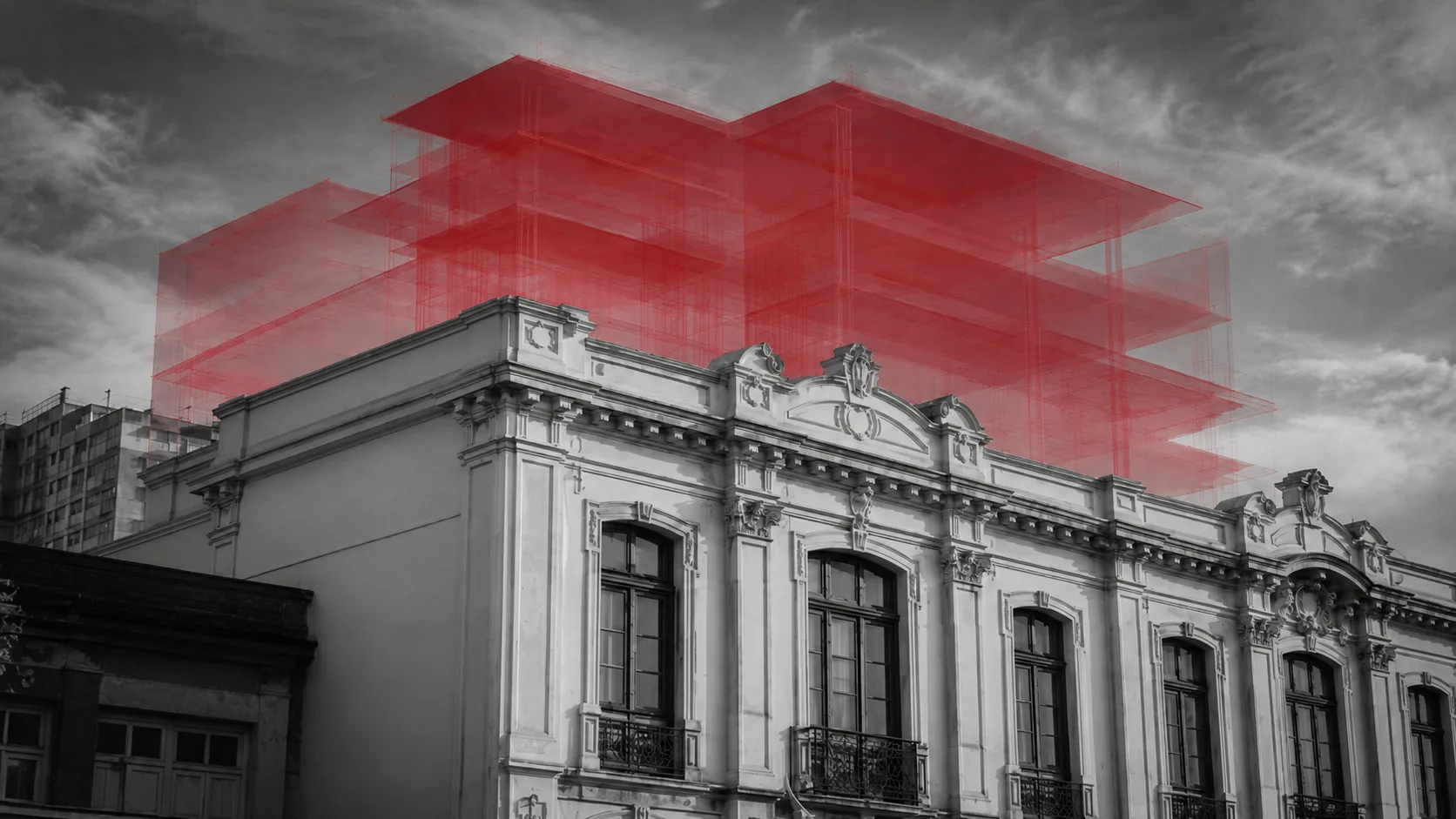
The transfer moves the second without touching the first.
Sending and receiving: two properties, one potential
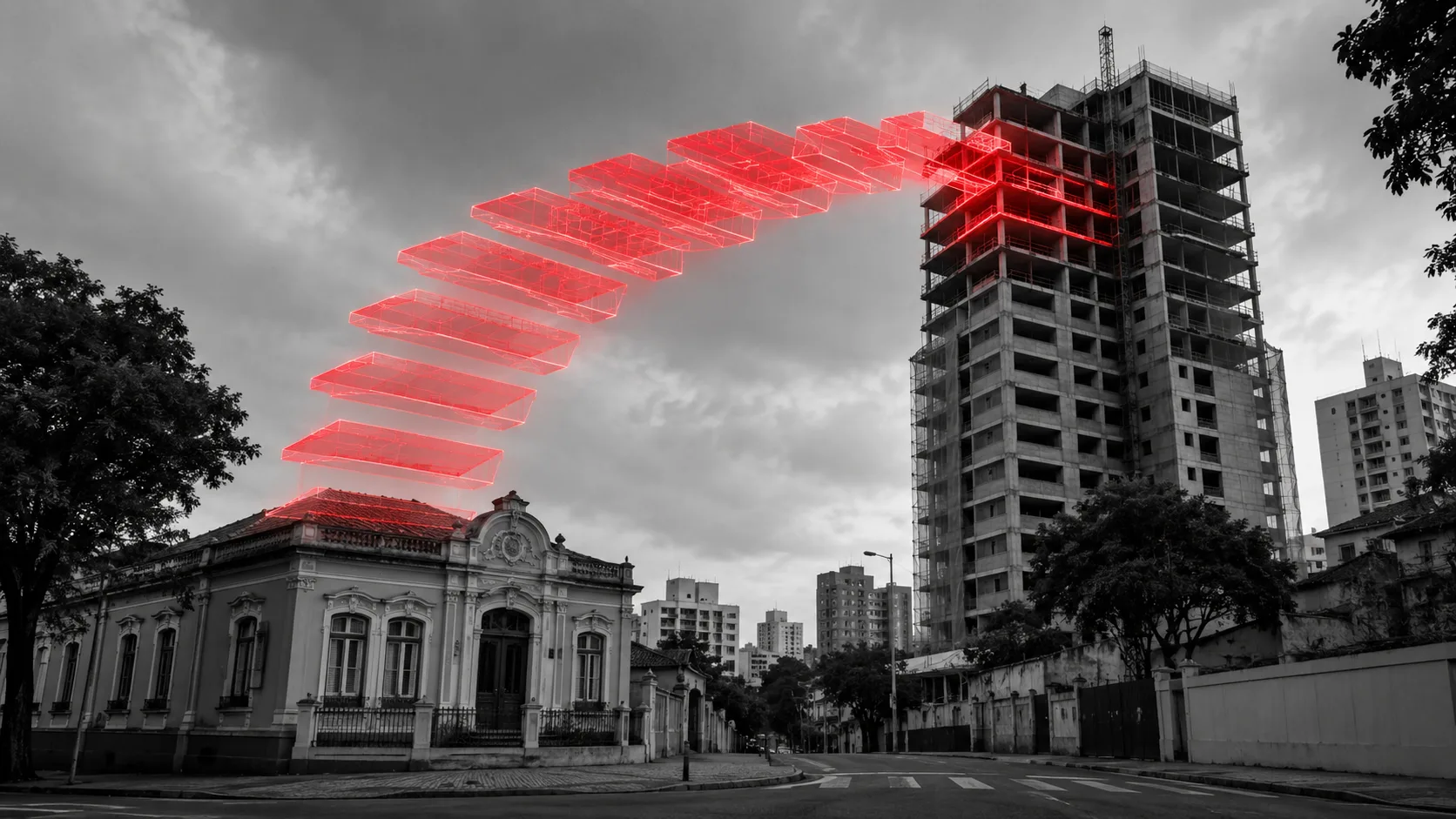
The mechanics of the transfer always involve two properties. The sending property, or generator, is the one affected by a restriction from the public authority, a heritage listing, an environmental preservation, or the one donated to the city. It is from this property that the unused potential leaves. The receiving property is the one that receives that potential and exercises it, in an area with infrastructure capable of supporting the densification. The very caput of art. 35 provides for two ways to bridge the two: the owner may exercise the potential elsewhere, on another property of their own, or alienate it to third parties. In both cases, by public deed.
To prevent the same potential from being used twice, the transfer is recorded on the property title of the sending property and on that of the receiving one. The record serves two functions. It allows the public authority to control how much potential each property has already spent, and it protects whoever later buys the lot: the buyer knows, from the property title record, how much can still be built there. The public deed requirement of art. 35 converges with the Civil Code, which makes the deed a requirement for the validity of transactions that transfer rights in rem over property and conditions acquisition on registration with the registry.
How much is transferred, and why it is not meter for meter
Federal law brings no calculation formula. The City Statute leaves the quantification to the master plan of each municipality. Specialized doctrine poses the first question clearly: which use coefficient can be transferred, the basic or the maximum? The answer is in local legislation, and it changes the result.
São Paulo is the most documented example. In the Strategic Master Plan, Municipal Law 16.050 of 2014, the transfer with donation of the property calculates the transferable potential by multiplying the area of the sending lot by its maximum use coefficient and by a donation incentive factor. In properties classified as ZEPEC in the category of representative real property, the typical case of listed buildings, the transferable potential is the difference between the basic and the maximum coefficient of the property itself. The practical consequence is counterintuitive: the amount of square meters taken from the sending property is not necessarily equal to the amount received by the receiving property, because it depends on the location of each one. The transfer is a conversion, not a copy.
With donation and without donation
As to the participation of the administration, the transfer divides into two kinds, and the distinction matters because it changes the municipality's margin of decision.
- With donation of the property. Provided for in § 1 of art. 35, it is the case in which the owner donates the property, or part of it, to the public authority for one of the purposes of items I to III, and receives in return the transferable right to build. Here the municipality's discretion is broad: it decides whether to accept the donation and on what conditions.
- Without donation, typical of heritage listing. Grounded in item II, it is the case in which the owner keeps the property preserved but, prevented from building on it by the restriction, is compensated with the right to build elsewhere or to sell it. The margin of decision is smaller, because the transfer serves to reimburse whoever was prevented from using their own lot.
In both, the doctrine warns of a point that often escapes the market: there is no subjective right of the interested party to the transfer. It is not a bound competence. The municipality grants the transfer within the public interest it serves, not as an automatic benefit of whoever has a restricted property.
Concession, CEPAC, and transfer: three forms, one thesis
The three instruments belong to the same created-land family: all of them sell, in some way, the right to build above the basic. The decisive difference lies in whom that potential is obtained from. The table places the three side by side.
| Axis | Onerous concession | CEPAC | Transfer |
|---|---|---|---|
| Legal basis | Arts. 28 to 31 of the Statute | Arts. 32 to 34 and the urban operation law | Art. 35 and specific municipal law |
| Where the potential comes from | From the municipality, against a counterpart | From a title issued by the municipality | From another property: listed, preserved, or donated |
| How it is obtained | Paying a counterpart at project approval | Buying the certificate in the primary or secondary market | Transferring or buying the potential of another property, by public deed |
| Where it applies | In any zone of the master plan above the basic | Only within the perimeter of the urban operation | Where municipal law enables sending and receiving properties |
| Who records it | Municipality, at approval | Municipality issues, CVM registers the operation | Municipality authorizes, registry records on the property title |
| What is acquired | Additional right to build, paid | Tradable security | Building potential detached from another property |
| Typical function | Funding the urban purposes of art. 26 | Funding the urban operation itself | Preserving, enabling donation, compensating restriction |
Where the transfer already walks: Curitiba and São Paulo
Curitiba is the historical reference. A pioneer of created land in Brazil, the city regulated the transfer of building potential for preservation back in Municipal Law 9.803 of 2000, later repealed, and today keeps it alive in Law 16.361 of 2024, regulated by municipal decree. Authorization to transfer the potential of a property of historical or cultural value goes through the technical analysis of IPPUC, the city's planning institute, and of the cultural heritage appraisal commission, with the transfer recorded at the registry, on the sending property and on the receiving one.
São Paulo is the largest-scale example. The Strategic Master Plan of 2014 details the two kinds: the transfer without donation, of the listed properties classified as ZEPEC, and the transfer with donation, used to enable road improvements, social-interest housing, land regularization, and parks. The most visible case is that of Parque Augusta. The area was designated as a municipal park and the building potential of the lots was transferred to the developers Cyrela and Setin, by means of Declarations of Transferable Building Potential, in an agreement that involved the city hall, the Public Prosecutor's Office, and civil society. The square becomes a park; the square meter reappears densifying another point of the city.
The transfer is the quietest instrument of the trio because it neither collects for the treasury nor moves the stock exchange. It does something else: it allows preservation without expropriation and donation without loss. Where it works, the listed mansion stops being a liability and becomes a transferable asset, and the park stops being an unpayable expropriation and becomes an exchange. Where it does not work, the city lists the property, freezes the lot, and offers nothing in return, and the bill for preservation turns into a lawsuit. The choice, as with the concession, is municipal, and less technical than it seems.
Sources consulted
All URLs verified on June 5, 2026.
- Lei 10.257/2001, City Statute, Planalto. Art. 35 (transfer of the right to build), art. 4, V, "o", art. 28 (use coefficient), and art. 42, II.
- City Statute, annotated art. 35, Arsenic library.
- LEVIN, Alexandre. Transferência do direito de construir. Cadernos Jurídicos da Escola Paulista da Magistratura, EPM/TJSP, year 23, n. 62, Apr-Jun/2022, p. 41-61. Created land, sending and receiving properties, São Paulo formula, the recording, and the two kinds.
- São Paulo City Hall, Gestão Urbana SP. Transfer of Building Potential, receiving areas, and calculation in ZEPEC/BIR.
- São Paulo Strategic Master Plan, Municipal Law 16.050/2014, arts. 122 to 133 on the transfer of the right to build.
- Curitiba City Hall, Urbanism. Building potential, specific legislation, Law 16.361/2024, and history.
- Revista Brasileira de Estudos Urbanos e Regionais, ANPUR. Study on Parque Augusta and the transfer of building potential to parks in the 2014 São Paulo PDE.
- Revista Brasileira de Estudos Urbanos e Regionais, ANPUR. Onerous concession and created land, the Carta do Embu and the French legal density ceiling.
Updated on June 5, 2026. Declared pending: collection figures and total transferred area per city do not enter this text, for lack of a consolidated verifiable source; they will be added when there is a dated official report. The legal nature of the transferred building potential, whether a right in rem, a personal right, or an intangible asset, is the object of doctrinal debate; the text describes the mechanism without settling that controversy.