What Jane Jacobs saw
In 1961, the writer and urban thinker Jane Jacobs published The Death and Life of Great American Cities, the book that reorganized how we think about the city. Its most quoted observation came from the sidewalk where she lived, in Greenwich Village, New York: a street's safety comes not from the police or a wall, but from the constant presence of people who, without arranging it, keep watch over the public space for one another. She called it eyes on the street.
The idea is simple and counterintuitive. A street is not safe because it is empty and controlled, it is safe because it is full and used. Whoever walks, sits, works at the shopfront, looks out the window: each presence is a witness, and their sum is a natural surveillance that no camera reproduces. Where there are people all the time, the space regulates itself. Where the street empties, the same corner turns into risk.
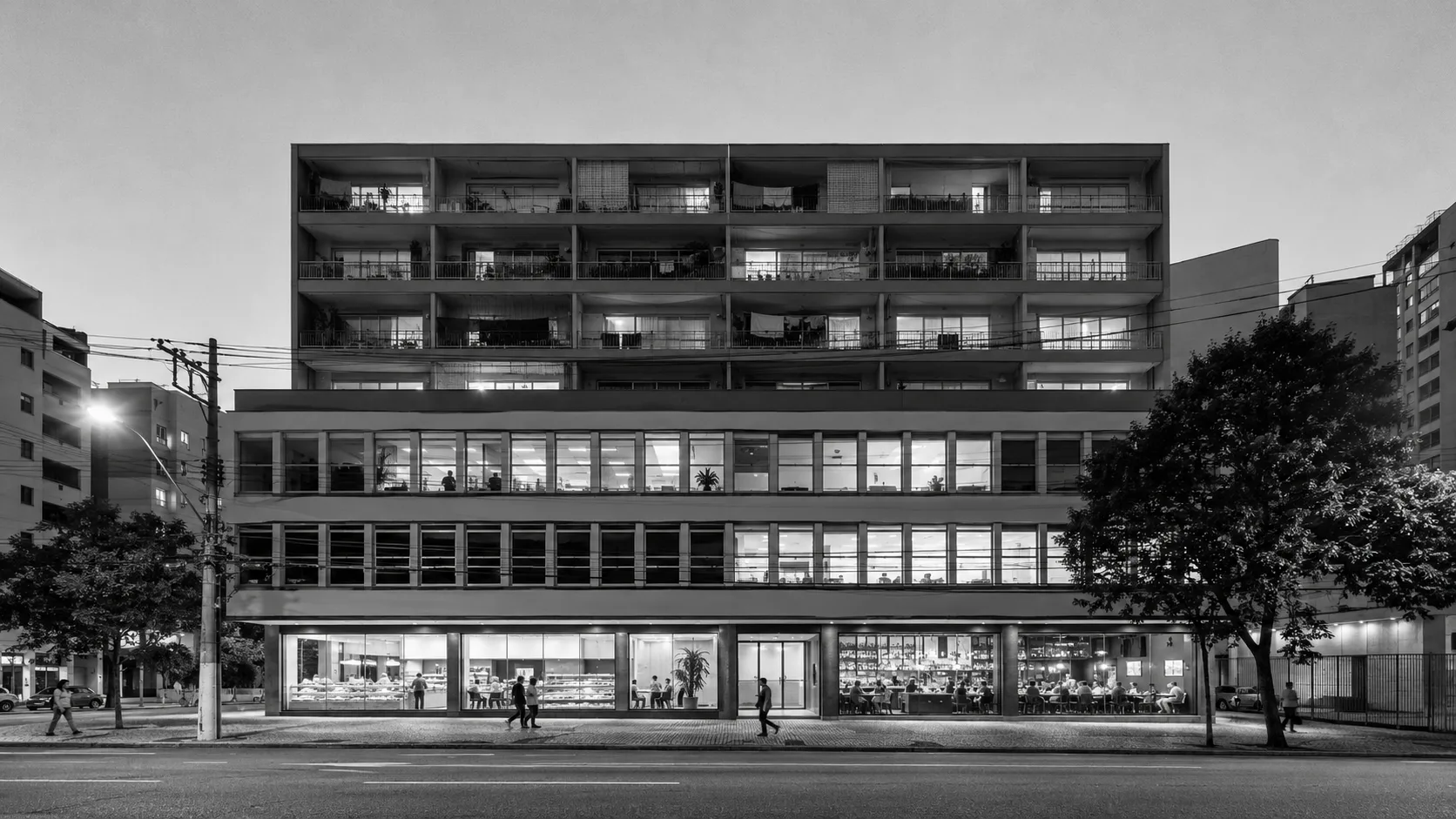
The series on mixed use showed one generator of that presence: the active ground floor, the commerce that returns movement to the sidewalk. But ground-floor commerce has a limit, the clock. It fills during business hours and empties afterward. This post is about the other generator of presence, the one that covers the hours commerce does not: public space.
Eyes on the street do not come from shops alone
Ground-floor commerce is a powerful ally of the living street, which is why it took center stage in the previous posts. But reducing eyes on the street to commerce stops halfway. The shop closes. The office empties at 7 p.m. What keeps presence before the commercial city wakes and after it sleeps is not the shopfront, it is public space: the square, the wide sidewalk, the park, the plaza, the waterfront.
Public space is the city's common ground, the place that asks for no purchase to be occupied. It is where someone runs at six in the morning, where the child plays in the afternoon, where the music happens at night. Each of these uses brings people at a different hour, and none depends on an open shop. It is the infrastructure of presence that works even when commerce is shut.
That is why public space is decisive exactly where mixed use alone falls short. A neighborhood can have an active ground floor and still empty out in the small hours if there is nowhere for life to go outside business hours. The well-designed square is that somewhere. It extends the street's hours of presence at both ends of the day, and that is what sustains eyes on the street when the clock of commerce stops.
One space, many uses through the day
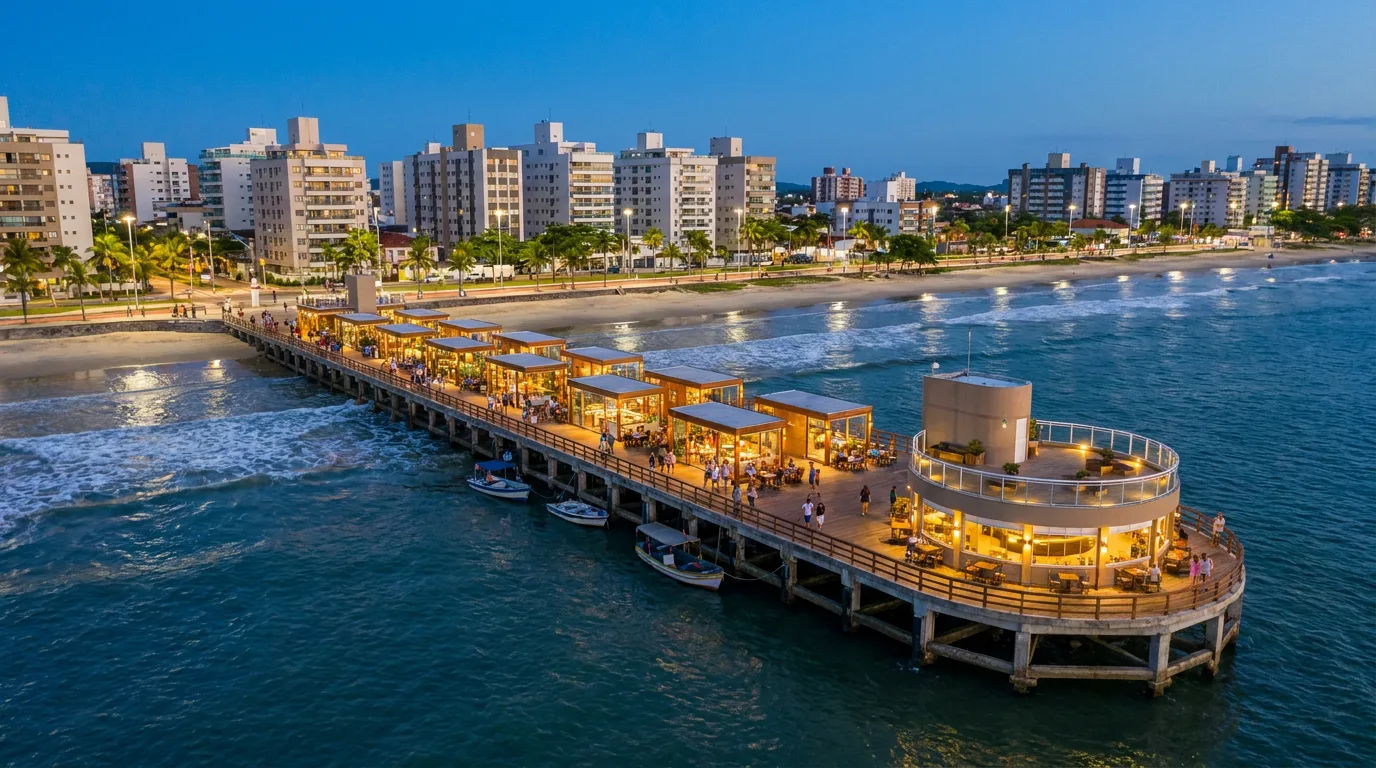
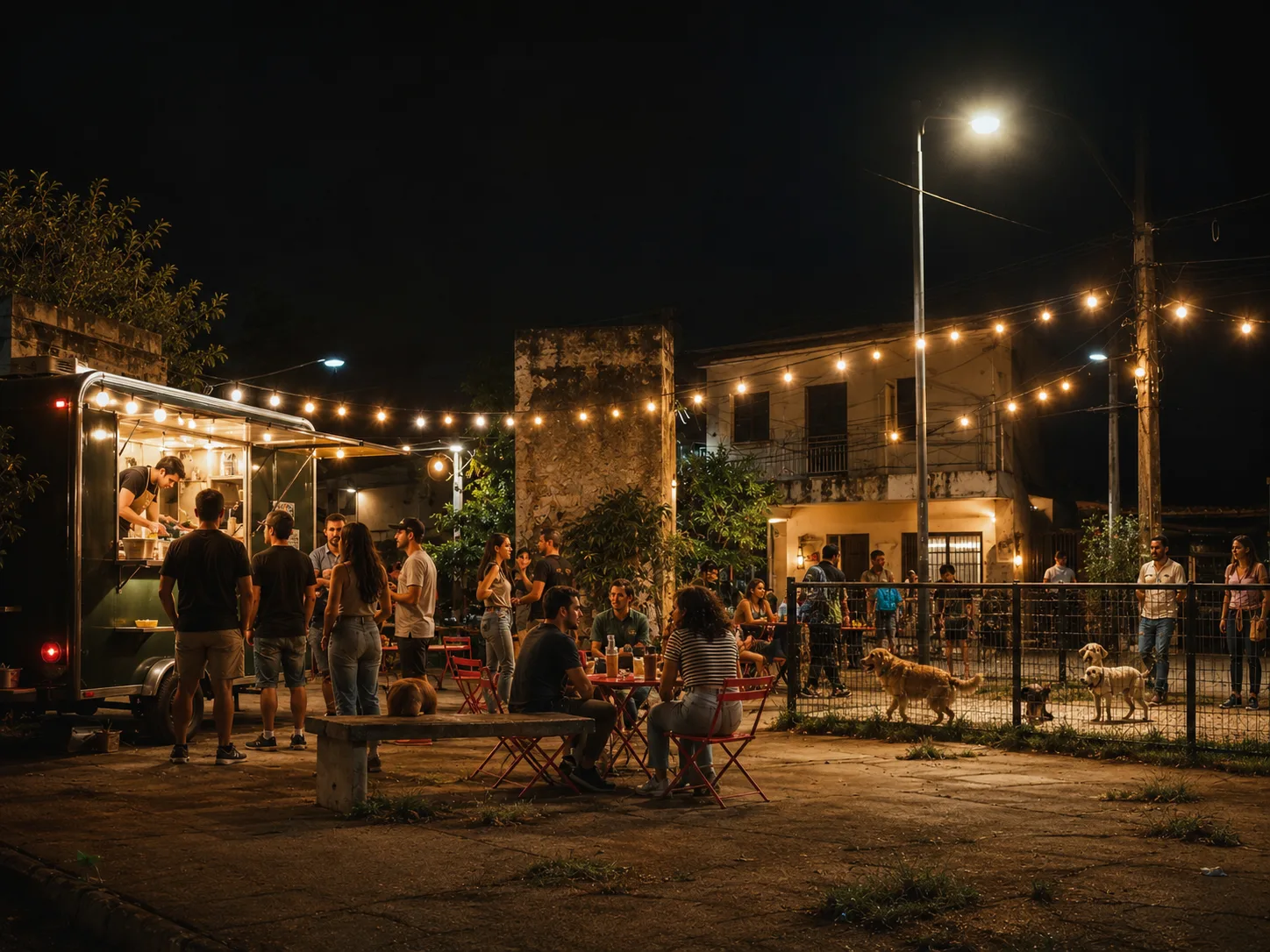
What keeps a public space full of presence is not one use, it is the succession of uses through the day. The same square can be several things at different hours, and that rotation is what keeps it alive. Early in the morning, before commerce opens, it is exercise: walking, running, stretching, the dog, the seniors' group. By day, it is passage and rest: those crossing, those having lunch on a bench, those waiting. At night, after work, it is gathering: the event, the night market, the music, the conversation that does not fit at home. The waterfront is the clearest example of this rotation: from the walk and the run at dawn to the late-night stroll, it keeps movement and varied activity almost around the clock.
Each time slot brings its own public, and the exchange between them is what prevents the void. When the last person exercising crosses paths with the first to open the shop, and the last evening visitor crosses paths with whoever still lingers in the square, presence never hits zero. It is the same curve-of-the-day principle that mixed use applies to the building, now applied to public territory: cover the 24 hours by distributing uses, instead of concentrating everything in a peak followed by a desert.
The safe square is the one with use before and after commerce.
It is by covering the hours commerce does not that well-designed public space matters so much for safety. Not because it replaces the active ground floor, but because it completes it. The ground floor holds business hours; the square, the park, and the sidewalk hold dawn and night. Together, they close the cycle of presence that keeps eyes on the street all day long.
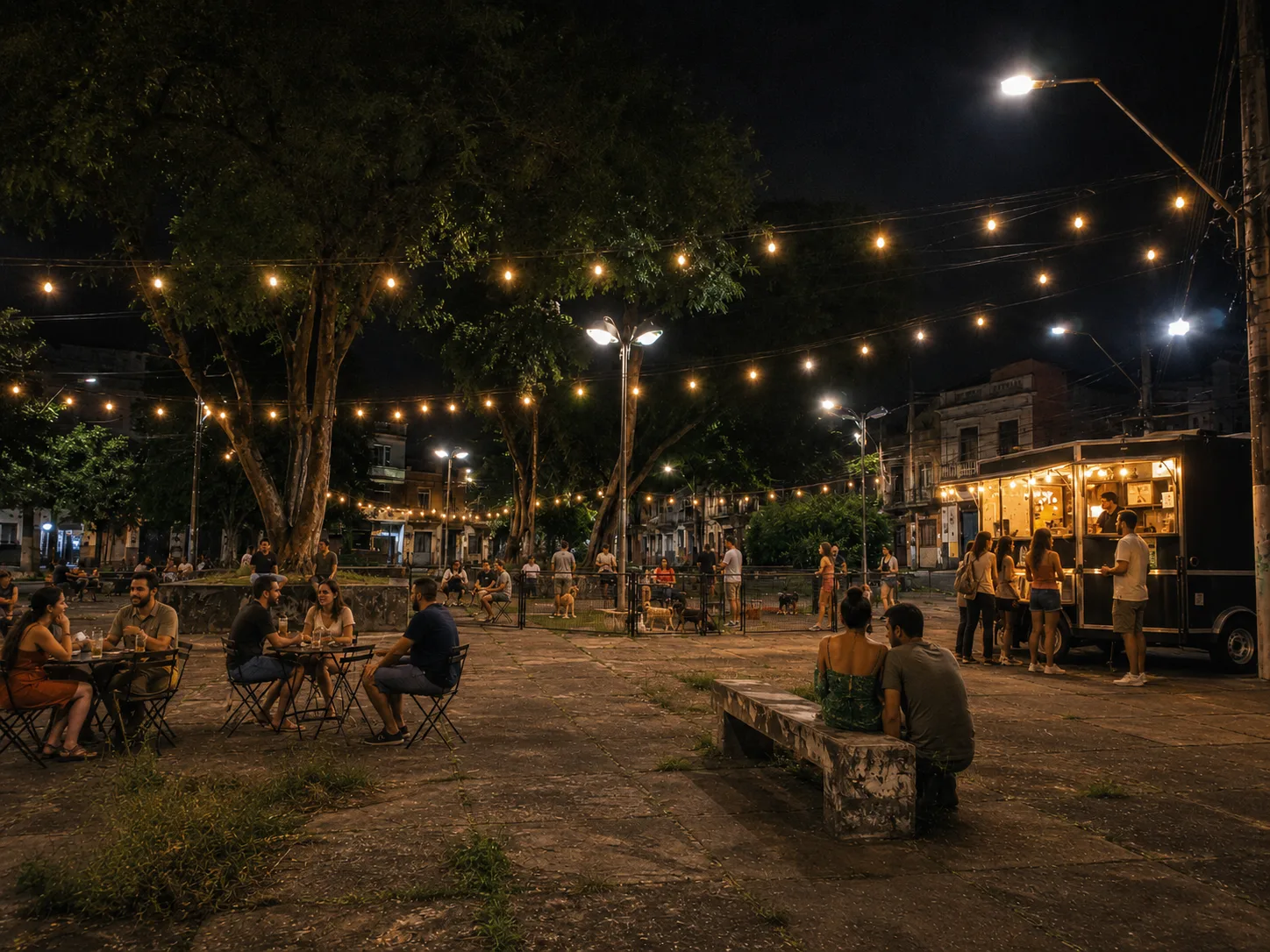
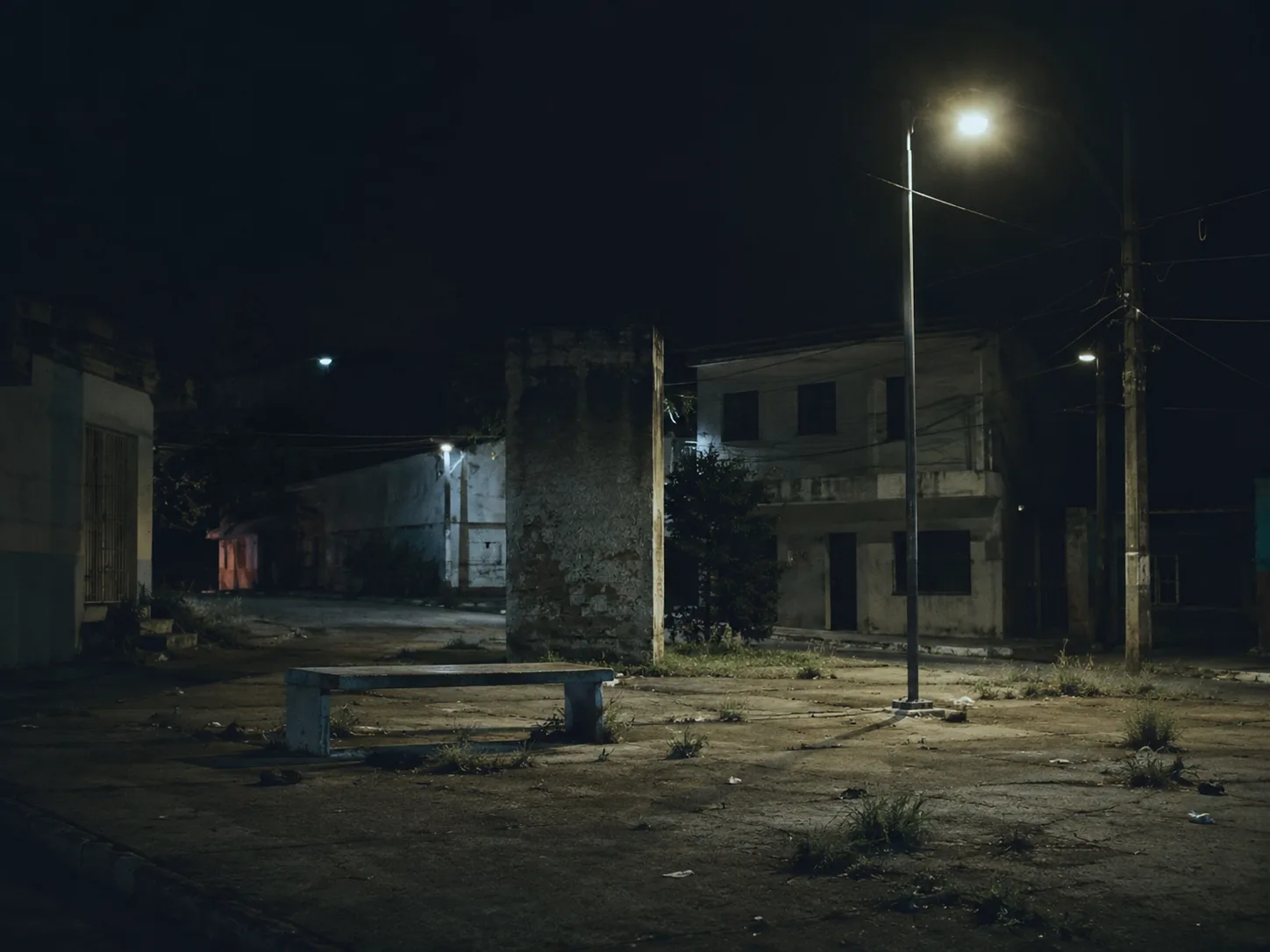
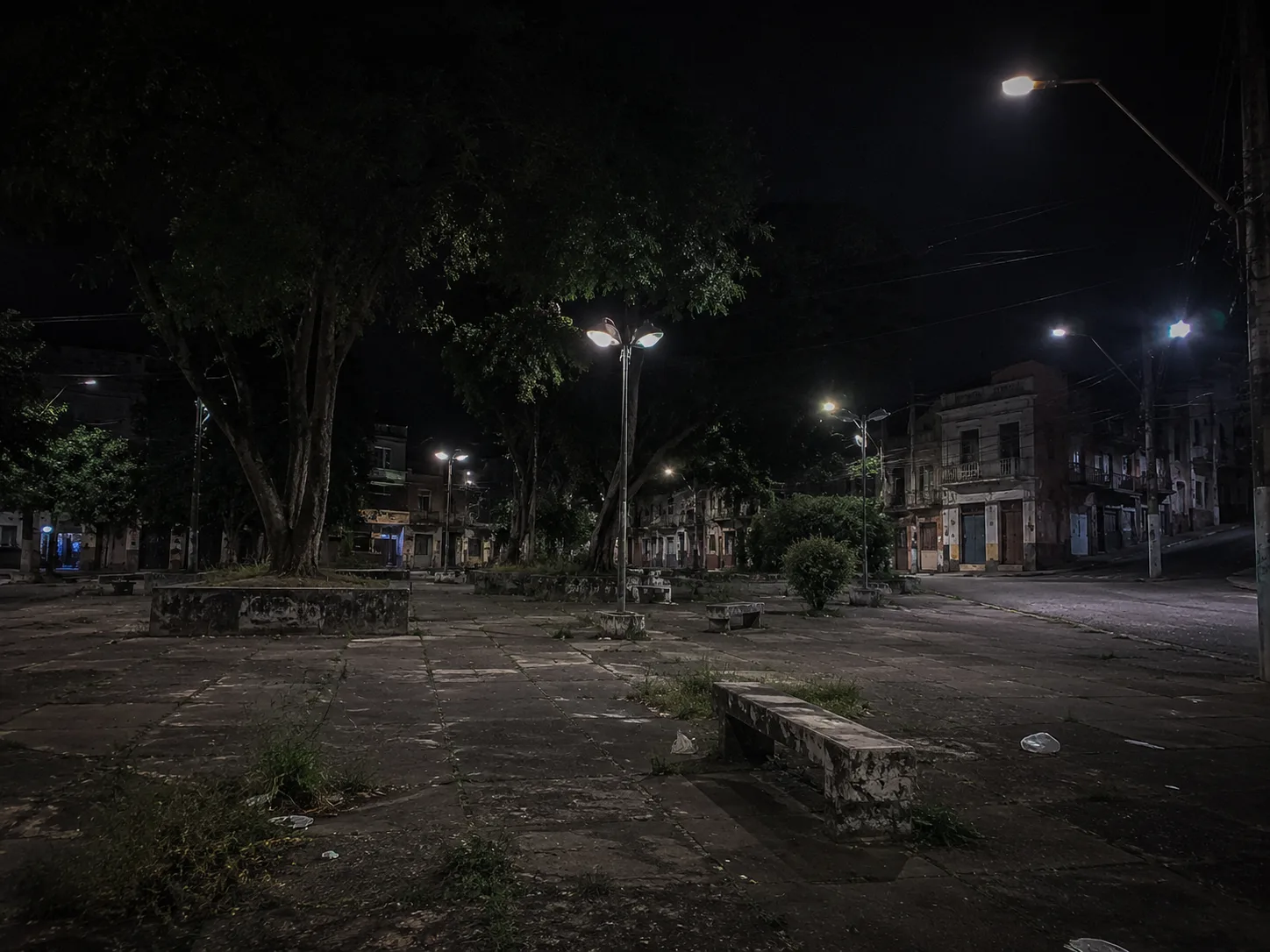 Before
After
Before
After
Density and inclusion: the full that protects
Presence does not come merely from having public space. It comes from having people, varied people, and enough of them. So, alongside mixed use and the quality of the space, two factors decide whether the street fills up: inclusion and density.
Public space that protects is inclusive public space, welcoming all ages and all crowds. The square that serves the child, the elderly, the worker, the skater, and the family at once is the one with movement all day, because each group uses it at its own hour and in its own way. Space designed for a single type of person empties during everyone else's hours.
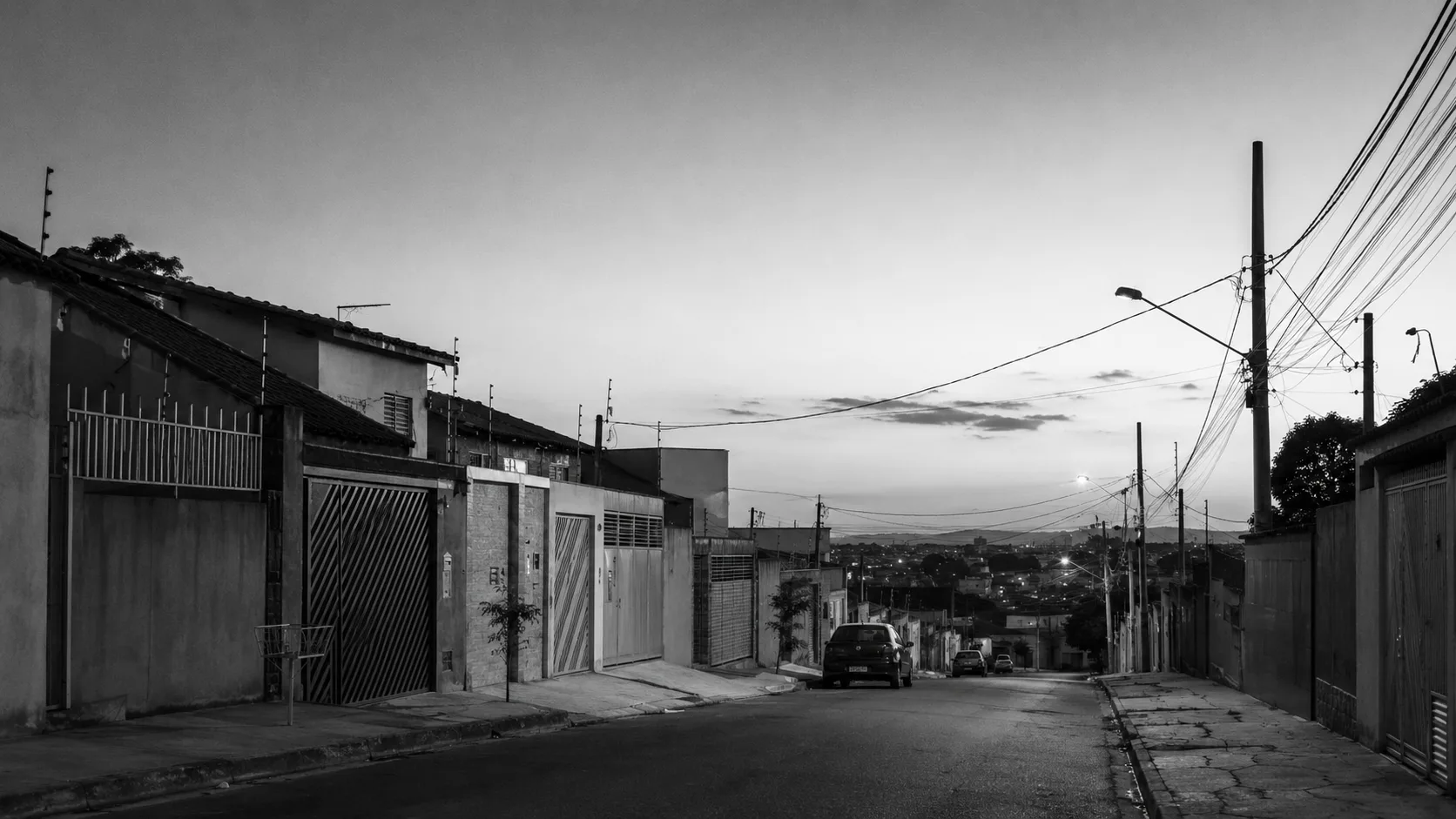
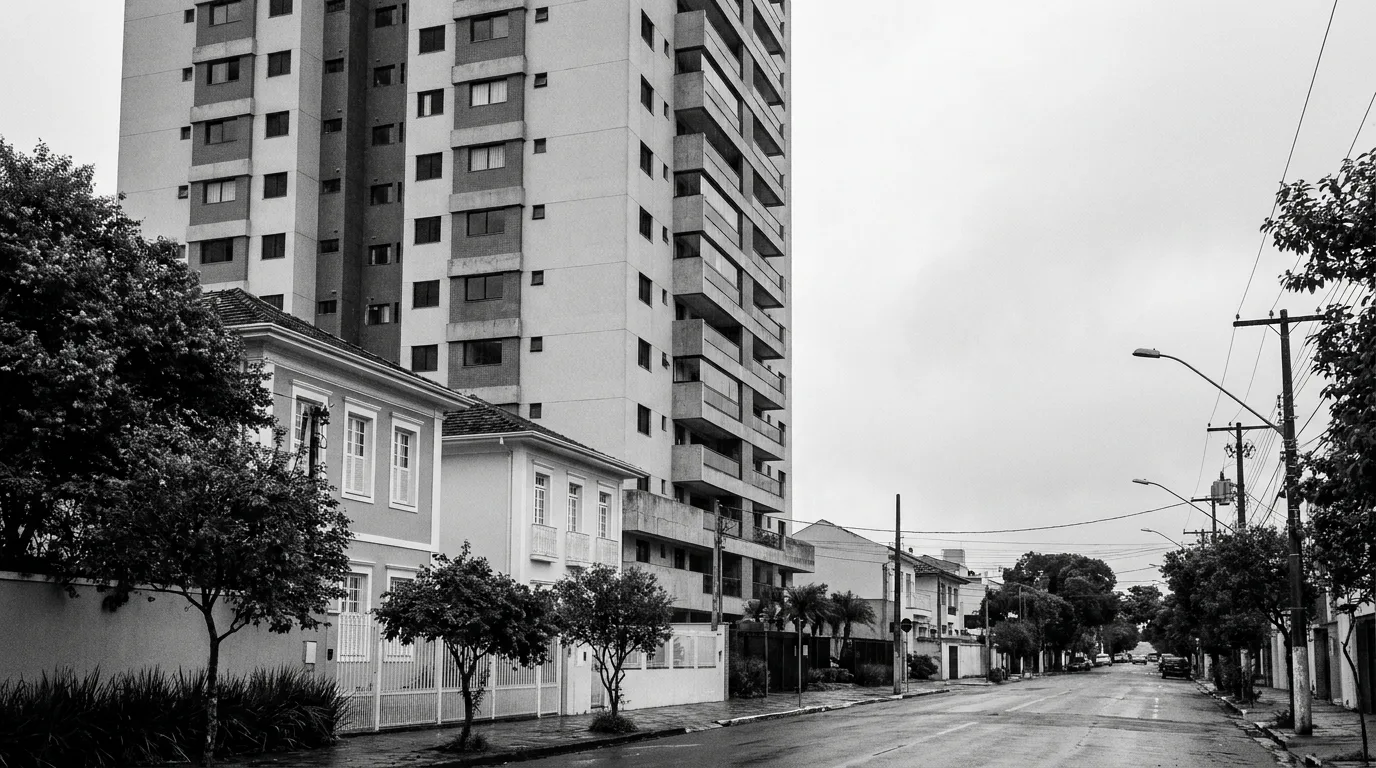
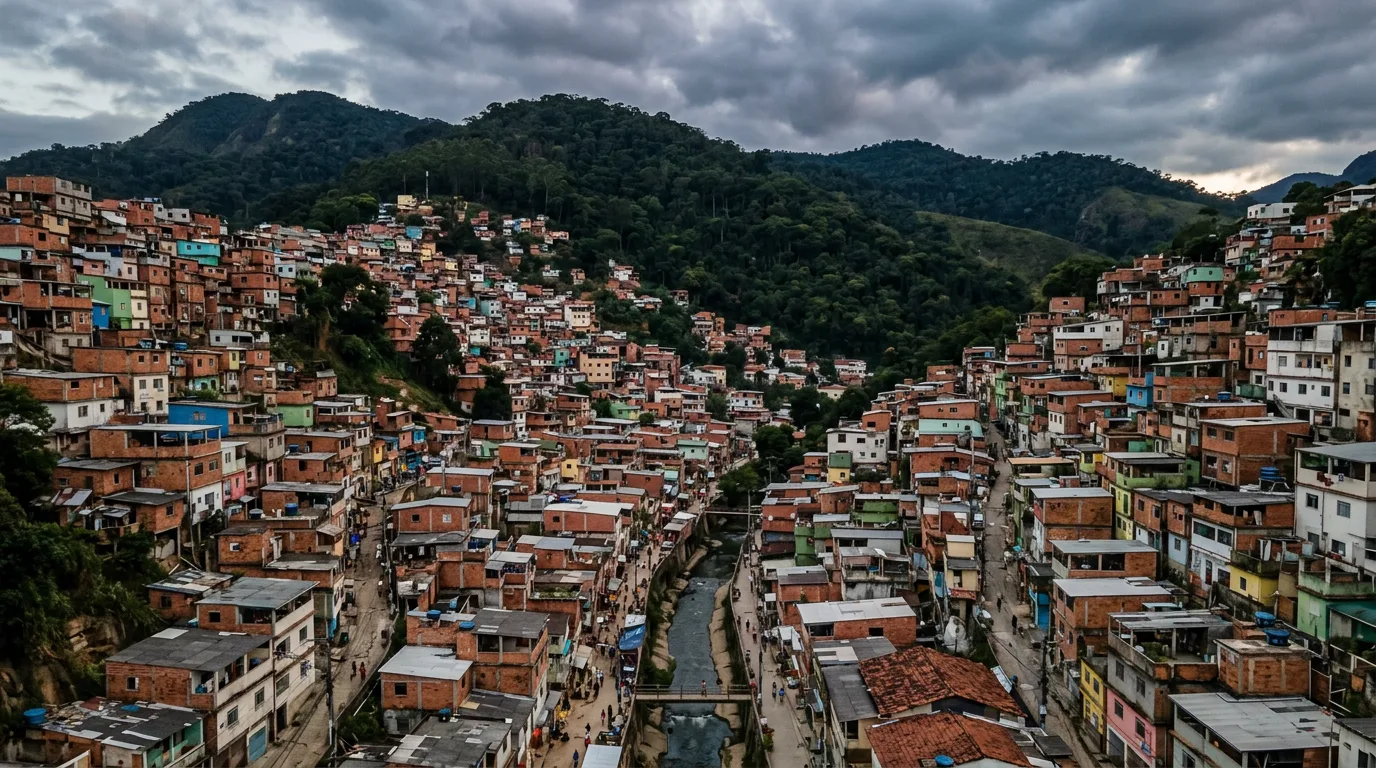
Density works in the same direction, up to a balance point: more people living and moving nearby means more eyes, more customers for the shops, and more life in the square. In Brazil the idea persists that the safe place is the low-density one, the neighborhood of set-back houses and empty streets, in the spirit of a Jardim Europa in São Paulo. But the calm of those addresses comes from walls, gates, and private security, not from urban vitality, and it is the opposite of eyes on the street. Safety through presence is not in the controlled void, but in the right density, inclusive and well designed.
What empties the street
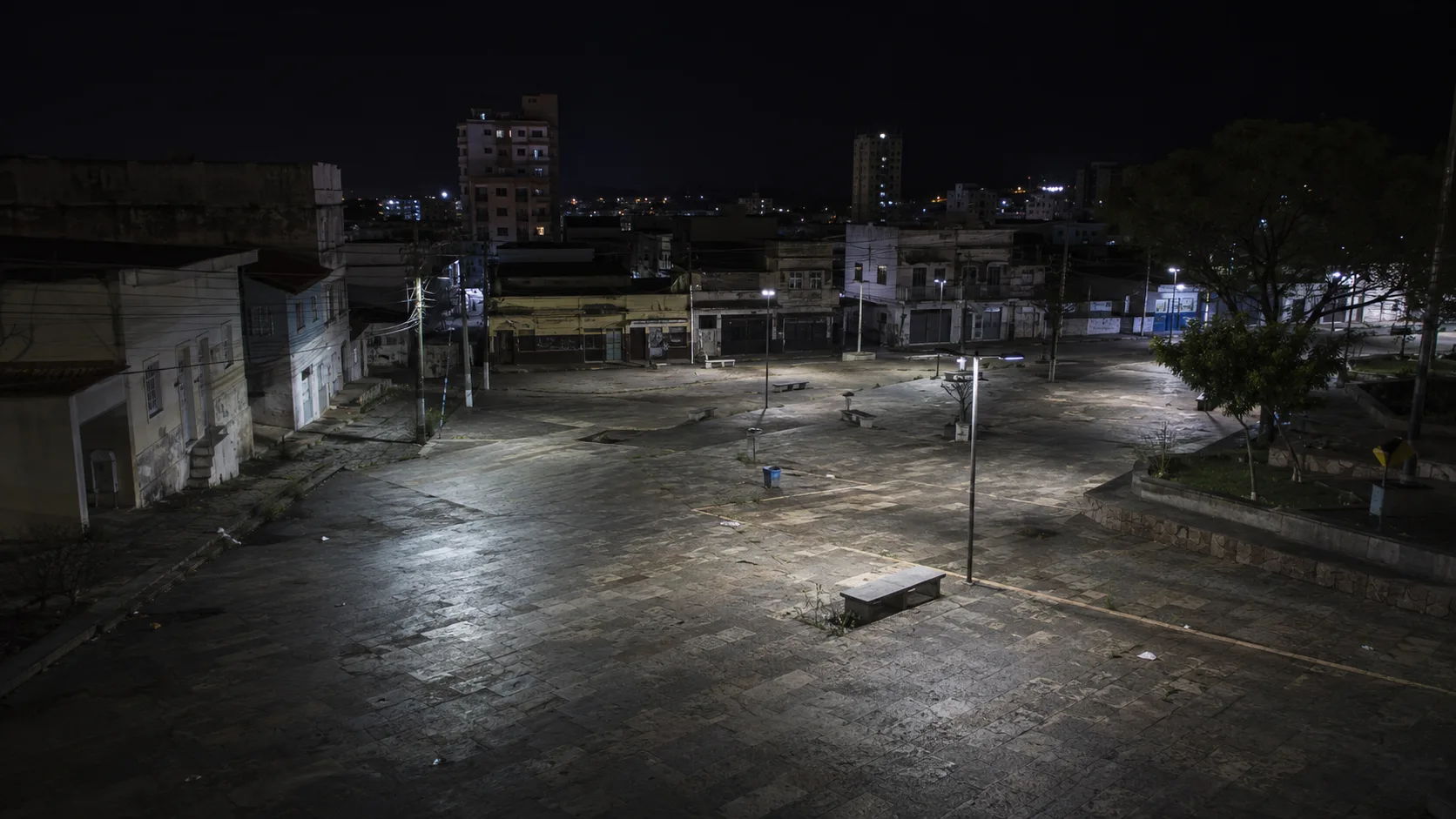
If distributed presence is what gives safety, the opposite is what takes it away. And the opposite is not only the absence of people, it is the design that pushes people away. Some patterns empty public space predictably, and all of them are design decisions, not fate:
- Closed edge. Walls, unused landscaped setbacks, blind facades, and garage gates facing the public space strip it of the windows and doors that would produce eyes. The square fenced with its back turned is a square without witnesses.
- No reason to stay. With no shade, no bench, no water, nothing to do, no one stays. The space becomes a corridor of quick passage, and quick passage watches nothing.
- Darkness. Lighting designed for the car, not the pedestrian, hands back at night a space no one occupies. Without light at the scale of the walker, the square closes itself when it gets dark.
- Anti-pedestrian scale. Long blocks, hostile crossings, and isolated superblocks scatter the few people there are, and scattered people never reach the critical mass that produces presence.
- Neglect. Public space without maintenance signals that no one cares, and what seems ownerless is what gets avoided first. Upkeep is part of the safety design, not a later detail.
The common thread is one: the void is almost never a chance absence of people, it is the result of a space that was not designed to be used. The good news is the flip side: if emptying is designable, so is presence.
Designing safety into public space
Designing a safe public space is not installing more cameras, it is shaping the place so it attracts and holds presence through the day. It is technical work, with its own repertoire, and it is what Arsenic does in its public-space requalification work.
The instruments are concrete: active edges, with uses and openings facing the space instead of walls; furniture that invites lingering, benches, shade, water, somewhere to sit and stay; lighting at the pedestrian scale, which extends use into the night; crossings and routes that connect the square to the neighborhood instead of isolating it; landscaping that gives comfort without creating blind spots; and programming, the calendar of uses that guarantees the rotation of publics that keeps eyes on the street.
That repertoire is in real projects of the studio. Praça Acrísio, in Itabira, is a square design that treats public space as infrastructure for coexistence and for safety. It is the difference between a square that exists on the map and a square the city uses.
Safety is presence, and presence is designed
Eyes on the street is, in the end, a thesis about presence, and presence is something you design. The active ground floor takes care of business hours; public space takes care of the rest, distributing uses from dawn to night so the street is never left without witnesses. When the square is exercise in the morning, rest in the afternoon, and gathering at night, it does for safety what no camera does: it fills the place with people who care.
Safety in public space is not surveillance, it is design that produces life. And design is what you control. The city that separated everything bet on the controlled void; the living city bets on the well-designed full. Between the two, the difference is design, and design is where Arsenic works.
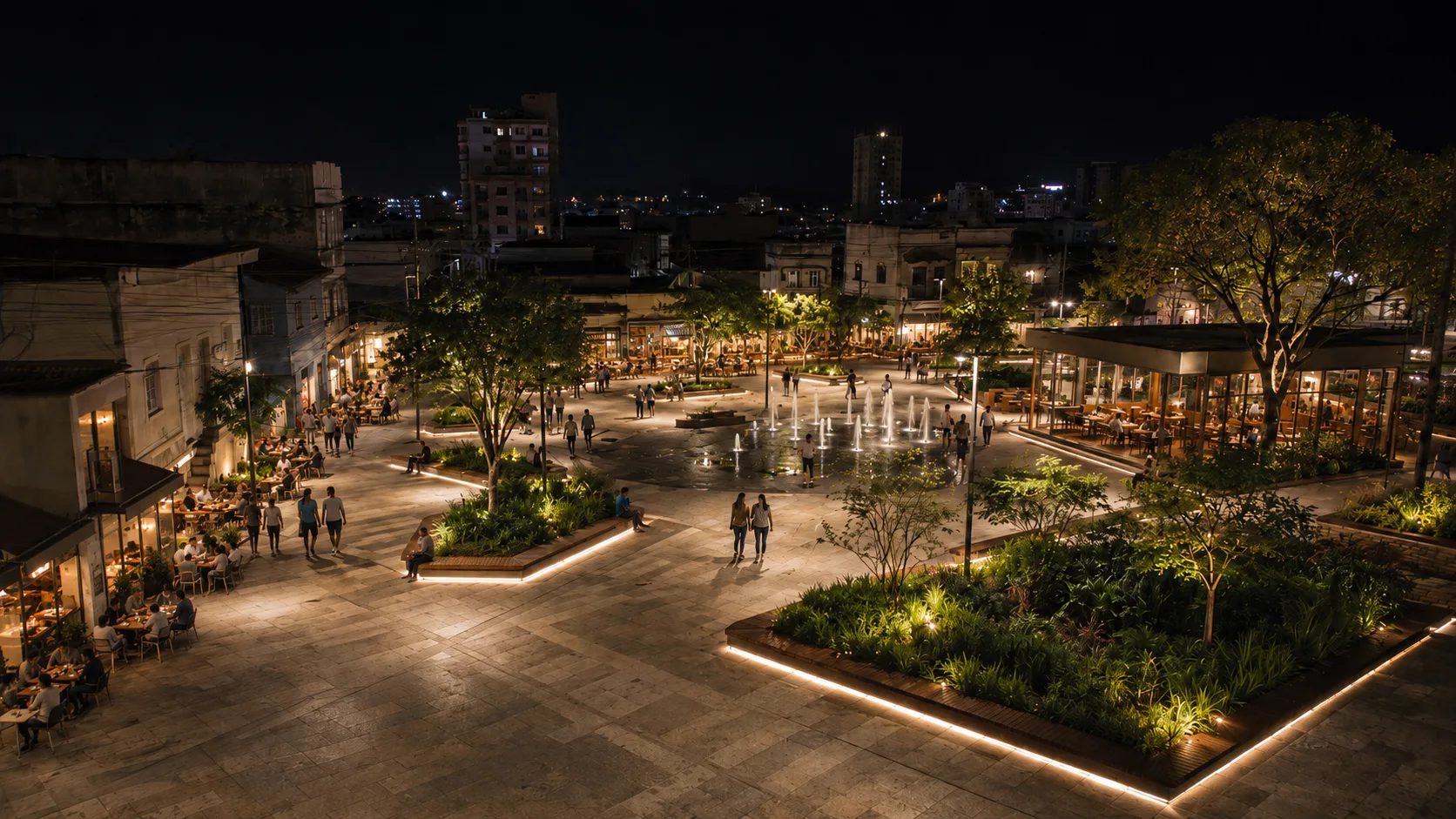
 Before
After
Before
After
Sources consulted
All URLs verified on June 24, 2026.
- The Death and Life of Great American Cities, Wikipedia.
- Jane Jacobs, eyes on the street, Project for Public Spaces, PPS.
- Jan Gehl, Life Between Buildings and Cities for People, Wikipedia.
- Project for Public Spaces, placemaking.
Updated on June 24, 2026. Declared editorial limit: the relationship between presence, use of public space, and safety is presented as a consolidated urbanism thesis, from Jane Jacobs to Jan Gehl and the Project for Public Spaces, not as a statistic. No crime figure is asserted without a source. The project cited, Praça Acrísio, is a real Arsenic work, with a page in the studio's portfolio.