
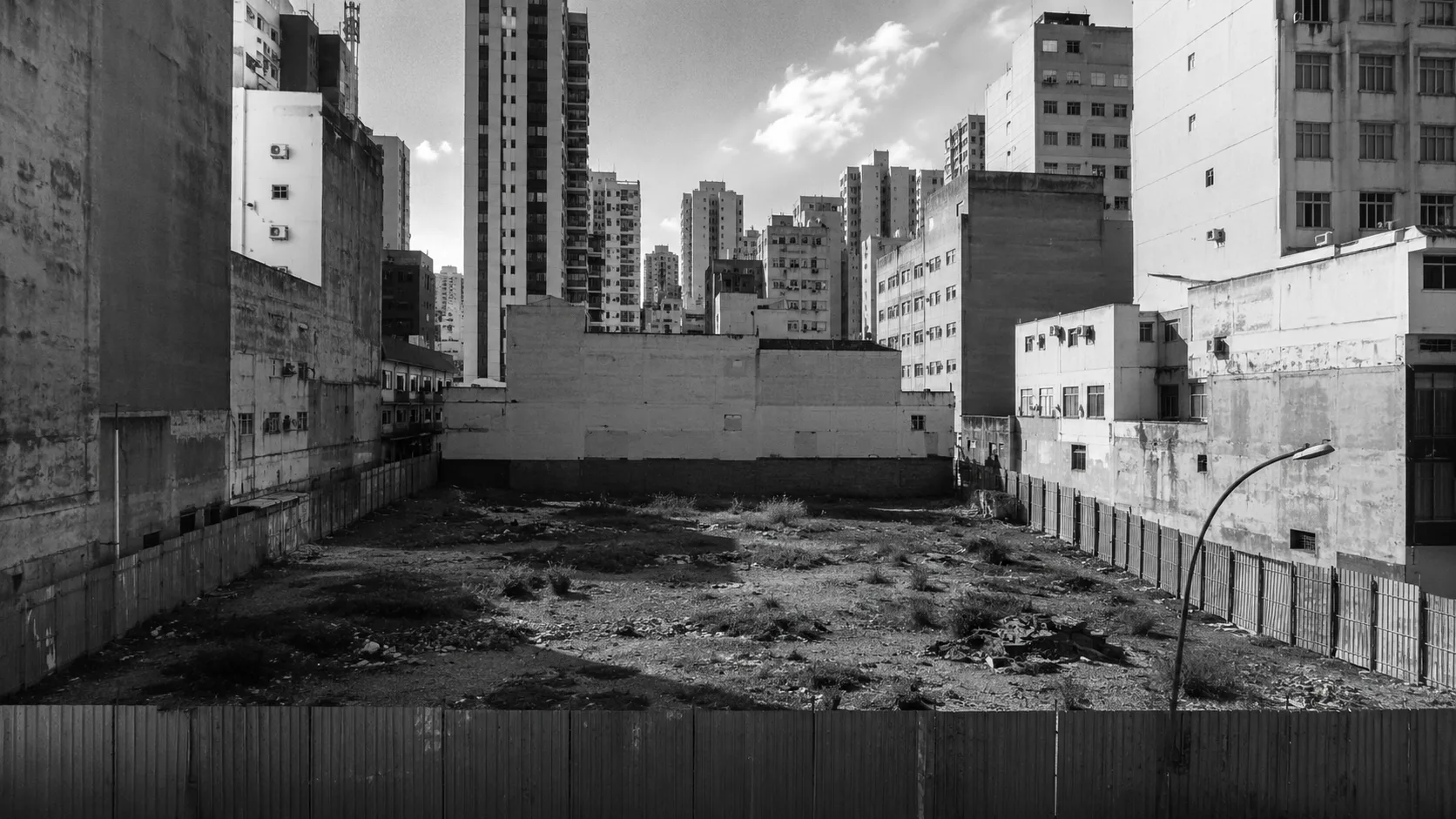
The logic of the staircase: a social function charged step by step
The Constitution does not treat urban property as an absolute right. Art. 182, in its paragraph 4, authorizes the municipality to require the owner of unbuilt, underused, or unused urban land to promote its adequate use, under penalty, in the exact words of the text, of measures applied successively. The sequence is the reading key to the entire instrument.
The word successively carries the entire design. The three items are not parallel options for the municipality to pick from: they are steps of a single staircase. Each step only opens when the previous one has not resolved the problem. First, the obligation to put the land to use. Then, the tax that grows heavier. Last, the punitive expropriation. The objective is in the caput of the article and in the paragraph that follows it.
The combined reading sets the criterion: urban property fulfills its social function when it complies with the master plan. Outside it, idle land is the opposite of the social function, and the staircase exists to correct that. The requirement depends on a specific law for an area included in the master plan, and on the terms of the federal law, which is the City Statute.
Where the rule comes from: Constitution, master plan, and the Statute
The 1988 Constitution drew the design. Lei 10.257 of 2001 regulated it and gave it concrete deadlines and figures. Without that federal law, paragraph 4 of art. 182 would be an intention with no mechanics. Between the two texts sits a third, indispensable element: the master plan.
The master plan is approved by the City Council and is mandatory for cities with more than twenty thousand inhabitants. It is the instrument that defines what adequate use means in each zone, and that is why nothing happens outside it. Without a specific municipal law and without an area included in the master plan, the staircase cannot be activated. It is a power of the municipality, not an automatic effect of the federal law.
The fact matters especially for those who decide on a long horizon. The rule has existed for more than two decades, but its application depends on the municipality having assembled the legal and administrative apparatus for it: a master plan delimiting the areas, a specific law setting conditions and deadlines, and a structure to notify, inspect, and charge. Where that apparatus does not exist, the steps remain on paper.

First step: compulsory subdivision, building, or use
The first step is the obligation to put the property to use. The Statute opens it with a verb of municipal discretion, not of automatism.
The definition of underused is technical and points back to the master plan: underused is the property whose use is below the minimum defined in it. From there, the mechanism moves through notification.
The minimum deadlines are clear: one year, from the notification, to file the project with the competent municipal body; and two years, from the approval of the project, to start the works. Large-scale developments may, on an exceptional basis, provide for completion in stages, as set out in paragraph 5 of the same article. The clock starts running with the notification, and the notification is registered on record.
The lock that follows the property: the obligation is not sold off
The point that changes the calculation for anyone holding idle land is in art. 6. The obligation is not tied to the person of the notified owner: it travels with the property.
The translation for the decision-maker is direct: selling or inheriting the notified lot does not reset the clock. The new owner, buyer or heir, takes on the deadline exactly where it stood. Transfer by act inter vivos or causa mortis transfers the obligation without interruption of any deadlines. This pairs with the registration at the real estate registry provided for in paragraph 2 of art. 5: the obligation becomes public and traceable on the title.
- Continuity of the deadline. Whoever buys inherits the timer: there is no restart, there is succession.
- Registry publicity. The registered notification makes the obligation visible to any interested party who reads the title.
- Implication for due diligence. Before buying urban land in an area subject to the instrument, check the title for any registration of notification for compulsory subdivision, building, or use. Buying without checking is buying the former owner's deadline.
Second step: progressive property tax over time
When the deadlines of the first step are missed, the second opens. Here the instrument stops being regulatory and becomes fiscal: the tax grows year by year to make idleness expensive.
The progression is geometric and capped by a ceiling. Each year's rate may not exceed twice the previous year's, and there is an absolute limit: the maximum rate of fifteen percent. The technical precision matters: the ceiling of fifteen percent applies to the property tax rate, not to the value of the property. The increase runs for five consecutive years, and what happens at the end of that period is in the following paragraphs.
The progression was not made to collect revenue.
It was made to make idleness expensive.
Two points lock off easy exits. First, if within five years the obligation is not met, the municipality keeps charging at the maximum rate until it is met, with the prerogative of art. 8 secured, which is expropriation. Second, the granting of exemptions or amnesty relating to this progressive taxation is prohibited: there is no political negotiation that can erase the tax. The economic reading is declared in the very structure: the geometric progression was designed to induce use, not to fill the municipal coffers.
Third step: expropriation with public debt bonds
The last step is the harshest, and also a discretionary power of the municipality. After five years of charging the progressive property tax without the obligation being met, the punitive expropriation opens.
The difference between this expropriation and the ordinary one is decisive, and it must not be confused. Ordinary expropriation, provided for in art. 182, paragraph 3 of the Constitution, is paid in cash, with prior and fair compensation. The one in art. 8 of the Statute is the punitive exception: paid in public debt bonds, with prior approval by the Federal Senate, redeemed within ten years, in equal and successive annual installments, with the real value of the compensation and legal interest of six percent per year. The table below sets the two regimes side by side.
| Axis | Ordinary expropriation, CF art. 182, § 3º | Punitive expropriation, Statute art. 8º |
|---|---|---|
| Nature | General instrument of public utility or public interest | Last step of the staircase of the social function, after five years of progressive property tax |
| Form of payment | Cash | Public debt bonds |
| Timing of compensation | Prior and fair | Redeemed within ten years, in equal and successive annual installments |
| Approval of the bonds | Not applicable | Prior approval by the Federal Senate |
| Interest | Under the general expropriation regime | Legal interest of six percent per year |
The compensation calculation is also designed not to reward idleness: the real value reflects the property tax assessment base, deducts the appreciation generated by public works carried out after the notification, and does not count expected gains, lost profits, or compensatory interest. And the staircase does not end with the municipality: once the property is incorporated into public assets, the municipality itself must give it adequate use within five years. The social function binds whoever charges, too.
How this shows up in practice and what the decision-maker should watch
São Paulo is the Brazilian reference case. According to the official Gestão Urbana source of the São Paulo City Hall, the instrument, there called compulsory subdivision, building, or use, is regulated by the Master Plan, by Municipal Law 15.234 of 2010, and by Decrees 55.638 of 2014 and 57.562 of 2016, with the prescribed sequence of compulsory notification, progressive property tax over time, and expropriation with public debt bonds. It is the complete framework of the staircase, assembled and in operation.
On the scale of application, there is a peer-reviewed academic study, published in the Revista Brasileira de Estudos Urbanos e Regionais via SciELO, describing the implementation process in the central districts of São Paulo starting in 2014, with hundreds of properties notified. The figure serves as a dated order of magnitude of the implementation, not as a current official number. Anyone needing a current figure should seek it from the municipality's primary source.
- Where the real risk lives. For the owner and the developer, the critical point is step 1: the notification registered on the title and the deadlines of art. 5. Whoever acts early, files the project, and starts the works never reaches the progressive property tax.
- What to verify before buying. A title clear of any registered notification, the area inside or outside the master plan perimeter subject to the instrument, and the existence of a specific municipal law that actually activates the staircase.
- What the staircase actually does. It does not exist to punish, but to unlock. The most effective instrument is not expropriation: it is the notification, because it changes the calculation for anyone holding idle land even before the first step weighs on the wallet.
The thesis closes where it began. The social function of urban property is not a slogan: it is a staircase with steps that rise in pressure, written in literal text, with deadlines, percentages, and consequences. Whoever decides with urban land needs to know exactly which step they are standing on, because each one has a cost, and the first is the only one that still allows a choice.
Sources consulted
All URLs verified on June 15, 2026.
- Federal Constitution of 1988, official text, art. 182, Planalto. Caput and paragraphs 1, 2, 3, and 4.
- Lei 10.257 of 2001, City Statute, official text, Planalto. Arts. 5, 6, 7, and 8.
- Compulsory subdivision, building, and use, 20 questions and answers, regulation in São Paulo, Gestão Urbana SP, São Paulo City Hall.
- The implementation process of compulsory subdivision, building, or use in the central districts of São Paulo, SciELO, Revista Brasileira de Estudos Urbanos e Regionais.
- Booklet on the social function of property and compulsory subdivision, building, or use, São Paulo City Hall, PDF.
Updated on June 15, 2026. Declared pending: the number of properties notified or expropriated in São Paulo varies year by year and requires consultation of the municipality's current primary source; the text cites only the dated order of magnitude from the academic study and describes the legal framework without current figures, and it will be updated when a verifiable consolidated source becomes available.