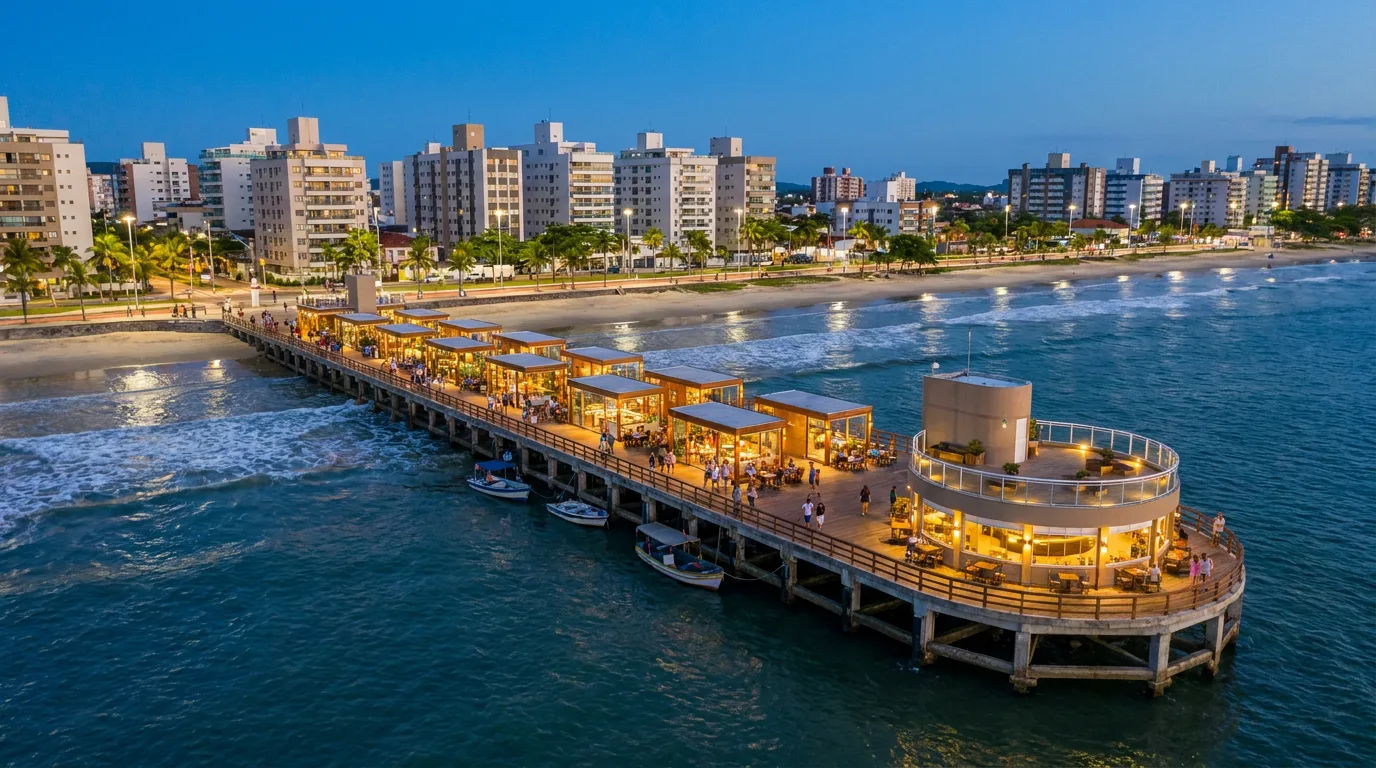
A place to go to
Anyone who runs a shop in a beach town knows what living off the season means: you hire in December, you lay off in March, and you spend the rest of the year trying to pay the bills with whatever is left of the summer. The whole town works like that, and the seafront ends up being for ten months out of twelve.
A destination changes that because it creates a reason. Nobody crosses town to look at a new building, but people do cross town to have dinner looking at the water, to walk at the end of the afternoon, to take the family out on a Sunday, to catch a boat. That reason is what produces movement where there was none, and movement is the raw material of everything else.
That is the difference between building the city and building city. And it is why a project like this deserves to be read with a different measure, one that is not the square metre.
The first effect: the money that follows
Whoever arrives first in a place carries the whole risk alone. There is no proven footfall, there is no neighbour to share the bill with, there is no track record to show the bank.
What happens next is what matters. Once the destination exists and people start showing up, the risk of the next investment drops sharply. The hotel whose numbers did not add up now adds up, because there is finally a reason to sleep in the town. The restaurant that only opened in season starts opening all year. Then the guesthouse, the diving school, the boat rental, the ice cream shop, the gym, the larger supermarket.
Then comes real estate, and it comes at another level. Land next to a consolidated destination is worth more and sells faster, and whoever builds there can now offer what they could not offer before: not just the flat, but what exists underneath it. That is how a seafront people pass through becomes .
The point that usually escapes notice is the order of things. These investments do not arrive because someone ran a campaign to attract investors. They arrive because someone solved, before them, the problem that none of them would have solved alone.
The second effect: the infrastructure that finally adds up
Every small town has a list of public works that everyone knows are needed and that never happen. Widening the access road. Resurfacing the seafront avenue. Dealing with the sewage that still runs into the river. Putting decent lighting on the dark stretch. Creating a bus line that actually reaches the place. Discussing a better connection to the large city next door.
Those works do not happen for a simple reason: when you divide their cost by the number of people who there, the numbers do not add up. And nobody approves works whose numbers do not add up.
A consolidated destination changes that division. It brings into the region a number of people who did not live there, and those people show up in the traffic counts, in the demand for transport, in water consumption, in sewage volume, in boat movements. Suddenly the works that were extremely expensive per inhabitant become reasonable . And they get built.
That is what is meant by the phrase that gets repeated a lot and explained very little: It is not a figure of speech. It is that the project enters the public accounts as new demand, and new demand is what unlocks infrastructure decisions that have been stalled for twenty years. It holds for the road, for transport, for sanitation and, in certain cases, for the large regional connection that redraws the map of the whole area.
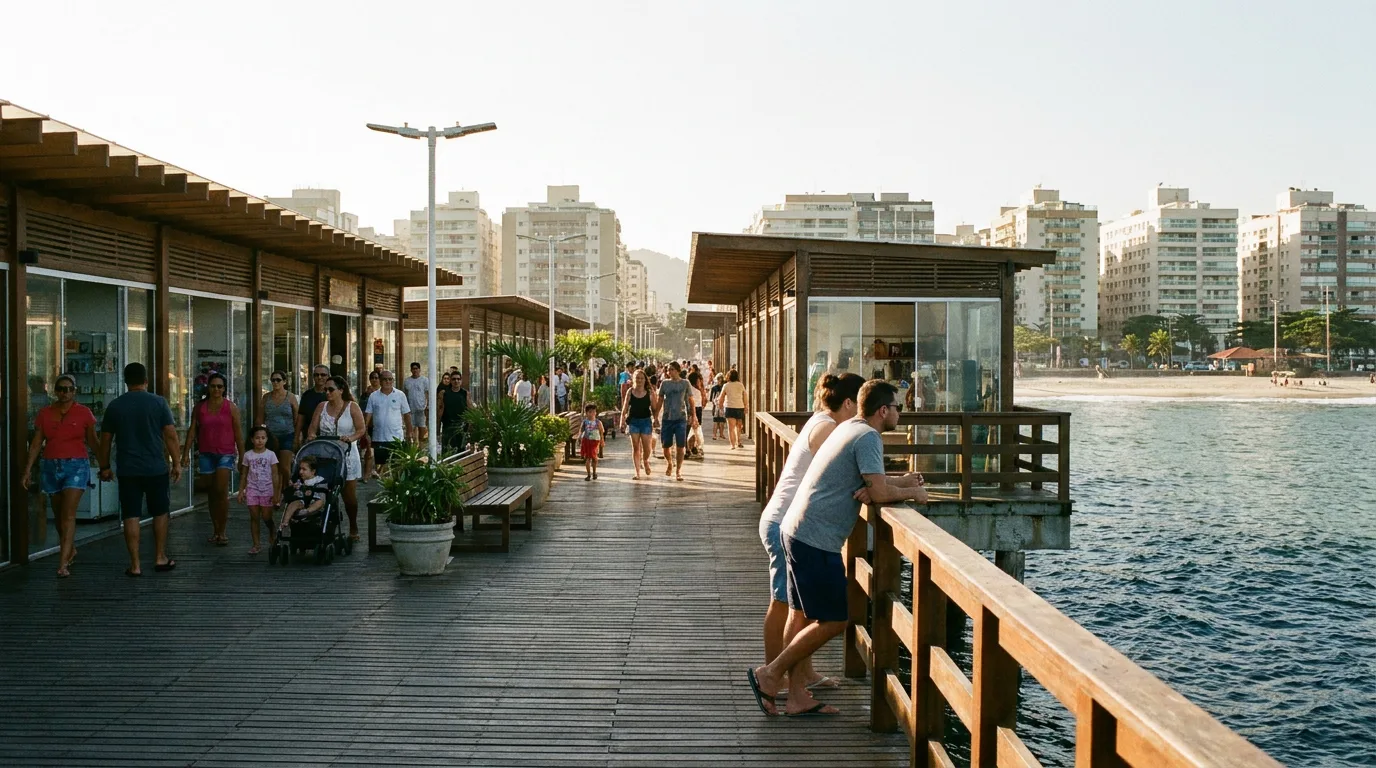
The third effect: the lives of the people who live there
Here is the part that rarely makes it into the investor presentation, and it is the part that decides whether the town wants the project or fights it.
Work that lasts the whole year.
Work that is not only the counter.
The child who does not have to move away.
The seafront given back to the town.has the right
And what improves without being in the project.
A city does not move towards whoever builds the tallest . It moves towards where people want to .
What has to go right
None of this is automatic. The difference between the pier that pulls a whole region and the one that ends up isolated lies in very concrete things.
- Operating all year
- Access resolved before opening.
- Giving something back to the street.
- An operation genuinely under contract
- The formal side in order.
That is why the feasibility study of a waterfront project starts with the situation of the land and the permits, and not with the programme. Anyone who inverts that order designs first and finds out later, and finding out later costs years.
And what has to be said
An honest project also talks about what weighs against it. Concentrated tourist flow puts pressure on sanitation, water supply and waste collection, and that has to be sized beforehand. Accelerated appreciation pushes rents up and can displace the people who lived there, which is dealt with through housing policy alongside the project, not afterwards. A structure over the water interferes with the movement of sand and can alter the neighbouring beach, so the position of the works is a technical decision, not an aesthetic one.
None of these points is a reason not to do it.
The first investment in a sequence
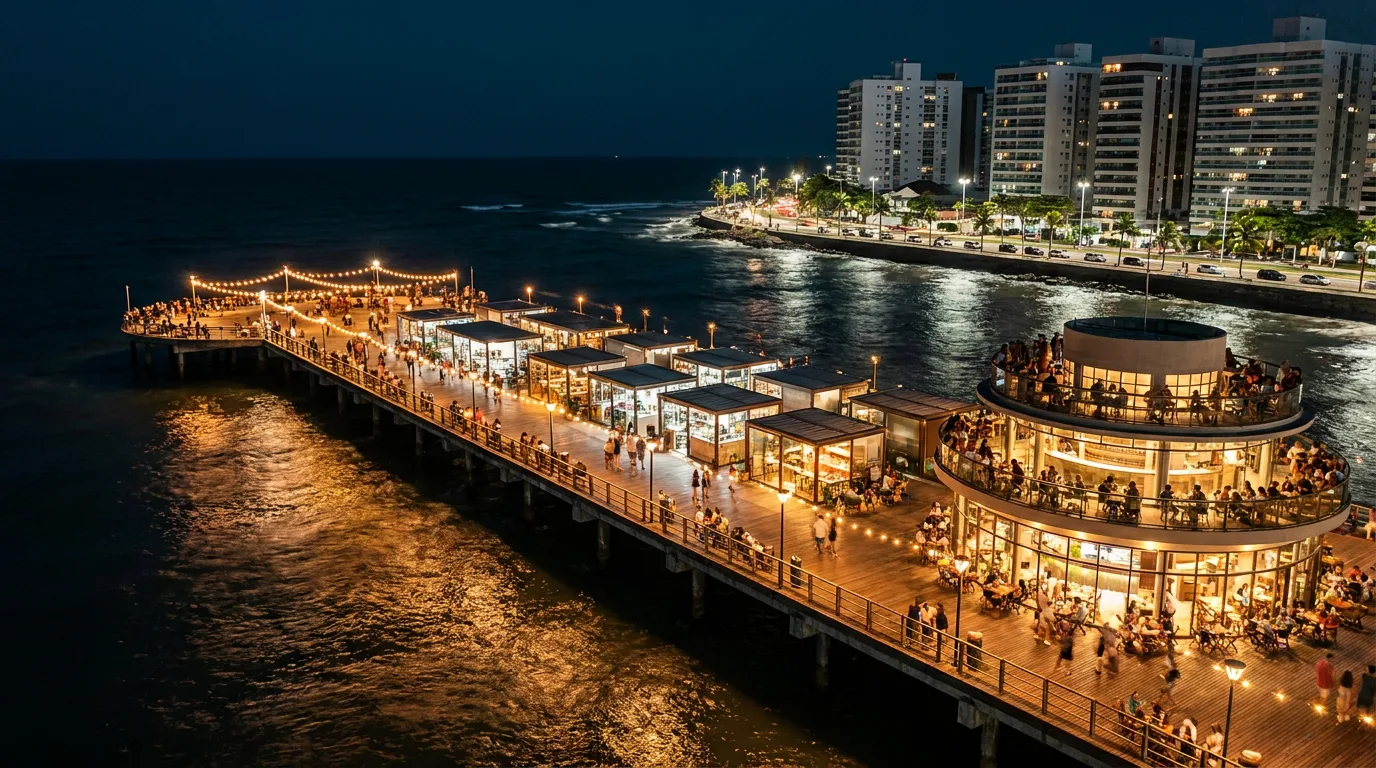
A well placed pier is not a development by the sea. It is the first investment in a sequence: it creates the destination, the destination brings the private investment that would not have come before, the new movement justifies the infrastructure that had been stalled, and the sum of that changes the working year of the people who live in the town.
Whoever structures a project of this kind is not designing a building. They are deciding where a region will grow over the next decade, and that decision is taken before the first pile goes in.
Sources consulted
All URLs verified on 18 August 2026.
- Law 7.661 of 16 May 1988, National Coastal Management Plan, official text, Planalto. Art. 10, beaches as public property in common use by the people and the prohibition of occupation that hinders access.
- Law 9.636 of 15 May 1998, official text, Planalto. Art. 18, regimes for the transfer of use of federal property.
- Law 12.815 of 5 June 2013, official text, Planalto. Art. 2, item VII, and art. 8, tourism port facility and the authorisation regime.
- Law 10.257 of 2001, Statute of the City, official text, Planalto. Arts. 36 and 37, prior neighbourhood impact study.
Updated on 18 August 2026. This text describes the typical sequence between destination, demand and investment decision, and it is analysis by Arsenic Arquitetos: it is not a statement about any specific works, project under review, identified development or guaranteed outcome, and it carries no projection of employment, revenue or appreciation. References to legislation are summarised in plain language; the literal reading of the shoreline regime, article by article, is kept in a separate technical analysis. The applicable regime depends on the ownership status of the property, which requires federal demarcation, and on state and municipal legislation, and it does not replace case by case advice.